
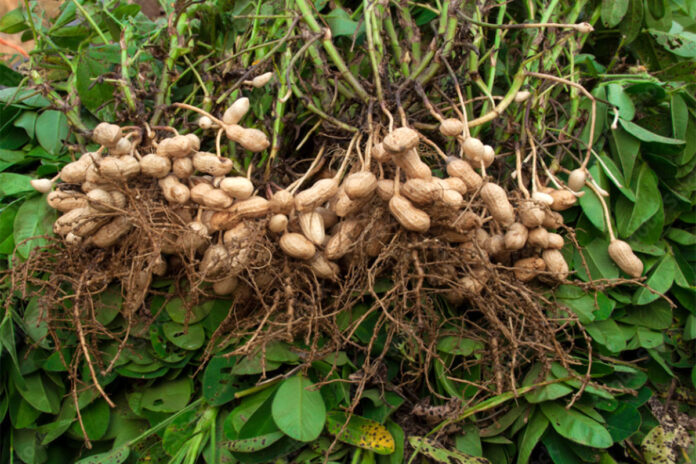
According to the Crop Estimates Committee’s September 2026 report, groundnut production was estimated at 65 620t, an increase of 3,6% from the 63 350t produced in 2025. This was despite a decline in the area planted, from 48 750ha to 44 650ha. Average yields increased from 1,30t/ha to 1,47t/ha.
Adri Botha, chairperson of the South African Groundnut Forum, told Farmer’s Weekly that favourable rainfall had been the main driver of improved yields, with some farmers achieving exceptional results.
However, conditions varied between production regions, and excessive rainfall prevented some farmers from entering their fields to harvest.
Despite these challenges, Botha described 2026 as a very positive year, with groundnut prices comparing favourably with competing crops.
Botha said soil moisture levels were currently favourable, providing a promising start to the planting season. However, rainfall during January would be critical to crop development and ultimately determine yields. This coincided with the period when the strongest effects of El Niño and associated dry conditions were expected.
Although groundnuts could recover from drought if sufficient follow-up rainfall occurred, Botha said earlier planting would be preferable.
Alfonso Visser, president of SA Peanuts, shared this optimism, noting that prices had remained stable at levels similar to the previous season, while other crops had experienced greater volatility.
He expects areas planted to groundnuts to increase by more than 10% in the coming season, although production might not increase by the same margin because of the anticipated El Niño.
Visser said conditions had so far been better than anticipated, and planting had therefore already started in irrigated production areas, with particularly promising conditions around Douglas, in Northern Cape.
New cultivars offer growth potential
Both industry representatives highlighted improved genetics as a major opportunity to increase yields and expand production.
Botha said the industry was working to improve seed purity and accelerate the registration of new cultivars. Four cultivars from private companies and another two from the Agricultural Research Council (ARC) could be registered within the next two years.
The ARC was also advancing its seed purity programme through DNA fingerprinting, which would become a requirement for future cultivar registrations in South Africa.
In addition, the Groundnut Forum had launched a long-term agronomic research project to investigate why yields differed substantially between neighbouring farms. Initial data was expected next year, which could then guide better production practices going forward.
Visser said that South Africa had considerable potential to expand groundnut production, particularly as processors had already increased their processing capacity.
However, the specialised equipment required for groundnut production remained a barrier to expansion, as grain farmers needed to make additional capital investments. Visser believed the favourable returns from groundnuts could justify this investment over time.
Tariff changes support local processing
The industry welcomed the increase in the general customs duty on imported peanut butter from R0,99/kg to 20% ad valorem, effective from 24 July 2026. The adjustment addressed a discrepancy whereby imported raw groundnuts attracted a 10% duty, while finished peanut butter entered South Africa at a substantially lower tariff.
Botha said the change was intended to place local peanut butter manufacturers on a more equal footing with imported products but was unlikely to have a significant effect on producer prices.
Visser was more optimistic about its broader impact, believing it would create a larger market for locally produced groundnuts.
He said the industry was also pursuing an increase in the import tariff on blanched peanuts to stimulate domestic production and improve income per hectare.
Despite the positive outlook, Botha warned that farmers faced growing challenges from limited crop protection options, particularly for nematode control. The Groundnut Forum was investigating alternatives and developing improved guidelines to ensure that available products were used effectively at critical stages, while minimising unnecessary applications.
With stronger genetics, expanding processing capacity, and renewed interest in production, the industry remained optimistic about its longer-term prospects.