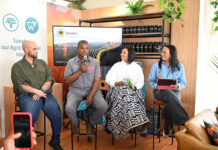
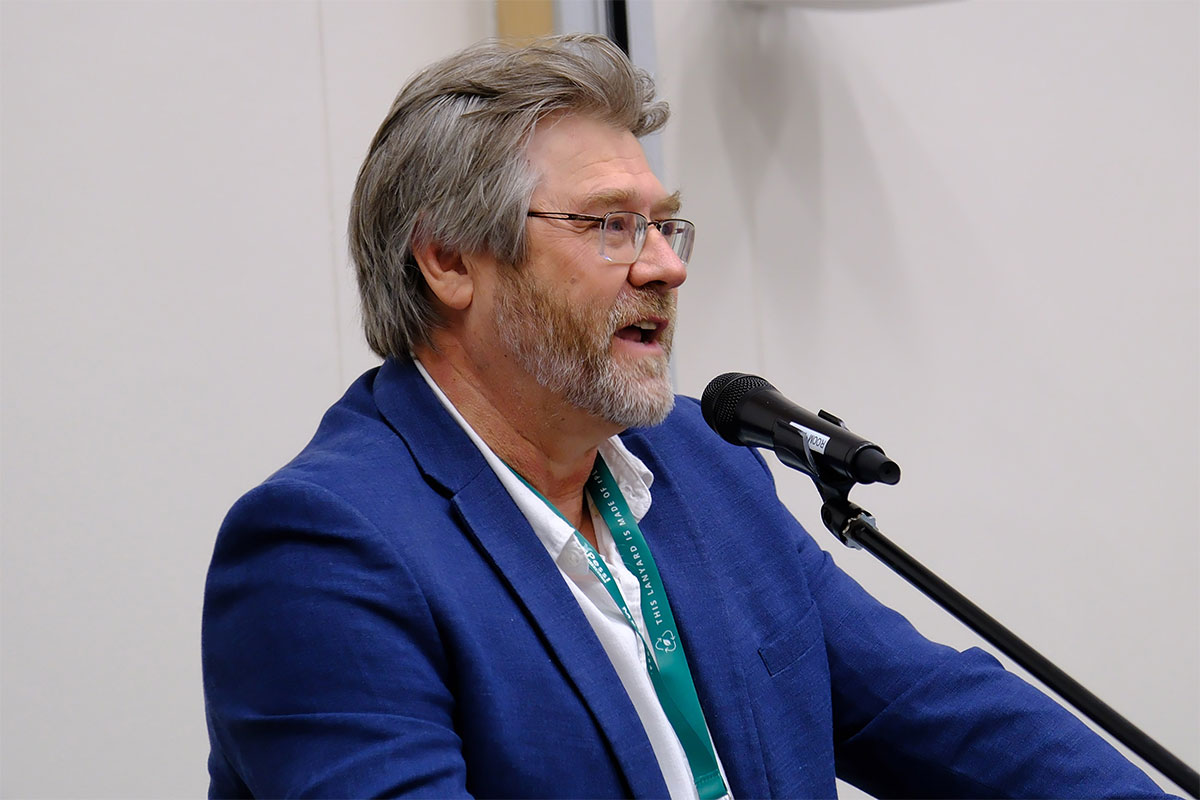
Midgley made the off-the-cuff remark during a discussion on weather data collection at the launch of a multinational project to install 100 000 professionally managed, real-time weather stations across Africa to improve forecasting and climate risk mitigation.
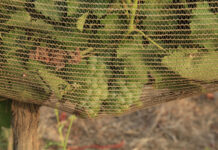
“How many millions of rands have farmers spent on shade netting [to protect crops] against hail and heat stress?” Midgley said.
“That’s climate expenditure. Theoretically, it should be claimable from the international community as a loss or damage expenditure.”
The project is the brainchild of Gottfried Pessl, founder and CEO of Austrian agritech company Pessl Instruments, which supplies networked agricultural measurement equipment such as weather stations, insect traps, and soil moisture probes.
The company already has a significant footprint in South Africa through some 700 hi-tech weather stations deployed by its partner company, Metos SA.
At the launch, held on 25 March at the Stellenbosch Institute for Advanced Study, Midgley shared data showing a steep decline in the number of weather stations producing reliable data on the continent. The number reached a high of almost 2 000 in the early 1970s and dropped to less than 500 by 2018. The overwhelming majority of these credible weather stations are in South Africa.
Midgley said farming communities could combine their efforts and “sidestep officials if they are not prepared to advocate” on behalf of African farmers, who often bear the brunt of climate disasters such as hail, drought, and flooding.
He added that private international funders could also contribute to investments like the weather station network as ‘in-kind’ contributions towards their climate mitigation obligations.
Lack of resources is an issue
Dr Ilse Trautmann, former deputy director-general for Agricultural Research and Regulatory Services at the Western Cape Department of Agriculture, serves on the advisory board of directors of Pessl’s initiative.
At the event, she said one of the main barriers for African smallholder farmers is the “lack of resources to adopt modern tools and data-driven practices”.

She explained that far too many decisions in African farming are made based on guesswork rather than sound scientific data, and many farmers lack the real-time information that would enable them to take crucial farming steps at the correct time.
Trautmann added that for most smallholder farmers, weather stations “aren’t even on the shopping list”.
Africa’s untapped potential
Pessl said 60% of productive agricultural land in Africa is still unutilised or underutilised, and there is no reason why yields in many parts of Africa could not increase by 2,5 times.
“But at the moment, most farmers still do not have the technology or enough weather intelligence to make the right decisions. That is why we are doing this project,” he said.
He said the massive gains Brazil’s agriculture sector made on the Cerrado, the country’s tropical savannah, could be replicated in Africa.
“What Brazil generated in the Cerrado was a miracle in terms of [maize] and soya production. The country had [the Brazilian Agricultural Research Corporation] help them do the science and revolutionise seed production, and they also began to mechanise the farms completely. Then they started a weather network.
“For us, Brazil is our biggest market, bigger than the US, with 12 000 connected [weather monitoring] devices and counting,” Pessl explained.
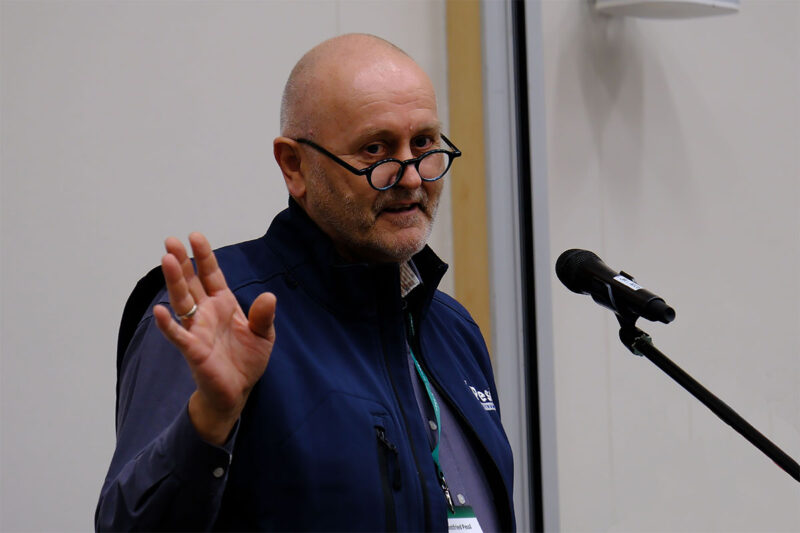
He added that the 100 000 weather stations across Africa’s arable land would bring the continent within the World Meteorological Organisation’s standard, but would still be “completely insufficient for precision agriculture”.
However, the strategic allocation of high-density weather station networks in areas with high potential for high-value crop production, combined with mechanisation and widespread adoption of precision agriculture, could bring compelling returns on investment.
The test run
Between 2021 and 2023, Pessl Instruments was involved in the Eureka Climate Smart Agriculture project in the Western Cape, which installed more than 200 networked weather stations across the province to provide hyperlocal weather forecasts to farmers.
Financed in part by the governments of Austria and South Africa and a European tech innovation fund, Pessl said the project provided valuable lessons on how to run a weather network of that scale. He said the 100 000 weather station project is the ‘industrialised’ version of the Eureka project.
At the launch, a number of industry experts emphasised the value of location-specific data for highlighting specific agricultural problems, such as harmful temperature spikes and localised frost risk. They said this data also informs crucial decisions, including establishing high-value crops in new locations, taking preventative steps against pests and diseases, and the proactive planning of irrigation.
Gabrielle Redelinghuys, project lead for incubator projects and marketing intelligence at Villa Crop Protection and project manager for the Eureka project, said collaboration and data sharing are crucial for effective weather data generation, processing, and dissemination.
She added that data gathering and dissemination for actionable climate insights is the first step to building broader climate literacy.