
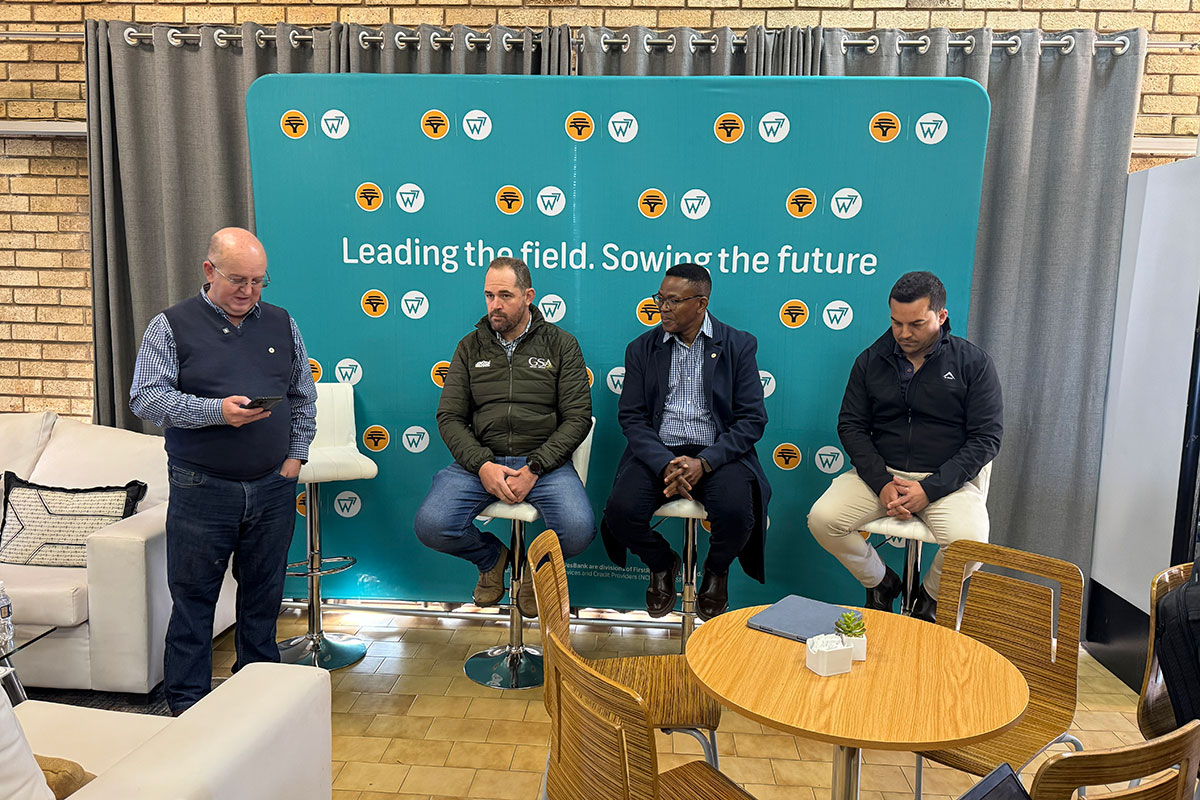
The panel for the discussion, hosted by FNB, comprised Paul Makube, senior agricultural economist at FNB; Dawie Maree, head of agriculture information and marketing at FNB; Dr Phillip Oosthuizen, chief operations officer at Red Meat Industry Services; and Dr Dirk Strydom, managing director of Nampo.
Oosthuizen described the current foot-and-mouth disease (FMD) outbreak as a serious warning for the livestock industry.
“For a very long time, we have been trying to get proper biosecurity systems and traceability measures implemented in the industry. Hopefully this will be the final wake-up call.”
He said one of the industry’s biggest recent challenges was vaccine availability, adding that significant volumes of imported vaccines were now entering the country. However, he cautioned that vaccination alone would not solve the crisis.
“The availability of vaccines is one thing. The strategy and implementation are another challenge entirely,” Oosthuizen said, referring to the logistical difficulty of vaccinating enough animals, administering booster shots, and maintaining proper traceability records.
The panel stressed that biosecurity is not only a livestock concern but a risk facing the entire agricultural economy.
Strydom warned that grain producers are equally vulnerable to disease and pest outbreaks that could threaten national food security and exports.
“There are serious diseases out there that can wipe out a whole crop. Just think what that could mean for food security,” he said, adding that increased livestock exports would also support the grain industry by boosting demand for feed grain and oilseeds.
“When we export more animal products, we create markets for grains and oilseeds, too. That is why biosecurity is just as important for the grain industry.”
Economic costs of biosecurity failures
Makube said recent outbreaks of FMD, avian influenza, and African swine fever demonstrated the enormous economic consequences of biosecurity failures.
“Biosecurity issues affect investor confidence and increase financing risks associated with losses that come from biosecurity failures,” he explained.
According to an accompanying FNB statement, the 2021 FMD outbreak, which was limited to Mpumalanga, North West, and Limpopo, cost the red meat industry an estimated R2,1 billion, while the current national outbreak is likely to exceed that figure significantly.
The panel also highlighted the severe financial strain that movement restrictions place on livestock farmers.
Oosthuizen said livestock systems depend on the uninterrupted movement of animals through the value chain, and once movement restrictions or quarantines are imposed, farmers’ cash flow dries up rapidly.
“If you cannot move your animals, you do not have income, and then you cannot repay your bank [loans],” he said.
Makube added that smaller and emerging farmers are often least equipped to absorb prolonged disruptions because they lack the financial reserves available to larger operations.
Regaining FMD-free status
The briefing also focused on South Africa’s likely transition towards FMD-free-with-vaccination status, a process speakers compared with Brazil’s long-term recovery path.
They said rebuilding export confidence will depend not only on vaccination but also on improved traceability systems, stronger surveillance, and better coordination between government and industry.
Strydom argued that communication and coordination remain major weaknesses.
“Coordination is the key word,” he said, adding that biosecurity measures cannot remain confined to policy discussions at industry level but must instead reach farmers directly through practical engagement and implementation.
The panel concluded that South African agriculture needs to move away from reactive crisis management towards building long-term resilience against increasingly frequent biological threats.
“Once an outbreak is visible, the cost is often already mounting,” the FNB statement noted.