
Farmers deciding between newer smart tractors and older analogue machines often focus on purchase price first. But on most farms, the real cost might only come later.
A breakdown during planting or harvest can cost far more than the machine itself. Delayed planting windows, lost working hours, and expensive repairs quickly affect profitability, especially when equipment is needed every day.
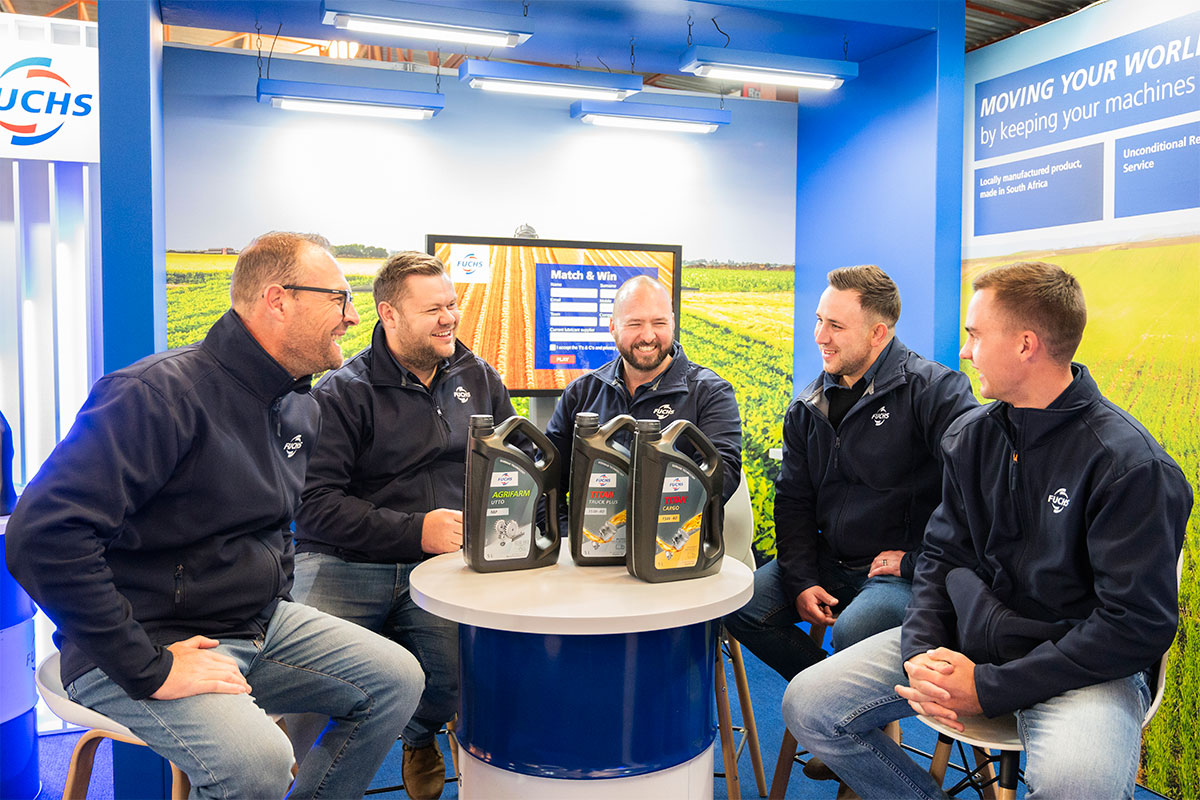
According to Rocco van Schalkwyk, automotive inland sales manager at Fuchs Lubricants South Africa, uptime should be the first priority.
“If your equipment stands in season, it costs you money. It’s not making you money,” says Van Schalkwyk.
He says many farmers still treat lubrication as a consumable expense instead of part of their maintenance strategy.
Lubrication protects the working parts that carry the biggest repair costs, including engines, transmissions, hydraulic systems and wet brakes. Using the correct product helps reduce wear, manage heat and prevent premature failure.
Van Schalkwyk says one of the biggest mistakes farmers make is trying to save money by buying cheaper oils without checking whether the product matches the application.
The damage, however, often does not occur immediately. Farmers may use a cheaper lubricant and see no problem at first, but over time, wear increases and failures start appearing in gearboxes, hydraulics or final drives.
“Farmers look at the oil and say this is expensive because it’s consumable. They shouldn’t look at oil as a commodity; it’s an investment,” says Van Schalkwyk.
Different machines also require different formulations.
Van Schalkwyk explains that an axle oil, for example, may contain high levels of extreme pressure additives, but that same product could damage a gearbox containing yellow metals such as brass if used incorrectly. The wrong lubricant in the wrong application will eventually lead to problems.
Van Schalkwyk says farmers should first follow original equipment manufacturer recommendations and service intervals before trying to extend machine life. Even if a lubricant is capable of lasting longer, the safest approach is still to service according to the manufacturer’s schedule.
“The machine was designed to run only for that many hours before it needs a service,” he says.
Daily inspection also remains one of the simplest and most effective maintenance tools.
Checking oil levels, looking for leaks, inspecting hoses and watching for puddles under parked tractors can help identify problems early. By the time a warning light appears, it usually means the issue is already serious.
Oil analysis is another way farmers can reduce downtime. Testing can reveal contamination or wear metal concentration in oil before a major failure happens, allowing repairs to be planned instead of being forced during the season.
Van Schalkwyk says lubrication accounts for only about 2% to 3% of total maintenance cost, but protects some of the most expensive components on the farm.
For farmers managing rising input costs, that makes maintenance less about saving on oil and more about protecting the value of the machine itself.