
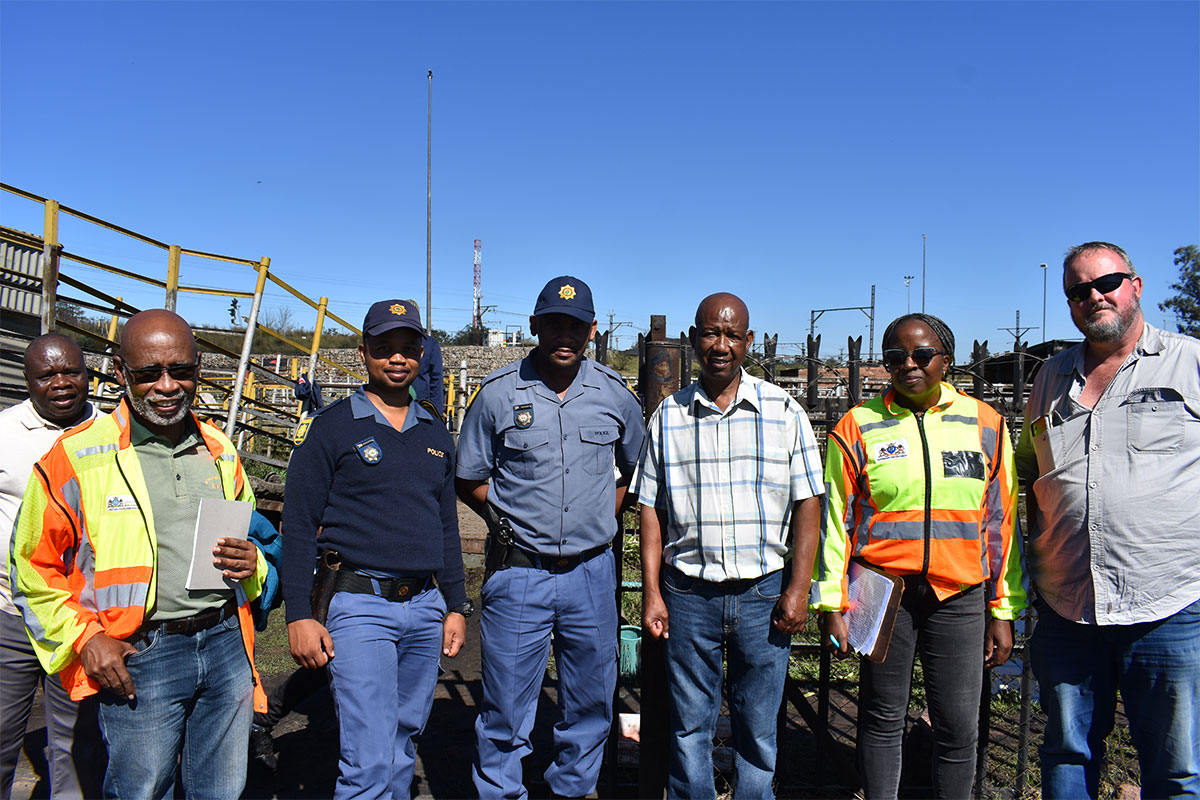
The inspection formed part of intensified enforcement measures to curb the spread of FMD, as authorities increasingly focus on livestock auctions as critical control points in the value chain.
Officials on site were tasked with identifying cattle transported without the required FMD documentation, as well as animals moved across provincial boundaries in contravention of current regulations.
Veterinary officials said the operation was largely successful, with most farmers complying with prescribed movement protocols. However, Dr Wynton Rabolao, chief director of veterinary services in Gauteng, confirmed that two farmers were found to be non-compliant and were subsequently prohibited from offloading their animals at the auction.
“This kind of enforcement is necessary,” he told Farmer’s Weekly, noting that movement control remains one of the most effective tools to limit the spread of the disease.
Preventing potentially infected or unverified animals from entering auction systems is critical to protecting commercial and emerging farmers, as well as safeguarding national herd health and market access.
Captain Jan Labuschagne of the SAPS Stock Theft and Endangered Species Unit in Cullinan said, “Our involvement forms part of routine oversight linked to livestock movement.”
He added that there has been a downward trend in stock theft cases in the area, which he attributed largely to increased police visibility and a stronger on-the-ground presence at auctions and along transport routes.
Authorities have repeatedly warned that illegal or undocumented animal movements not only increase disease risk but also create opportunities for stock theft and informal market activity.
Auctions under scrutiny
Livestock auctions have come under particular scrutiny because they bring together animals from multiple locations, creating a high-risk environment for disease transmission if controls are not strictly enforced.
Authorities have stressed that auctions can continue to operate, but only under tightly controlled conditions. Auctioneers, agents, and producers all share responsibility for ensuring that animals entering these markets comply with national regulations.
The Bronkhorstspruit inspection highlights a broader shift towards visible, on-site enforcement rather than reliance on self-regulation alone.
For compliant farmers, stricter enforcement can be seen as a protective measure, helping to ensure that those who follow the rules are not placed at risk by the actions of others who do not.
As Rabolao indicated, the goal is not to disrupt trade unnecessarily but to enable it to continue safely.
“If protocols are followed, auctions can operate, farmers can sell, and the industry can keep moving, without compromising animal health,” he added.
With inspections likely to continue across the country, producers are urged to double-check their documentation and biosecurity practices before transporting animals.