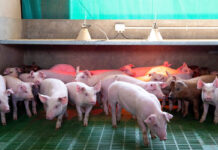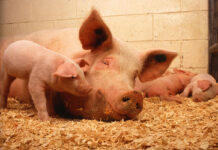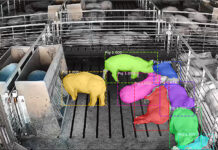

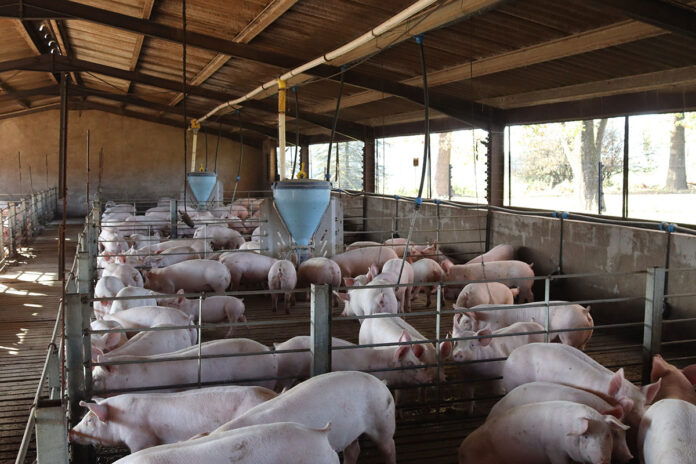
The South African Pork Producers’ Organisation (SAPPO) welfare code revision marks a significant shift in how breeding herds will be housed in the future. While the 2023 code permits sows to be housed in gestation crates for up to eight weeks, the revised 2025 code phases out crates entirely from 1 January 2032 and increases the minimum space allocation to 2,25m² per sow.
For many producers, the immediate implication is the need to provide more space. However, research conducted by the National Pork Board in the US suggests that successful group housing involves far more than meeting a minimum floor-space requirement.
According to the researchers, factors such as feeding systems, group size, pen design and animal management all influence how effectively sows utilise available space. More importantly, they determine whether the transition to group housing improves welfare and productivity or simply introduces new challenges.
This aligns closely with the realities already facing many South African producers. According to Cara Nel, monogastric development manager at Vitam International, environmental stress remains one of the most consistent drivers of reduced feed conversion in commercial pig systems.
“Housing design is one of the most important determinants of environmental stability, yet many production systems have not kept up with upgrades that take into account the needs of modern herds. Adequate insulation is a common issue, which impacts ventilation capacity, limiting temperature control and increasing environmental stress on pigs,” she says.
Group housing is about more than square metres
One of the strongest conclusions from the US National Pork Board review is that additional floor space alone does not automatically create a successful group housing system.
The report notes that while more space is generally beneficial for sows, particularly after regrouping, in smaller groups and in various stall-feeding systems, housing performance depends heavily on how that space is used.
Simply increasing floor area without considering feeding behaviour, social interactions and competition may not deliver the expected benefits. This becomes increasingly important as social hierarchies form within groups. Dominant animals naturally compete for access to resources, while subordinate animals attempt to avoid conflict.
The housing system therefore needs to provide sufficient opportunities for all animals to access feed and water while minimising competition and aggression.
Nel notes that competition often manifests itself in subtle ways that are easy to overlook.
“As stocking density rises, so too does stress and disease transmission, both of which reduce production efficiency. Limited feed and water space further compounds the issue, creating competition at critical access points and reducing uniformity of intake across groups.”
She adds that some pigs consume feed more consistently than others, resulting in uneven growth rates and reduced group uniformity.
“Feed and water space constraints also influence behaviour, with increased competition leading to stress-related intake disruption and variability in performance.”
Feeding systems shape housing design
A key lesson from the US National Pork Board research is that feeding systems and housing design cannot be considered separately.
The report highlights that group size, pen design and animal grouping strategies should be determined in conjunction with the feeding system.
Different feeding systems create different levels of competition and therefore require different management approaches. This means that producers planning new facilities should not first build the housing, and then decide how animals will be fed. Rather, feeding strategy should form part of the design process from the outset.
The report pays particular attention to electronic sow feeding (ESF) systems. While these systems protect individual animals while feeding, competition still occurs as feeding order is established within the group.
Researchers found that overstocking ESF stations increases competition at feeder entrances, resulting in higher aggression levels, increased stress and a greater risk of injuries and lameness. Dominant sows typically gain access to feeders earlier in the feeding cycle, while younger and subordinate animals feed later.
As a result, subordinate animals are most affected when feeder capacity becomes inadequate. In severe cases, some animals may fail to consume their full daily ration before the feeding cycle resets.
The report specifically identifies gilts as particularly vulnerable in these systems if they are not properly trained to use the equipment or experience social pressure from larger animals. Researchers therefore recommend grouping gilts together where possible in ESF systems.
The findings reinforce Nel’s view that feeder systems have a major influence on production efficiency.
“Poorly adjusted feeders increase feed wastage through spillage, feed sorting and uneven access, while also shaping pig behaviour in ways that increase competition and disrupt consistent feeding patterns within groups.”
She notes that the resulting variation in feed intake translates directly into uneven growth rates.
“Over time, this reduces overall production efficiency, delays market turn-off and results in less uniform carcass weights. From a commercial perspective, this reduces the efficient use of housing space and negatively affects profitability.”
Feed wastage itself carries a significant cost. According to Nel, losses in poorly managed systems can range from 5% to 15%, a substantial financial burden considering that feed remains the largest production cost.
Designing facilities that support pig behaviour
The US National Pork Board report also highlights the importance of designing housing systems that account for pig behaviour rather than simply accommodating pig numbers.
The report notes that aggression is usually at its most intense when new groups of sows are formed. Large mixing pens, or more complex pens (increased dividers and hiding areas) may be beneficial during the first day or two after new groups are formed. Once the aggression has reduced and the hierarchy is formed, the group can be moved into a smaller pen. This would be particularly beneficial to younger, smaller sows or gilts.
Managing dynamic sow groups (small groups added into a larger group at different times) is generally considered to be more difficult than static groups, where all sows enter the group on the same day. Dynamic groups will initiate another day of aggression each time sows are added, but productivity effects are variable. Because of this recurrent aggression, dynamic pens should be planned using the upper ranges of the space recommendations.
One practical challenge identified by the researchers is ‘recycling’, where sows repeatedly return to feeding stations after consuming their daily ration. These animals can create bottlenecks that prevent others from accessing feed, reducing the efficiency of the feeding system and potentially causing some sows to miss their daily feed allocation.
To address this problem, the report describes several design strategies. One option is a single- pass system, where animals leave the feeding station into a separate yard area before rejoining the main group. This creates distinct activity zones and discourages immediate re-entry attempts.
The report notes that providing water in the exit area can further encourage animals to remain there for longer periods.
Additional approaches include identification-controlled entrance gates and automated systems that prevent animals that have already consumed their daily feed allocation from repeatedly accessing feeders.
Ventilation, temperature and stocking density remain critical
Although the move towards group housing often focuses on welfare and space allocation, environmental control remains equally important. Nel emphasises that environmental conditions can quietly undermine performance even when nutrition is correctly formulated.
“Temperature extremes are particularly disruptive. Cold conditions force pigs to divert energy towards maintaining body heat rather than growth, while hot conditions reduce feed intake. In both cases, feed conversion efficiency declines as maintenance energy requirements increase,” Nel explains.
Ventilation plays a central role in managing these challenges. Nel says that where air quality is poor, pigs not only eat less, but also become more susceptible to environmental stress.
Elevated ammonia and carbon dioxide levels suppress appetite and reduce feed intake, making proper ventilation a critical component of housing design.
South African summer conditions place additional pressure on production systems, particularly where cooling and ventilation capacity is insufficient.
Changes in production efficiency have also created new housing challenges. Nel notes that increased litter sizes and higher numbers of piglets weaned have resulted in higher stocking densities in many weaner and grower facilities, resulting in increased competition for space.
As group housing becomes more common, these design pressures are likely to become even more important.
Managing pigs through Summer
Housing design and management become particularly important during periods of heat stress.
Nel explains that pigs naturally reduce feed intake in hot conditions to limit metabolic heat production. This leads directly to slower growth, poorer feed conversion ratios, increased maintenance energy use and greater oxidative stress.
Behavioural changes also become apparent. “Pigs tend to increase water activity during hot periods, which can contribute to water wastage and management challenges. In systems without slatted flooring, excess water can result in wetter pens, creating additional hygiene and management pressure.”
Maintaining intake during these periods requires attention to both feeding and water management. Proper water sanitation and unrestricted access to clean water become essential. Nutritional strategies should also be adjusted to account for reduced feed intake.
“Because pigs naturally reduce feed intake in hot conditions, diet nutrient density becomes increasingly important to ensure sufficient energy and amino acid intake despite lower feed consumption,” says Nel.
She adds that protein nutrition should be carefully balanced to reduce unnecessary metabolic heat production, while antioxidant support becomes increasingly important because of the oxidative stress associated with heat.
Practical management interventions can also help. Offering feed during cooler periods of the day and increasing feeding frequency can encourage intake while reducing the heat generated during digestion.
“Highly digestible ingredients are particularly valuable under heat stress conditions, as they reduce the energy cost of digestion and improve nutrient utilisation. Maintaining electrolyte balance and ensuring unrestricted access to clean, cool water further supports thermoregulation and performance during hot periods,” Nel advises.
An integrated approach to housing
The US National Pork Board researchers conclude that no single group housing system is suitable for every operation. Instead, successful systems depend on balancing space allocation, feeding strategy, group size and management practices according to the needs of the herd.
For South African producers preparing for the transition away from gestation crates, this may be the most important lesson of all. Meeting minimum space requirements will be necessary, but long-term success will depend on how effectively housing systems manage competition, support animal movement, provide access to resources and maintain environmental stability.
Ultimately, Nel believes that housing, nutrition and management cannot be separated. “The greatest gains in feed efficiency are achieved when housing design, ventilation, stocking density, water systems, feeding strategies and daily management work together as a single integrated production system that supports intake, comfort and consistency across all production stages.”
Email Cara Nel at [email protected].