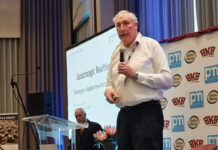

The developments were outlined during a recent industry webinar, Disease Reporting & Bioaftogen Technical Overview, hosted by the Veterinarian Network (V-Net), which brought together local veterinarians and international vaccine specialists to unpack the science and practical realities of the country’s current FMD response.
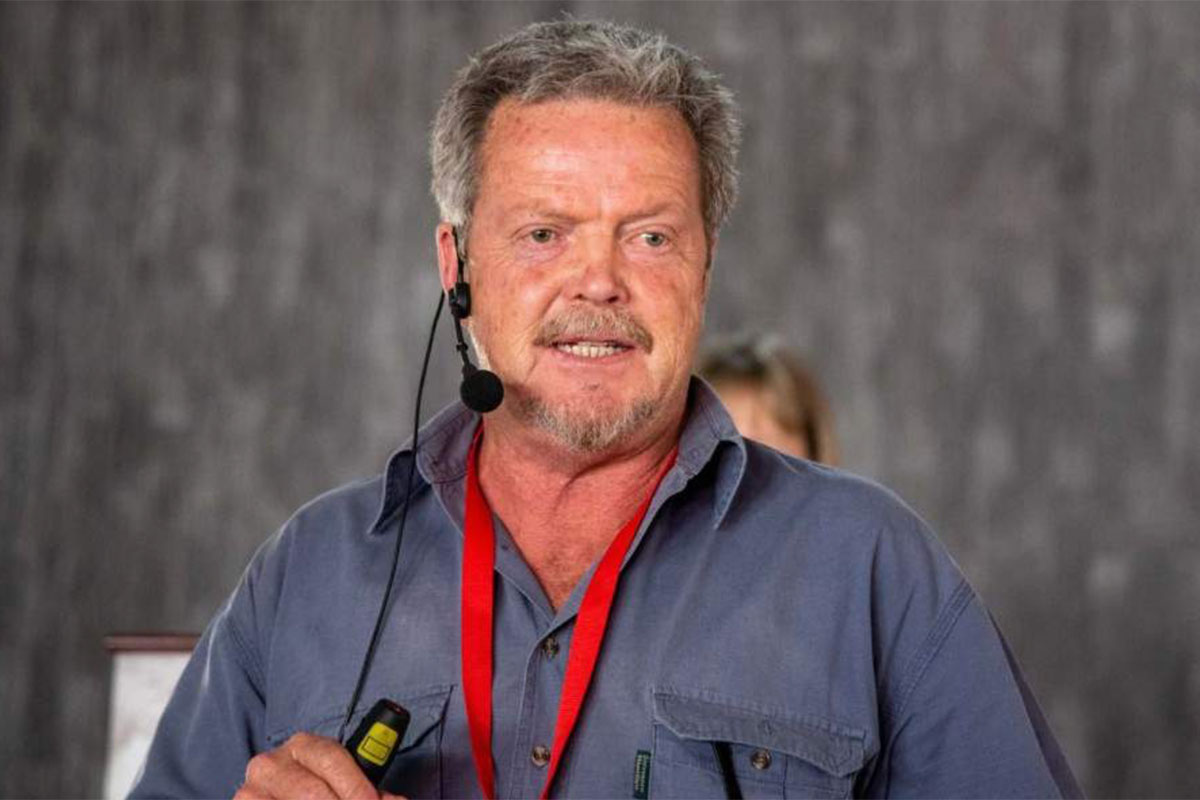
Moderated by veterinarian Dr Danie Odendaal, director of Veterinarian Network, the session covered vaccine evaluation, technical insights, and, crucially, the next phase of field monitoring.
From policy shift to vaccine rollout
South Africa’s vaccination strategy shifted at the end of November, when government announced a move from targeted outbreak control to a broader national vaccination approach.
However, supply initially lagged behind policy.
“At the time of the announcement, no vaccine had been procured,” Odendaal noted. “We were effectively starting with nothing.”
With local production unable to meet demand, authorities turned to international suppliers. Argentina-based vaccine manufacturer Biogénesis Bagó responded quickly, adapting formulations to include serotypes relevant to Southern Africa and scaling up production under tight timelines.
In February 2026, one million doses of Biogénesis’s Bioaftogen and 1,5 million doses of the Dollvet vaccine arrived in South Africa. These doses have already been administered to cattle.
An additional 11 million doses have been secured. This includes five million doses of Bioaftogen, of which 1,5 million have already been imported and 3,5 million are expected within the next two weeks.
The remaining six million doses are Dollvet, imported from Türkiye by Dunevax, and are scheduled for import by early May 2026.
Scientific criteria guide emergency vaccine selection
Dr Livio Heath, research team manager for vaccine production at the Agricultural Research Council, who presented on vaccine evaluation, emphasised that emergency vaccine selection follows internationally accepted scientific criteria.
“The first and most important consideration is safety,” Heath said. “With FMD, the consequences of introducing infection through a vaccine are severe.”
Potency, measured as PD₅₀, is equally critical.
“In an emergency situation, you need high-potency vaccines. The international benchmark is a PD₅₀ of at least six, and the vaccines currently in use exceed that,” he explained.
Other import factors are:
- Strength of immune response (virus neutralisation titres)
- Antigenic matching between vaccine and circulating strains
- Duration of immunity
- Suitability for field conditions
Crucially, Heath cautioned against relying on a single metric: “No single parameter defines a good FMD vaccine. You have to consider potency, immune response, matching, and field performance together.”
Global experience and local application
Daniel Helou, regional director at Biogénesis, introduced the company and its global footprint, noting its long-standing involvement in FMD control programmes.
“Our vaccines work,” he said. “This is not about theory; it’s about field results, outbreak control, and real-world performance.”
Biogénesis has supplied vaccines in multiple large-scale outbreaks, including Argentina, Taiwan, and South Korea, and currently supports vaccine banks in several regions.
Dr Rodolfo Bellinzoni, executive director, and Dr Facundo Ronero, strategic marketing manager at Biogénesis, provided a detailed technical overview of the Bioaftogen vaccine platform, highlighting:
- High potency well above emergency thresholds
- Broad cross-protection across multiple FMD strains
- Strong safety profile across species and production stages
- DIVA capability, allowing differentiation of infected from vaccinated animals
- Immunity of approximately six months
The vaccine has been used extensively in diverse production systems around the world, with performance supported by laboratory data and field outcomes.
Field performance becomes the real test
While technical specifications and global experience provide confidence in vaccines, speakers repeatedly stressed that the decisive phase lies in real-world performance.
“There is quite a difference between what we see in a lab and what we see on the ground,” Odendaal said.
To address this, he will play a central role in the next phase of the programme. Biogénesis has appointed Odendaal as an independent contractor to lead post-vaccination observational monitoring in South Africa, working in collaboration with veterinarians across affected regions.
“This is where we understand how the vaccine works in real conditions,” Odendaal said. “We need to monitor what is happening in the field and not just rely on laboratory data.”
Early field observations encouraging but nuanced
Initial monitoring data from about 71 000 vaccinated cattle, predominantly in dairy systems, show:
- No significant adverse reactions
- No observable impact on milk production
- Minimal localised reactions, mostly linked to administration technique
However, interpreting vaccine efficacy remains complex.
“We are working with herds at different stages: some never infected, some recovering from infection, some previously exposed,” Odendaal explained. “That makes early interpretation difficult.”
To improve accuracy, the monitoring programme will focus on:
- Defined herd categories
- Serial serological testing at 30, 60, and 90 days
- Structured observational reporting through veterinary networks
- Expansion into beef systems and feedlots
Capacity constraints remain a challenge
Odendaal said one of the biggest constraints is laboratory capacity: “Our biggest limitation is access to laboratories that can do the required serology under the correct biosafety conditions.”
He explained that this limits deeper analysis of:
- Breakthrough infections
- Strain identification
- Long-term immunity under field pressure
A measured path forward
Speakers cautioned that vaccination is not an instant solution.
“Waiting for a perfect vaccine costs time that the virus will use,” Heath said. “In an outbreak, availability and speed are critical.”
At the same time, Odendaal stressed the importance of transparency and patience: “There’s a steep learning curve. We don’t fully understand some of what we’re seeing in the field, and we must be honest about that.”
The webinar also highlighted the strain on those managing the outbreak on the ground.
“No one is under more pressure than the farmers and the veterinarians in the field,” Odendaal said. “This affects every aspect of their operations.”