
The new pathway, which is being rolled out under the supervision of the Department of Agriculture’s (DoA) Directorate of Animal Health (the directorate), is intended to complement rather than replace government’s existing vaccination programme by expanding vaccination capacity while maintaining strict oversight and traceability.
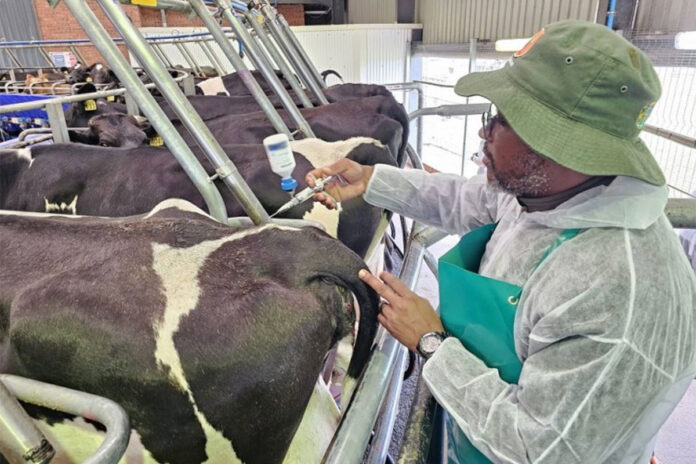
Farmers will not be able to purchase vaccines directly. Instead, if they wish to vaccinate their livestock via the private channel, they will work through a registered private veterinarian, who will take responsibility for prescribing, ordering, administering, and reporting the vaccinations.
According to information circulated to veterinarians by the Rural Veterinary Association of South Africa (RuVASA), together with a Dunevax Biotech FMD-vaccine distribution process flow, farmers who are not registered through the Buffalo Analytics system may instead approach a private veterinary practice directly.
Veterinary practices will consolidate vaccine requests, sign and submit the required veterinary prescriptions through Buffalo Analytics, and provide any outstanding information before orders are processed.
Once the order is verified, it is forwarded to Dunevax for processing. The prescribing veterinarian then receives an invoice and a standard operating procedure governing vaccine use and reporting. Vaccines are released only once the required documentation has been signed and payment has been received.
Before vaccines are delivered, the relevant provincial state veterinarian must be informed of both the order and the intended vaccination schedule. Vaccines are then delivered directly to the veterinary practice, where the supervising veterinarian assumes responsibility for administering the vaccines and ensuring compliance with reporting requirements.
Ensuring traceability
The system incorporates several traceability measures. QR codes are scanned after vaccines have been administered, allowing vaccination data to be captured for South African Health Products Regulatory Authority (SAHPRA) reporting, DoA records, public rollout mapping, and future revaccination planning.
Where vaccination feedback has not been submitted, additional information will be requested before further orders are processed.
The process flow states that the importation and use of the vaccines remain subject to SAHPRA permit conditions under Section 21 and authorisation by the directorate. Provincial veterinary services will continue to oversee vaccination activities for traceability, reporting, and disease surveillance purposes.
The approval follows months of calls from the livestock industry to broaden vaccine availability after widespread FMD outbreaks placed provincial veterinary services under significant pressure.
Until now, FMD vaccines have been supplied free of charge by government through provincial veterinary authorities. In a written parliamentary reply earlier this year, then Minister of Agriculture John Steenhuisen confirmed that vaccines were not sold directly to farmers or the public, disclosing the procurement costs of imported vaccines supplied through government.
The development complements government’s recently approved risk-based FMD control framework, which introduces greater flexibility for quarantine management, animal movement, and herd recovery while maintaining disease control measures.