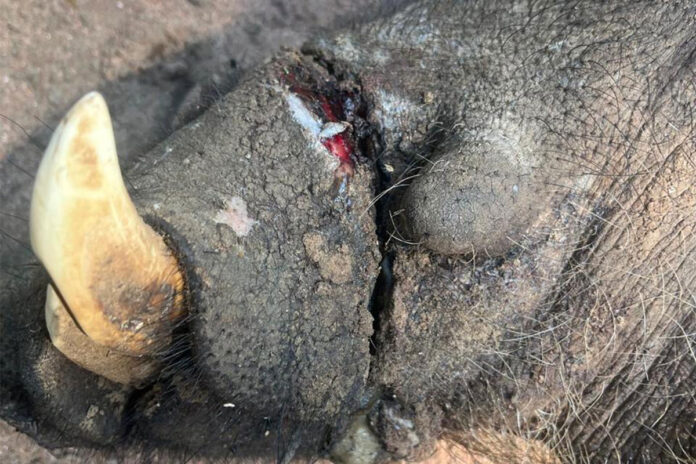
Botswana farmers are hoping a recent court ruling against four convicted poachers marks a turning point in the fight against wildlife crime.
Lennie Vermeulen, who farms at Waterloo Ranch in the Tuli Block and is a member of the Botswana Wildlife Producers Association, said the men were convicted of poaching two blue wildebeest on a farm two years ago.
Last week, they were each sentenced to three years’ imprisonment, with one year to be served and the remaining two years suspended. They were also ordered to compensate the owner for the animals they had killed.
“We hope this judgment will set a precedent for future cases and send a clear message that poaching is a serious crime with real consequences,” Vermeulen told Farmer’s Weekly.
Serious economic toll
Vermeulen’s hopes are shared by farmers across Botswana, many of whom say poaching has escalated dramatically over the past year.
According to Fanie Kotze, cattle manager at Lucerne Fields, many poachers use wire snares, which not only target wildlife but also trap commercial livestock.

“We patrol the farm every day looking for snares. In the past week alone, we found at least 30 and lost four head of cattle,” he said.
He noted that the increasing number of snares has forced farmworkers to spend more time patrolling fence lines and searching for traps than carrying out routine farming activities, adding significantly to the business’s running costs.
“Every hour spent looking for snares is an hour that could have been spent on productive farming activities.”
Kotze added that recently implemented foot-and-mouth disease (FMD) slaughter restrictions have compounded the problem, as farmers are unable to slaughter cattle that have been severely injured in snares to end their suffering.
Safety concerns
Another farmer, who asked to remain anonymous, said his family has been forced to hire a private security company after poachers began intimidating farmworkers.
“Our staff were threatened, and we realised we could no longer expect them to confront poachers on their own. Even now, we don’t allow anyone to work alone. They always move around the farm in teams of two or three for their own safety.”
The security company costs the farm about P42 000 (roughly R50 900) per month. Patrol teams use quad bikes to search roads, water points, and fence lines daily, but the size of the property makes it impossible to monitor every corner continuously.
Dwindling wildlife
The farmer said the impact of poaching has become heartbreakingly evident.
“When we bought our farm, we collected bakkie loads of bones from animals that had died naturally. Now we hardly ever find carcasses [of animals that have died from] natural causes. If we find anything at all, it’s usually the remains of animals caught in snares.
“If it’s wildlife, poachers sometimes remove only a hind leg. If it’s cattle, they often take only the prime cuts because that’s all they can carry.”
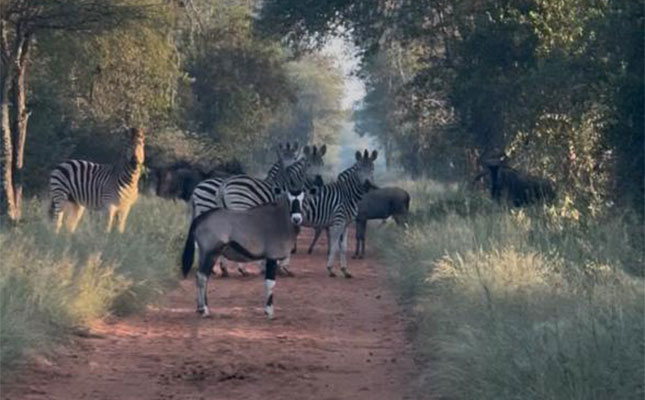
He added that populations of several species have been devastated.
“We used to have large herds of gemsbok, and now I think there’s only one bull left. The same has happened with the blue wildebeest and eland. The zebras have virtually disappeared, too. It makes you want to cry.”
In addition, he noted that giraffes, which had long escaped the attention of poachers, are now also being targeted.
From subsistence to organised crime
Andrew Freeman, chairperson of the Tuli Block Farmers’ Association, said poaching is “out of control” in the area.
While some incidents are still driven by poverty and demand for meat, he said the nature of the crime has changed significantly in recent years.
“The poor economy has fuelled unemployment, and the FMD crisis has contributed to meat shortages, so some people are poaching for subsistence.
“But there is increasing evidence that poached meat is being transported to urban markets, suggesting that organised groups are now operating in the area.”
Freeman added that wildlife theft is often not treated as seriously as stock theft, resulting in penalties that fail to deter offenders.
“While stealing a goat or a cow carries a penalty of up to five years in prison, up until now wildlife theft has often been treated far less seriously, partly because some people still believe that wildlife belongs to everyone rather than to the landowner who has invested in conserving and managing the animals,” he said.
The way ahead
According to Vermeulen, the cost and complexity of pursuing poaching cases has discouraged many farmers from reporting offences.
Reporting a case often requires travelling long distances to the nearest police station and, in some instances, obtaining DNA evidence to prove which species have been poached.
“Then you still have to spend days in court. Sometimes the accused doesn’t appear because they claim they have no money for transport, and while the police are willing to help, they simply don’t have the resources to bring every suspect to court.
“When I started farming here, there were very few antelope, and cattle were the primary enterprise. Everything we’ve built since then has come from investment – from genetics and game-proof fencing to introducing new species. I wanted to farm wildlife because I wanted to farm closer to nature,” he said.
Vermeulen noted that the consequences of poaching extend far beyond immediate financial losses.
“I would love to invest in better genetics and introduce more species, which would create opportunities for tourism and jobs and contribute to conservation. But at the moment, the risk of losing those animals to poaching is simply too high.”