Adverse sugar market conditions materially eroded RCL Food (RCL) group earnings, with steadier, efficiency-driven performance in the rest of the business unable to fully offset the decline.
RCL CEO Paul Cruickshank said in a statement that despite declining interest rates and stabilised food inflation, demand for food, including staples, has remained subdued, resulting in a highly competitive marketplace.
Underlying earnings before interest, taxes, depreciation, and amortisation (EBITDA) decreased by 14,6% to R1 185,8 million (December 2024: R1 388 million), largely driven by the sugar division, whose underlying result was down R251 million.
Other results included the following:
- Revenue down 1,9% to R13,3 billion
- EBITDA down 24,6% to R1 168 million
- Headline earnings down 30,1% to R681,8 million
- Headline earnings per share down 30,6% to 75,9c
- Underlying headline earnings down 21,9% to R694,8 million
- Underlying headline earnings per share down 22,4% to 77,4 cents
- Interim dividend per share down from 20c in December 2024 to 15c
Tariff shortcomings deepen strain on local sugar industry
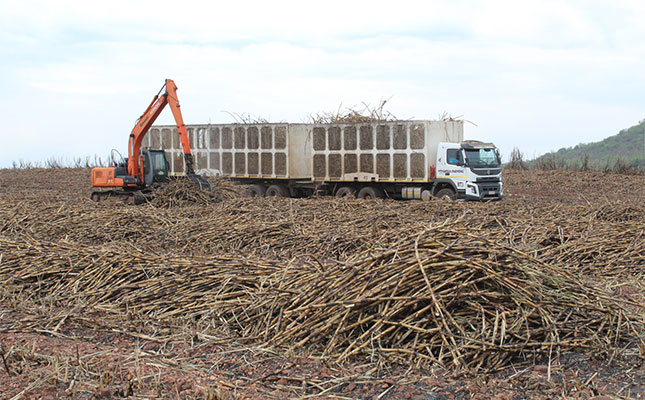
The results highlight the structural strain facing South Africa’s sugar industry. Cruickshank said the industry remains significantly affected by declining global sugar prices and deep sea imports.
“Increases in the sugar import duty implemented in August and December 2025 were calculated using the existing ineffective tariff formula. These increases remain insufficient to protect against volumes of subsidised imported sugar entering South Africa through opportunistic importers.
“This trend is displacing local market sales and increasing exposure for local growers and millers to the significantly lower-priced export market,” he explained.
Additionally, local market sales pricing remains unchanged, creating margin pressure as input cost increases were absorbed by RCL FOODS.
While this is not sustainable over the long term, Rob Fields, RCL’s chief financial officer, told Farmer’s Weekly that the company is hopeful that engagements with government will bring relief through the increase in the dollar-based reference price for sugar imports.
“At current global prices and import volumes, the sugar division’s earnings were slightly below the cost of capital. For any other participant in the sugar industry, it would have resulted in losses, but we have had three record years behind us. The other divisions have helped us ride out the storm in the sugar business. Profits are down, but still acceptable under the circumstances,” he said.
Fields reiterated that the weak performance in the sugar division was not a cost-of-production issue: “We are running our mills better than we ever have. The single biggest issue is that we need protection from sugar dumping.”
He confirmed that sugar remains a strategic core business for RCL: “There is no talk of restructuring, and we are comfortable with the portfolio as it stands.
“The sugar industry can be volatile, and our exposure means that we face greater risks when the industry experiences the kind of turmoil it is seeing now.”
Limited growth as competition heats up
The groceries business unit delivered a good underlying result with a 3,3% increase in revenue, while the baking division saw more subdued growth at 0,4%.
Pet food delivered an improved result compared with the prior period, driven primarily by higher volumes, although this was partially offset by higher production and distribution costs incurred as part of the focus on improving service levels.
Late last year, pet food production was temporarily halted at RCL’s dry pet food plant due to traces of salmonella being found in some batches. This reduced supply will affect results for the remainder of this financial year.
Field said that while there had been challenges in starting up production once more, the plant is up and running again and stock pipelines are being restored.
Despite lower volumes, the beverage division delivered better results due to focused efforts to drive a more profitable product mix and continuous improvement cost savings. Field noted that demand for mageu had declined since cash-strapped consumers were opting for lower-priced energy drinks.
The baking business unit showed little growth from December 2024, as volume declines were seen across the bread, buns, rolls, and milling categories. However, these were offset by good performances in the pies and speciality categories, despite marginally lower volumes.
Field explained that since consumers were under pressure and volume growth had been limited, eking out modest growth in this category was acceptable, though not ideal.
“Our brands are faring well in the market and our margins are holding up. Bread, however, remains under significant pressure due to competition in the market. There seems to be a race to the bottom in terms of prices among the big bread brands.”
Prospects
The prevailing macroeconomic conditions, marked by subdued consumer demand and confidence, are expected to continue.
While RCL had placed much emphasis on improving efficiencies to retain margins over the last few years, Fields said there is still room for growth in this regard and that, therefore, impairments or restructuring are not on the table.
“We have confidence in the improvements we have delivered to date, and there is still a healthy pipeline of more opportunities we can pursue.”
He added that the dividend cut was proportional to earnings and was not necessarily precautionary for the next six months.
“We need time to see how the big unknowns in the sugar division in particular will play out before we can pay a different level of dividends,” he concluded.