
When the South African Cereals and Oilseeds Trade Association (SACOTA) began preparing for soya bean exports to China in April, limited export supplies and strong domestic demand made a large shipment unlikely.
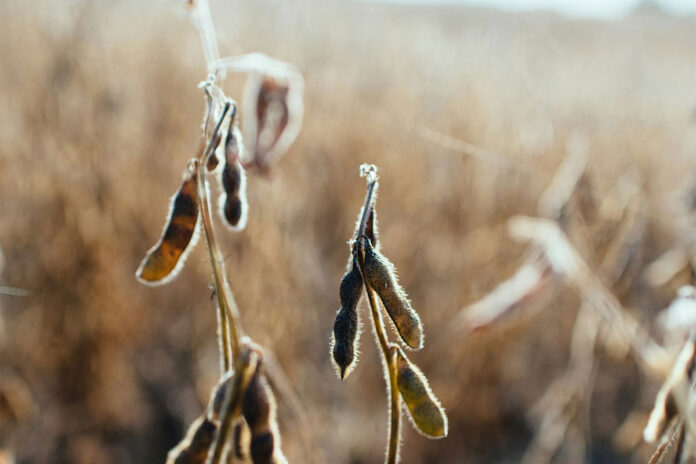
Late rainfall in the Free State and Mpumalanga, the main production areas, had delayed the soya bean harvest, leading to significant demand from local processors and only small quantities available for export.
In addition, as SACOTA pointed out in a statement, “the yellow maize export programme historically receives preference at the Port of Durban export terminals […] potentially limiting soya bean exports”.
Dr André van der Vyver, executive director of SACOTA, told Farmer’s Weekly that since the Chinese market opened for South African soya bean exports in 2022, all originating silos, export terminals, and traders needed to re-register to export to China annually.
Soya beans also had to be tested for certain plant diseases, with the documentation submitted to Chinese authorities. The process is carried out in accordance with the government protocol signed at ministerial level between the two countries.
SACOTA handles the process on behalf of the industry, collaborating with the national Department of Agriculture’s Directorate of Plant Health.
Nevertheless, one of SACOTA’s members, which wishes to remain anonymous for strategic reasons, began working on a large shipment to China, the world’s biggest importer of soya beans.

The trader subsequently secured a deal to ship 200 000t of South African soya beans to China in November. The last time South Africa exported soya beans to China was in 2023, sending a total of 147 000t in three separate shipments.
The export opportunity became even more attractive when, on 1 May, China temporarily expanded zero-tariff access to its market to another 20 African countries, including South Africa. The arrangement, which runs until 30 April 2028, follows China’s extension of zero-tariff access to 33 least-developed African countries in late 2024.
Previously, China levied a 3% import duty on South African soya beans, which added about US$15/t (roughly R242/t) to the price, according to SACOTA’s media release. With the duty removed, and shipping to China already US$12 to US$15/t (R193 and R242/t) cheaper from South Africa than from South America, local soya beans gained a price edge over Brazilian and Argentinian supplies at prevailing prices.
“It wasn’t one single factor that made the deal possible, but rather the combination of a number of factors. The zero tariff definitely contributed, and the trader would also have hedged prices and probably started buying up soya bean stocks for some weeks prior to the announcement,” Van der Vyver said.
Soon after the 200 000t deal was concluded, forecasts of a developing super El Niño contributed to an increase in local grain and oilseed prices, making further soya bean export deals less attractive.
“Amid expectations of El Niño causing smaller harvests in key production areas, investors and speculators started investing in agricultural commodities in the hope that the price would rise later,” Van der Vyver explained.
“This caused local soya bean prices to rise rapidly. So anyone who hadn’t started planning such a transaction in time would have missed the boat to export at all for the rest of the year, and possibly until the weather outlook changes significantly.”
A foothold in China
The 200 000t shipment due to depart Durban for China in November is small compared with China’s annual soya bean imports of around 115 million tons. However, Van der Vyver described it as a “much-needed boost for the local industry” and an important step towards securing future market opportunities.
“For an exporting country, it’s important to have one or two big buyers, because it brings you economies of scale and the ability to send more than one ship successively to the same region,” he said.
South Africa already exports to Southeast Asia, with Malaysia currently its biggest market in the region. Indonesia opened its market to South African soya beans this year, but both markets are relatively small.
Van der Vyver said repeat exports to China would keep South African logistics infrastructure geared towards the market and encourage the improvement of services throughout the chain.
“When you do once-off transactions, often all the players in the chain have to relearn the procedures to make it happen.
“However, these bigger transactions incentivise the whole logistics chain to make the necessary investments in harbours, terminals, and know-how,” he said.
SACOTA expects South African soya bean exports could reach 510 000t in the current season, including the latest 200 000t shipment to China. Deep-sea exports to Indonesia and Malaysia, as well as cross-border exports to Zimbabwe and Eswatini, are expected to continue. This would make it the second-biggest export season for soya bean on record, behind 2023, when South Africa exported 590 000t.