The Food and Agriculture Organization of the United Nations has chosen ‘Innovate today. Nourish tomorrow’ as the theme for World Food Day 2026. It highlights the need for practical solutions to improve access to nutritious food while protecting natural resources.
Better decisions through technology
Prof Moses Azong Cho, chief researcher and precision agriculture research group leader at the Council for Scientific and Industrial Research (CSIR), told Farmer’s Weekly that digital technologies could help farmers make better-informed decisions and adopt more innovative farming practices.
“The CSIR is advancing food security and climate resilience through digital agriculture technologies that help farmers make better, data-driven decisions,” he said.
One example is the CSIR’s Precision Agriculture Information System (PAIS), which uses satellite data to provide near-real-time information on soil and crop conditions.
Cho said the PAIS could help farmers optimise fertiliser and pesticide use, reduce production costs, and respond more effectively to drought and changing weather patterns.
The system’s crop growth monitoring and yield forecasting capabilities also allow farmers to plan harvesting, storage, logistics, and marketing well in advance. It is already being used by the Eastern Cape Rural Development Agency to support farmers with data-driven decision-making, Cho noted.
“The technology is already beginning to show tangible impacts in improving resource-use efficiency, farm management, and overall decision-making within the farming community,” he added.
However, adoption remains uneven, particularly among smallholder and emerging farmers. Cho said barriers included limited digital literacy, poor connectivity, restricted access to devices, and difficulty interpreting data-rich information.
Innovation must improve access
Nazeer Sonday, an organic vegetable farmer in Cape Town’s Philippi Horticultural Area (PHA) and chairperson of the PHA Food & Farming Campaign, said innovation must be judged against the problems the food system is meant to solve.
“The primary example really is the hunger crisis and the child stunting crisis we face in the country,” Sonday said.
He stressed that this did not mean farmers should be expected to give food away. Instead, the broader food system should enable all South Africans, including the unemployed and vulnerable, to access food.
“The whole food system is supposed to be premised on the fact that it can deliver access to food for everybody in the country,” Sonday added.
Innovation beyond technology
Shelly Fuller, conservationist and landscaper at Return on Ecology, promotes regenerative farming practices in the Western Cape.
She said that agri-innovation should not be viewed only through a technological lens.
“Innovation doesn’t always need to be something new and shiny. It can also mean improving an existing process, a system, or a way of working so that it creates better value, higher-quality production at lower cost, greater efficiency, improved access, or better social and environmental outcomes,” Fuller explained.
Innovation can also prevent food loss
While smarter production can help farmers use resources more efficiently, innovation is also needed to ensure that more of the food already produced reaches people.
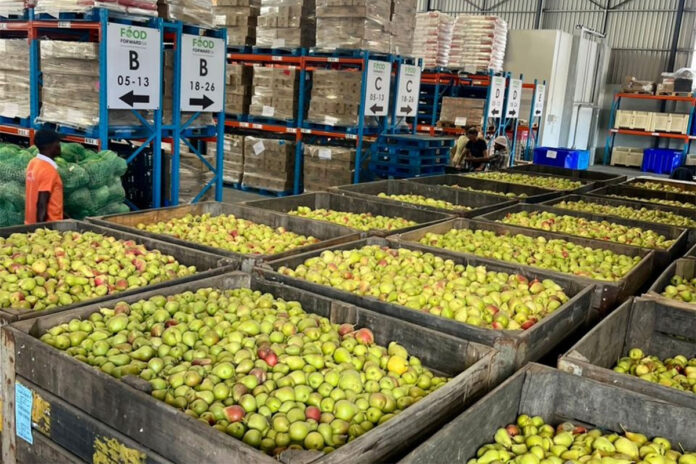
Andy Du Plessis, managing director of FoodForward SA, said that more than 10 million tons of food are lost or wasted in South Africa every year, while more than 18 million people experience food insecurity and malnutrition.
Much of this loss occurs before food reaches consumers. According to Du Plessis, 8% is attributed to on-farm activities and primary processing, while a further 19% is lost through production, postharvest handling, and storage.
“If we were able to recover 80% of what was wasted, we could eradicate hunger and malnutrition altogether,” Du Plessis noted.
FoodForward SA’s digital platform, FoodShare, demonstrates how innovation can help close the gap between available food and communities in need. It connects beneficiary organisations with participating retailers, enabling them to collect edible surplus food from nearby stores and record collections via smartphone.
“When we recover quality food before it goes to waste, we can turn an existing resource into a reliable source of nutrition, while also addressing the climate impacts of food loss and waste,” Du Plessis said.
Innovation further upstream is equally important. Du Plessis pointed out that farmers and other food businesses could improve demand forecasting, identify surplus produce earlier, and establish clear internal ‘donate by’ triggers.
He added that, as the World Food Day theme suggests, nourishing tomorrow will depend not only on producing food more efficiently but also on acting today to prevent edible surplus from going to waste.
For Sonday, the purpose behind the World Food Day theme is straightforward.
“Isn’t that what food producers are supposed to do? They’re supposed to feed people,” he said.