
“The world crop is up 20% from last year, but demand has not kept up,” Alex Whyte, director of Green Farms Nut Company, told Farmer’s Weekly.
“Volumes sold this year are similar to those sold last year. It’s not that the market is dead; it just hasn’t kept pace with volume growth.”
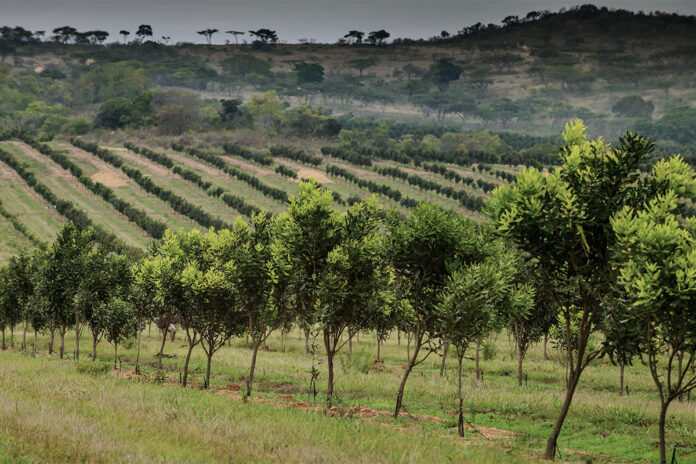
The rapid rise in volumes is the result of trees planted between 2015 and 2022, which are now starting to bear nuts.
Shane Hartman, CEO of Global Macadamias, noted that international demand and consumption were slower than expected.
“There are multiple challenges that are having an effect on demand, including trade wars and reduced consumer spending in key markets. Consumers appear to be holding onto disposable income. The geopolitical situation has really had a fundamental effect on consumer economics,” he explained.
Macadamia Sales Market (MSM) stated in its August market report that an inventory overhang had developed in EU markets, where record macadamia imports last year had left Europe well stocked for much of 2026.
“The situation has led buyers to focus on short positions as they experience unprecedented security of supply in 2026.
“In the US, substantial frontloading occurred ahead of the implementation of new import tariffs in 2025. There is a sense of abundant supply among buyers, but also an awareness that the current nature of demand is not able to fully absorb it,” the report stated.
Consequently, prices are decreasing by around 8% in US dollar terms, depending on the style and crack-out percentages. Since the rand has been trading stronger against the dollar than was forecast at the start of the year, farmers are also losing out on the exchange rate.
Hartman lamented that lower prices were inevitable: “It’s the economics of oversupply. The only way to move stock is to find a price point that stimulates demand. Prices will likely decline until markets rebalance and the excess stock clears out.”
Whyte expects the low prices to be an ongoing trend for at least the next four years as more trees mature and higher volumes come onto the market.
With China now claiming the top spot in terms of production, having overtaken South Africa earlier this year, the viability of this market has dwindled, placing further pressure on demand.
Whyte said the large Chinese volumes were being used as a bargaining tool by buyers in that country.
“The buyers now expect South African product to land at the same price as the Chinese product, which is not feasible.”
Despite the low prices, he still expects an ample supply of South African nut-in-shell (NIS) to be sent to China.
“But there will also be processors that would rather crack those nuts and channel them to kernel markets. The risk is that the kernel markets will become increasingly flooded.”
Catching up to a missed opportunity
Increasing demand to meet supply is fundamental to attaining sustainable pricing. However, the industry is grappling with how to grow demand and finance the marketing campaigns needed.
Whyte noted that the global macadamia industry had not done much to promote consumption.
“The processors focus on business-to-business marketing since they don’t sell directly to consumers. But what we now need is promotion to consumers. Individual processors don’t have the finances to fund the kind of consumer marketing campaigns we need.”
He noted that macadamias did not have a consumer brand that was championed, as was the case with many of the other nut categories.
“It raises the bar for the whole industry. It is a missed opportunity that the industry has not risen to this challenge, but it takes a lot of time and money to establish a brand. It doesn’t happen overnight, and until it does, we are at the mercy of supply and demand,” Whyte said.
Responding to the need for greater marketing, Macadamias South Africa (SAMAC) is set to launch a commercial arm that will focus on demand creation and premium positioning.
Whyte explained that SAMAC would continue its research division, but it had recognised the need to focus on consumer marketing.
“We can have the best research in the world to boost quality, but if farm-gate prices aren’t sustainable, then no one will be farming in five years’ time,” he added.
MSM reported that Australian-origin pricing had remained above other observed origins. Whyte said that while marketing efforts that branded Australian macadamias as premium played a role, the greater effect came from more favourable tariffs.
“Australia can export to countries like South Korea and India at 0% tariffs. If South Africa were to export to those markets, we would need to reduce our prices by 30% to compete. In countries without tariffs for South Africa like the EU and US, the price difference is less pronounced,” he explained.
Hartman emphasised the need to reduce tariffs for South Africa. “India represents a sizeable market of 1,4 billion people. It would be the ideal market to shift NIS to, now that China is becoming self-sufficient. But at the current 30% import tariff, the prices don’t work.”
Uncertain times ahead
MSM noted that suppliers had reacted to the changing realities by lowering offers during the first half of the year.
“Looking ahead, the direction of the second half of the year is not yet clear. It depends on buyers’ response to lower prices – especially in the US where the tariff issue now appears settled – and the depletion of EU inventories, which will bring buyers back to the market ahead of the festive season.
“Meanwhile, the ultimate performance of the Chinese harvest, which kicks off in earnest in September, will influence Asian buyers in the same way,” the report stated.
Hartman noted that the industry was at a critical crossroads, where macadamias could either maintain their premium positioning, or become a commodity where price wins.
“Marketing and demand generation will tip the scales in our favour and hold macadamias at a price that is feasible for growers. We need our Dubai chocolate moment,” he added.