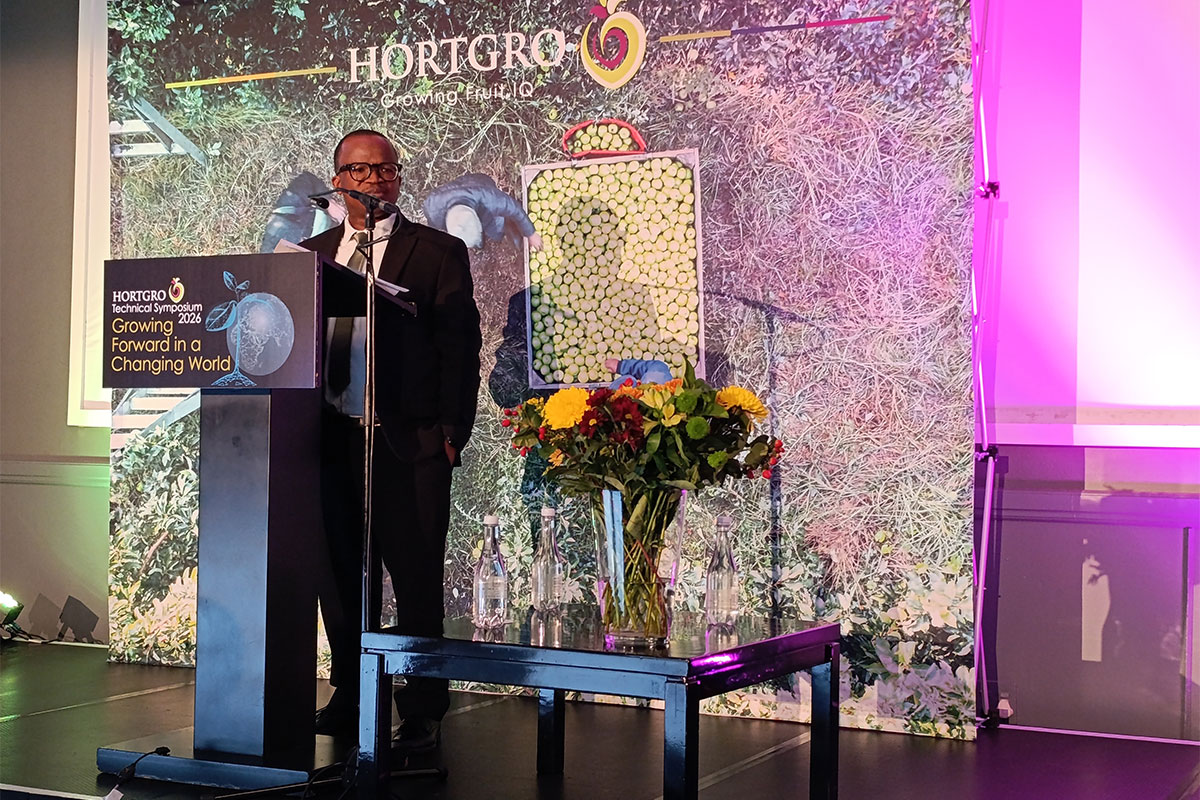
This was according to Wandile Sihlobo, chief economist at Agbiz and Presidential Envoy on Agriculture and Land, who spoke at the Hortgro Technical Symposium in Somerset West, Western Cape, last week.
He said that while agriculture has demonstrated strong growth potential despite persistent structural constraints, progress has been slowed by the failure to release state-owned farmland and fully implement policies aimed at expanding commercial farming.
Sihlobo argued that South Africa already has the framework needed to drive transformation and growth but lacks effective execution.
“The route to actually get there has already begun. We don’t need more study groups and plans; we need implementation,” he added.
He pointed to the National Development Plan (NDP), published in 2012, which envisages significant agricultural expansion and the creation of one million jobs across the agricultural value chain by 2030. At the time, the sector employed about 720 000 people, a figure that has since risen to about 960 000.
While this represents meaningful growth, Sihlobo said the sector could have achieved far more if key NDP conditions had been met, particularly the release of state-acquired farmland and improved support for emerging farmers.
He noted that the state purchased about 2,5 million hectares of agricultural land at market value between 2006 and 2019, but much of it has still not been released for productive use.
Enlarging the agricultural ‘PIE’
Sihlobo said land reform should prioritise expanding the number of successful commercial farmers rather than redistributing existing production without adequate support systems.
“We are not talking about taking from the white farmer and passing it to the black farmer. We are talking about growing the agricultural ‘pie’ for everyone. However, increasing the number of black commercial farmers is critical for the long-term sustainability and political stability of the sector,” he said.
According to him, moving more farmers from low-productivity to high-productivity agriculture will require stronger partnerships, technical support, and improved market access and financing.
He cautioned against viewing commercial agriculture as a sector dominated by wealthy producers, noting that only about 15 000 farming units generate annual income exceeding R3 million, while many family farms operate at significantly lower levels.
“What is key is how people assist those farmers. Regardless of whether they are Indian, white, or black, they are all South African farmers and they create jobs. We want the jobs and we want the products.”
Learning from the past
Sihlobo also called for lessons from earlier agricultural development programmes to be incorporated into modern land reform efforts.
He said that between the 1930s and 1950s, government provided coordinated long-term support to new farming entrants through financing, infrastructure, and technical assistance.
“The state was much more rigorously involved in supporting new farmers, and it was a long-term, systematic project.”
Looking ahead, Sihlobo said agriculture remains one of the few sectors capable of simultaneously addressing unemployment, poverty, and food security.
However, he stressed that achieving government’s ambitions will require faster land reform implementation, improved logistics, stronger biosecurity systems, and continued investment in export markets.
Long-term support is critical
Speaking at the symposium, Dr Khotso Mokhele, chairperson of the Hans Merensky Legacy Foundation, cautioned that land reform outcomes depend not only on the release of land but also on the level of post-settlement support provided to beneficiaries.
He said a key weakness in South Africa’s land reform programme is the assumption that communities will automatically be able to organise themselves and manage restituted land effectively.
He noted that this challenge is particularly acute where communities had been displaced decades earlier and are expected to reconstitute themselves without facilitation or sustained institutional support.
“By the time government opens a window for communities to claim land, many of them are no longer unified communities,” he explained, referring to cases where restitution projects had become bogged down in disputes over beneficiary lists and governance structures, despite successful land claims and funding allocations.
Mokhele said inadequate support for governance, institutional development, and commercial management had undermined many restitution projects.
“The danger [that comes with] land restitution is that we may actually have less productive land, because land that is successfully claimed can move from productive to unproductive if communities cannot get their acts together,” he concluded.