
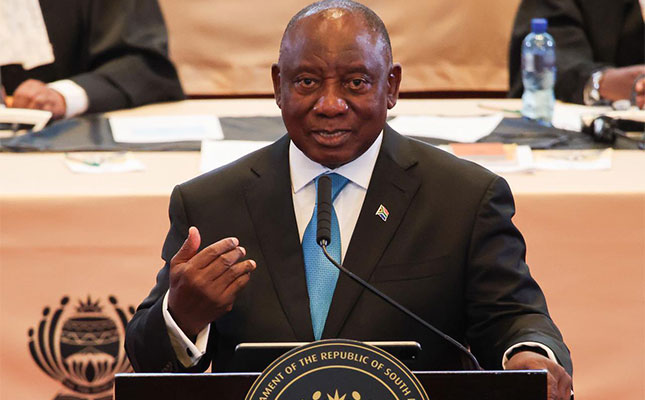
Dawie Roodt, chief economist at the Efficient Group, said SONA 2026 was one of the better speeches Ramaphosa had delivered, since it identified most of the urgent issues facing the country and gave very practicable solutions.
“We received a very positive overview of the economy, all of which was accurate. We are growing, but at 1%, it’s hardly something to get excited about.
“However, listening to the president, my biggest concern was that while he has the solutions, will those who got us into the mess get us out [of it]? I doubt it. The reason the economy is not doing well is because the government has run it into the ground.”
Panellists agreed that, since the National Budget, to be announced on 25 February, is likely to be similar to last year’s, implementing the solutions will prove challenging without an increase in funds. However, an increase requires a change in policy direction.
Sanisha Packirisamy, chief economist at Momentum, noted that the recent uptick in commodity prices is not enough to tackle South Africa’s challenges.
“We don’t have the budget. We need to start including the private sector in key socio-economic reforms to bring the funding and the know-how, both of which government does not have. Private-sector participation is therefore key to lifting socio-economic metrics.”
She noted that the private sector has demonstrated a healthy appetite for investing in projects that drive infrastructure growth. However, greater investment will depend on the terms and conditions of participation and the policies governing the business environment.
Roodt added that South Africa’s economy is based on income derived from taxpayers, which is not expanding fast enough.
“SARS [the South African Revenue Service] has become exceptionally aggressive over the last few years and is trying to squeeze every last cent out of those who are paying tax. The tax base won’t expand unless we get the right economic policies in place.”
Lamenting the ‘depleted’ state of the economy, Claude de Baissac, CEO of Eunomix, said South Africa needs to increase employment by incentivising businesses to hire people.
“The greatest asset in South Africa is its vast underutilised population. Put them to work. Do away with collective bargaining, and lower the cost of hiring and firing people,” he explained.
However, he said he believes government is against labour-intensive systems, since high unemployment creates a population that is dependent on social grants and therefore the government.
Discussing the role of trade, Packirisamy said that without growth in this arena, South Africa will not be able to ramp up economic growth and achieve the sought-after 3%. Yet, foreign policy in South Africa is lagging behind the global trend.
Referring to Canadian Prime Minister Mark Carney’s speech at the World Economic Forum in Davos in January, in which he noted that trade routes across the world are being reorganised, creating opportunities for the middle powers to emerge stronger, Packirisamy said South Africa is not in a position to capitalise on this opportunity.
“We don’t have enough people in strategic positions to negotiate trade access. We are not building the relationships we need to boost trade.”
Other factors that are crucial to achieving the growth target are improving the operating environment and providing policy certainty. Packirisamy pointed to the current water crisis and lack of service delivery from local government as hindering business growth.
“While electricity supply has stabilised, South African businesses have to compete with imported products from countries where electricity costs and labour are far cheaper. Our currency strength also does not help exporters, although consumers are benefitting from cheaper imports,” she explained.
Panellists concluded that unless government provides greater policy certainty and a favourable operating environment, businesses will be wary of investing in new infrastructure or hiring more staff. This, in turn, will impede economic growth and reduce South Africa’s ability to finance its reforms.