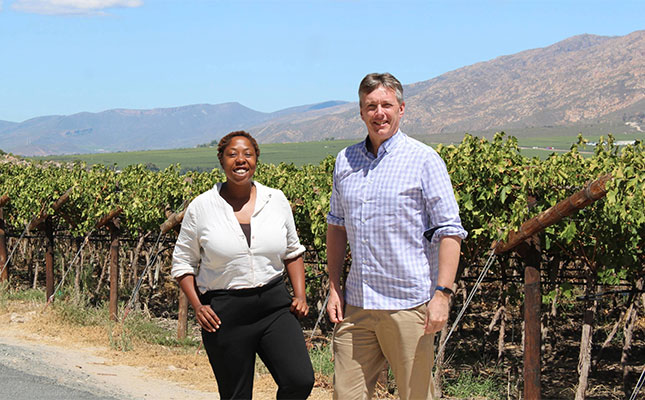

Speaking to Farmer’s Weekly, Alex Whyte, director of Green Farms Nut Company, said the industry entered 2025 with high hopes of continuing the price recovery after the COVID-19 pandemic had sent prices plummeting.
“But then [US President Donald] Trump’s Liberation Day tariffs took the wind out of our sails. Sales to the US were very subdued last year and, as a result, the industry has carryover stock of style 4 kernels.”
He explained that the US is the main market for style 4 macadamias, adding that these half-nuts will again struggle to perform this year as the tariffs remain uncertain, affecting the overall prices farmers receive for their crops.
Over the last six weeks, the US import tariff has changed twice, first when Trump extended the African Growth and Opportunity Act by one year, and again at the end of February when he announced that all countries would be subjected to a 15% import tariff, later reduced to 10%.
“There’s just no certainty as to where the tariffs will land one day to the next. This has made US buyers hesitant, and the risk is that macadamias become so much of a headache that they are delisted from products,” Whyte added.
However, South Africa received encouraging news in February regarding its export duties to China. Under the China-Africa Economic Partnership Agreement, export duties on South African macadamias will be reduced from 12% to 0%.
Whyte said this could encourage China to substitute in-shell Australian macadamias with South African ones.
“This could alleviate some pressure on the market. The removal of the tariff means prices could be more competitive than last year’s low prices.”
Shane Hartman, CEO of Global Macadamias, added that while the announcement was welcome, it was not a silver bullet for the industry.
“We are still awaiting details on the rollout mechanism and how the tariff relief will practically play out during the season. It provides more favourable marketing options, but processors need to be strategic in how they market the nuts based on cultivar and style spread to maximise returns for growers,” he explained.
Matching supply with demand
While final figures are still being processed, Macadamias South Africa (SAMAC) estimates the 2025 crop at 81 660t dry-nut-in-shell (DNIS). This is 6,38% lower than in 2024, bucking the expected trend of double-digit growth in the industry.
The estimate for 2026 has not yet been released, but Hartman expected only a slight increase from last year: “There were regions that had storm damage, while others are expecting bumper crops. Overall, it won’t be a big jump from last year and is unlikely to exceed 90 000t DNIS.”
Global stocks are set to increase as Australia, the world’s second-largest macadamia nut producer after South Africa, is expected to harvest a ‘normal’ crop.
“Last year, Australia suffered significant storm damage, which reduced the crop. The harvest should, however, be back up to around 60 000t DNIS this year,” Hartman said.
Macadamias have long been praised as a superfood that is well-positioned to meet the increase in health-focused eating. Whyte said global demand for macadamias is increasing, albeit slowly.
“It’s not double-digit growth. Most of the world still doesn’t know what a macadamia is, so there is a lot of room for growth, but it does not happen overnight,” he explained.
Last year, SAMAC launched a campaign in South Africa to promote macadamia nut oil. Whyte noted that the country imported around 6 000t of olive oil per year, yet macadamia oil makes for a suitable replacement.
“Initially, the industry was concerned that nut theft would increase if demand rose in South Africa. But no one will steal nuts to press them to oil, so it was a good avenue to take to grow the market in South Africa. So far, anecdotal evidence suggests that demand for macadamia nut oil is picking up,” he added.
This year, the campaign was extended to include kernel. Macadamia nuts and oil are currently featuring in the latest season of the cooking competition MasterChef South Africa.
Whyte said that while the South African market is small, current demand stands at around 1 000t of kernel.
“We have about five million middle-class consumers in South Africa who can afford macadamias. There is also a growing micro-industry that is being created around value-added products like milks and chocolates.
“We are the world’s largest producer of macadamias, and South Africans should at least be as passionate about them as biltong.”
Prices steady, but exchange rate reduces margins
The biggest challenge facing marketers this year is the uncertainty created by the US tariffs, since finding alternative markets that can absorb large quantities of style 4 macadamias is not easy.
Hartman said demand for whole kernel is strong, which could help balance out overall prices farmers receive for their crops this year.
“It is still too early in the year to have a clear picture of where prices will land. Once China has concluded its New Year on 3 March, we will have a better idea of inventory levels and demand.”
Whyte, however, noted that while prices will likely be similar to last year’s in US dollar terms, the stronger rand will mean that farmers will effectively see a drop of about 15% on-farm income.
Pricelists for the 2026 crop will be released in mid-March.