
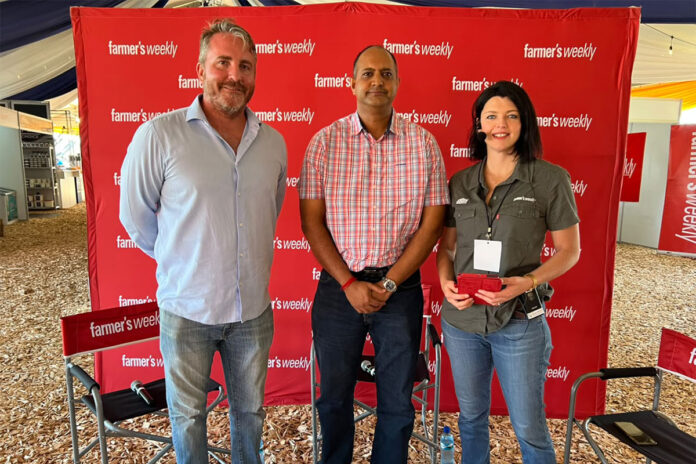
Speaking during a panel discussion titled ‘Beyond sugar: finding new value in South Africa’s sugar cane’, hosted by Farmer’s Weekly at the Royal Show in KwaZulu-Natal on Thursday, Brad O’Neill, sugar cane farmer and co-owner of craft rum distillery Sugar Baron, warned that diversification would mean little if farmers could no longer afford to remain in business.
“We need stability in the industry before we can even explore diversification and value addition. We need to reduce imports and increase the import tariff to protect the local industry from dumping, because we first need to ensure that the farmers are still there before we can invest in diversifying uses for sugar,” he said.
Sugar cane farmer Pratish Sharma agreed that protecting the domestic market was critical, but emphasised that investment in milling infrastructure was equally important.
“There has been huge underinvestment in our sugar mills over the last 15 years, which has put them on the back foot. For any business to thrive, it has to invest and strive to be better than it was the year before,” he said.
Sugar tax under fire
Both panellists questioned the effectiveness of the Health Promotion Levy, commonly known as the sugar tax, arguing that there was no conclusive evidence that it had achieved its intended health benefits.
O’Neill said sugar consumption in South Africa had increased in recent years despite the levy, raising questions about whether it was achieving its purpose.
Sharma added that while studies had examined the levy’s impact on obesity and non-communicable diseases, the evidence was not conclusive.
“In our view, [the levy] should be abolished as soon as possible.”
He added that the revenue collected through the levy went to National Treasury rather than being returned directly to the sugar industry.
According to Sharma, discussions with government about reducing or repealing the levy were continuing. He said the industry had succeeded in preventing annual increases, while government appeared increasingly receptive to concerns about the levy’s impact on livelihoods.
Imports erode profitability
Sharma explained that every ton of imported sugar displaced a ton of locally produced sugar in the local market. He added that the reliance on imported sugar reduced revenue across the local industry, affecting both growers and millers.
Although the recent increase in the dollar-based reference price to US$785/t provided some relief, O’Neill believed it was insufficient to protect the industry over the longer term. He warned that imports could begin rising again within six months unless further protection was introduced.
Sharma cautioned, however, that government needed to balance the industry’s need for protection against commercial sugar buyers seeking cheaper imports.
Diversification needs investment and markets
While diversification into bioethanol, bioplastics, electricity generation, and other sugar cane derivatives offered opportunities, both panellists cautioned that developing commercially viable markets would take time and considerable investment.
Sharma highlighted sustainable aviation fuel as a particularly promising opportunity, given moves internationally towards mandatory biofuel use in aviation.
He said enabling legislation from government could help unlock this market within the next few years.
O’Neill’s experience with Sugar Baron illustrated the challenges of diversification. Despite establishing a premium rum brand using fresh sugar cane juice, less than 2% of his farm’s production went into rum manufacturing.
“Establishing a brand and then having to market and sell it yourself is very different from sending cane to the mill and receiving payment at the end of the month. Our biggest challenge is marketing and selling the product,” he said.
Sharma added that growers also needed to reconsider how revenue from new downstream products would be shared between farmers and millers.
He argued that the most effective way to support small-scale growers was to create conditions in which the entire industry could prosper.
“If the industry thrives, everyone – from the small-scale grower to the large commercial farmer and the mills – will thrive,” Sharma said.
O’Neill also appealed to consumers to support South African sugar producers by checking product labels and choosing locally produced sugar rather than imported alternatives.