
Shamiel Randeree, managing director of snacks, treats, and beverages at Tiger Brands, said the company is providing local citrus farmers with a reliable domestic market at a time when, despite strong export demand, global market conditions remain unpredictable.
Speaking to Farmer’s Weekly, he said that Tiger Brands had previously been forced to import around 35% of its orange requirements because local supplies had tightened as global shortages increased demand for South African citrus.
Randeree explained that one of the factors contributing to the supply shortage was citrus greening disease in major citrus-producing countries such as Brazil.
“This increased demand for South African fruit meant that more oranges were available for export markets than for local processors.”
He added that South African citrus fruit is highly sought-after around the world.
“South African citrus is in high demand in a globally competitive market, making reliable local supply increasingly important. By sourcing 100% of our orange requirements from South African growers, we are reinforcing our commitment to local procurement, providing farmers with stable domestic demand, and strengthening South Africa’s agricultural value chain while reducing reliance on imports.”
From orchard to Oros
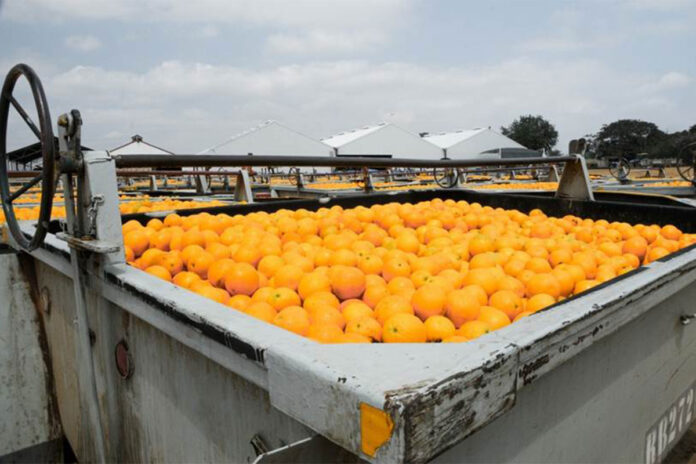
According to Randeree, Tiger Brands is the largest user of orange concentrate in South Africa, using about 45 000t of oranges every year, equivalent to about 275 million individual oranges, to produce approximately 3,5 million litres of the orange concentrate used to make Oros squash.
From May to July, the company sources Valencia and navel oranges from producers in Limpopo, Mpumalanga, and the Western Cape. The fruit is then processed into concentrate before being transported to Tiger Brands’ manufacturing facility in Roodekop, Gauteng, where between 75 000ℓ and 100 000ℓ of concentrate are delivered every week.
Randeree said securing Tiger Brands’ full orange requirement locally demonstrates the strength of its long-standing relationships with South African growers.
According to him, the company’s role as a dependable domestic buyer has enabled producers to invest in water infrastructure, solar energy, and other efficiency improvements while creating jobs in farming communities.
“Strong partnerships between food manufacturers and agricultural producers are essential to building a resilient food system and supporting the long-term success of farming businesses and rural communities.”
More produce will be locally available
Tiger Brands’ decision to source all of its oranges locally comes as South Africa’s citrus industry continues to expand, increasing the supply available to both domestic and export markets.
According to Dr Boitshoko Ntshabele, CEO of the Citrus Growers’ Association of Southern Africa, more fruit is expected to come into production in the coming years, making more available locally.
“The production growth trajectory is still the same. More fruit will be coming off the trees over the next few years. This creates the opportunity, if it is matched with improved market access, to create tens of thousands of new jobs locally.”
He said this also highlights the importance of securing a mix of export and domestic markets capable of absorbing the industry’s growing production.
However, Ntshabele added that growers continue to operate in a challenging environment, making local support all the more crucial.
“Our growers continue to face challenges, including unpredictable prices and market dynamics, rising input costs, as well as market access issues such as high tariffs and unscientific plant health measures.”
He concluded that dependable domestic buyers provide valuable certainty alongside export markets, allowing farmers to diversify their sales channels while reducing their exposure to volatile international markets.