
Latest articles

SA veldfires contribute little to global warming
The effects of veldfires on the atmosphere and climate aren't straightforward - and a recent study of South Africa's veldfires yields some surprising results, writes.
Quantifying what nature gives for free
The World Bank has launched a new programme that aims to put a value on a country's ecosystems in the same way GDP is measured.
Are disease-resistant sheep less fertile?
Researchers have discovered an odd relationship between disease-resistance and fertility in Soay sheep. Roelof Bezuidenhout reports.
Getting the most out of your glyphosate product
Glyphosate-based broad-spectrum systemic herbicides are invaluable in most farming enterprises. But follow simple guidelines to avoid sub-optimal and economically wasteful results. Lloyd Phillips reports.
New environmentally friendly ‘styrofoam’
An ultra-light biodegradable styrofoam substitute may put an end to plastic pollution and overburdened landfills, writes Alan Harman.
Healthy monola set to be a winner
With consumers growing ever more health-conscious and the food industry under pressure to get rid of "bad" cooking oils, this new speciality canola couldn't have been launched at a better time. Demand is only likely to increase, and so will farmers' bottom line. Kobus van Tonder reports.
New colour solution for table grapes
Achieving good colouration in table grapes is an important marketing tool, but very warm temperatures in some of South Africa's table-grape-growing regions hamper this. Research presented at the International Table Grape Symposium suggested a new growth regulator can encourage stronger berry colour in table grapes. Denene Erasmus reports.
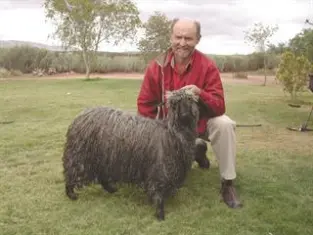
Is this the first blackgora?
While mohair purists advocate only pure white fibres, Roelof Bezuidenhout discovers a rare black specimen of fine quality.
Controlling bovine viral diarrhoea
Effectively controlling Bovine
viral diarrhoea virus (BVDV) in cattle herds takes an integrated farm biosecurity system. This includes keeping farm fences in good condition and limiting the movement of unauthorised people and cattle on and off the farm. But a pillar of any system should be a comprehensive vaccination programme.
Evergreen agriculture is the future of farming
Scientists have called for radical transformation of the agricultural sector to cope with climate change and food security, writes Alan Harman.
Sun spots behind droughts?
Arguments about CLIMATE change have been dominated by the role greenhouse gas emissions play, but the old sunspot theory is regaining lost ground. Will Alexander, a retired professor from the Department of Civil and Biosystems Engineering, University of Pretoria, insists there's a link between solar activity, climate and drought.
Keep your ammo away from ammonia
Storing household cleaning agents incorrectly can cause defects in ammunition, reports Roelof Bezuidenhout.
Issue date:
Issue date:
Bad news for critically endangered giant sable
Despite looking almost identical, a large population of sable antelope found in western Zambia do not, to the dismay of conservationists, belong to the same subspecies as the critically endangered giant sable of central Angola, genetic research at Stellenbosch University revealed. Denene Erasmus reports.
Spray herbicides more effectively
To apply herbicides and combat weeds efficiently, crop farmers must select, maintain and manage their sprayers and nozzles with care. Grant Orsmond of TeeJet Technologies spoke to Lloyd Phillips on how to get the most out of your spraying equipment.
New Biopesticide targets ticks
Concerns over long-term use of chemical pest control has popularised biopesticides. But none targeted ticks, until now, writes Alan Harman.
Farmers should fear frog losses
As frogs are reliable bio-indicators of the health of an environment or ecosystem, farmers should be worried about a decline in frog populations on their farms. Lindi van Rooyen investigates.
The giraffe now an endangered species
South Africans are used to seeing giraffe in parks and reserves, but the reality is this mega-fauna is under threat. Roelof Bezuidenhout reports.
Zinc deficiencies hinder optimal yields
In South Africa, about 42% of agricultural land suffers zinc deficiencies, lowering crop yields, writes Lindi van Rooyen.
What to remember when choosing a cover crop
Cover crops can improve soil and crop health, says Agricol's KZN sales manager and agronomist Dustin Beckerling, who gives Lloyd Phillips some pointers on selecting appropriate cover crops.
Test tube or artificial insemination?
Dairy farmers wanting to increase the number of calves and the percentage of heifers born on their farms should consider in-vitro fertilisation as opposed to artificial insemination, reports Alan Harman.