
Diversification and crop rotation are essential for ensuring long-term sustainability among producers, with the need for crops that can integrate seamlessly into practical farming cycles.
Piket Implements recently participated in a trial exploring hemp as a potential alternative, specifically examining its suitability for fibre production within the Western Cape.
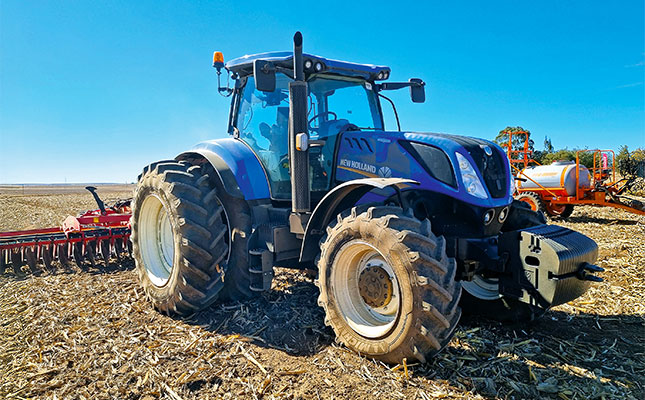
With advancements in technology and new industrial applications, hemp has experienced a resurgence and is increasingly regarded as a promising future cash crop option for producers. By adapting machinery traditionally used in the wheat industry, Piket Implements leveraged their expertise in developing equipment for field cash crops to look at the possibility of adapting current equipment for the use of hemp production.
Hemp needs about 500mm to 700mm of water per season, making it ideal for a wide range of South African regions. It is important to maintain consistent moisture, especially during germination and early vegetative growth.
Hemp requires nitrogen (N), phosphorus (P), and potassium (K) in relatively high amounts, with nitrogen being the most important. Typical applications include 70kg to 120kg of nitrogen, 30kg to 50kg of phosphorus, and 70kg to 100kg of potassium per hectare.
Trials
In small-scale planting trials, like the one carried out by Piket Implements, weed control was managed through mechanical weeding, which required sufficient spacing to allow workers to move between the hemp rows.
For larger commercial operations, skipped rows remain necessary to facilitate weed management and the application of fungicide sprays. Carel van Niekerk Jr of Piket Implements emphasised that effective weed suppression strategies must be carefully considered when sowing hemp.
For fibre production, planting density is typically set at 20 to 40 plants per square metre, a level that both suppresses weeds and encourages strong stem growth, the primary component harvested for fibre. In the trial, this translated to approximately 50kg of seed per hectare. To achieve this, a 12-row Piket Fine Seed Planter was adapted to follow a seeding pattern of two open rows, two closed rows, four open rows, two closed rows, and finally two open rows. This alternating arrangement created skipped rows that allowed for weed cleaning between plants using a hoe.
On-site improvisation was required, with regular box tape and cardboard used to close off seeding units. The seed performed best on a broad number 4 setting of the 10-groove Piket Implements seed meter, which proved effective given the small seed size and the importance of efficient seed use due to cost. Seeds were planted at a depth of 2cm to 3cm, ensuring optimal germination.
Reflecting on the trial, Van Niekerk noted that while the adapted planter was functional, future efforts should focus on purpose-built hemp planters rather than modifying existing wheat and maize equipment. Hemp’s growth characteristics and density make specialised machinery essential for efficient planting and effective disease control.
The substantial growth and dense canopy of hemp plants make disease management particularly challenging beyond the early stages, when the crop is most vulnerable to weed competition and fungal infections. Consequently, planting density and row spacing are of critical importance, as they enable early detection and effective control measures.
Producing hemp
For fibre production, hemp plants are typically harvested 70 to 90 days after planting, at the onset of flowering. At this stage, the stalks are cut and left in the field for up to three weeks to undergo retting, a natural process in which the bark loosens from the stem and fibres separate through enzymatic and biological breakdown. Although single-bladed bar cutters can be used, the use of multi-blade bar cutters assist in easing baling of the stalks. During retting, rotary rakes are recommended for turning the stalks, which facilitates drying and forming of windrows to prepare the material for baling. Once the stems reach a moisture content of 12% to 16%, they can be baled and transported for processing.
Average stalk yield for producers can be up to 12t/ha.
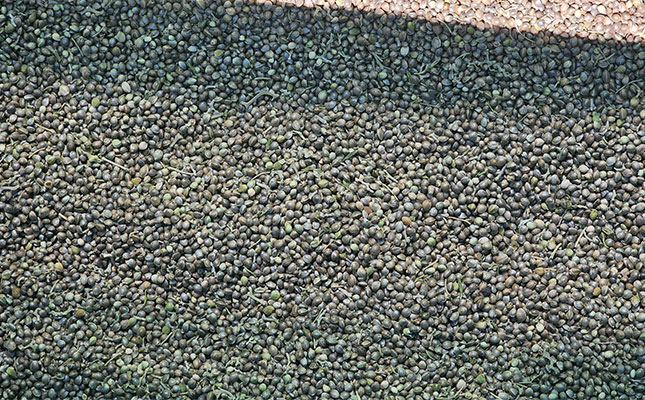
Current efforts in South Africa are also focused on seed production to ensure that ample seeds are available to growers that would wish to enter the industry. Mainstream agricultural machine adaptations for harvesters such as the John Deere W6 and T6 series already exist that can harvest the flower and the leaves separately in one go with different separation bedding inside the harvesting machine.
Hemp fibres are widely used in material production, while the inner woody core, known as the hurd, is increasingly utilised in the manufacturing of hempcrete, an environmentally friendly insulation material. Hempcrete production is regarded as one of the most significant value-added opportunities for hemp growers, providing an additional revenue stream alongside fibre production.
Advances in processing technologies, particularly cottonisation, have further enhanced hemp’s appeal by enabling its fibres to be refined for use as an alternative to cotton in textile manufacturing. This innovation has contributed to hemp’s resurgence as a sustainable raw material in global fibre markets.
In South Africa, however, hemp cultivation remains subject to strict regulation. Producers must obtain specialised hemp production licences under the Plant Improvement Act (No. 53 of 1976).
Despite its considerable potential, compliance requirements, including licensing and traceability, have posed challenges for new entrants, limiting broader participation in the hemp value chain.
For more information visit piket.co.za.