


Bad news for critically endangered giant sable
Despite looking almost identical, a large population of sable antelope found in western Zambia do not, to the dismay of conservationists, belong to the same subspecies as the critically endangered giant sable of central Angola, genetic research at Stellenbosch University revealed. Denene Erasmus reports.
Green trailer to reduce emissions
Transporting 1kg tomatoes in a 40t rig from ZZ2 in Polokwane to the Johannesburg Fresh Produce Market probably has a smaller carbon footprint than a housewife driving in an SUV to buy the same from her local supermarket. New developments in Barloworld trailer designs will certainly widen the gap. Joe Spencer reports.
New Bell Series III Tractors built tough for Africa
It may seem like Bell Equipment is going retro with its new Bell Series III Haulage Tractors, but the company is simply providing for the operating needs of their customers at the lowest cost per ton hauled, reports Joe Spencer.
Spray herbicides more effectively
To apply herbicides and combat weeds efficiently, crop farmers must select, maintain and manage their sprayers and nozzles with care. Grant Orsmond of TeeJet Technologies spoke to Lloyd Phillips on how to get the most out of your spraying equipment.
New Biopesticide targets ticks
Concerns over long-term use of chemical pest control has popularised biopesticides. But none targeted ticks, until now, writes Alan Harman.
Farmers should fear frog losses
As frogs are reliable bio-indicators of the health of an environment or ecosystem, farmers should be worried about a decline in frog populations on their farms. Lindi van Rooyen investigates.
Harvesting olives with Manitou & Topavi
Manitou Southern Africa, in conjunction with French parent company Manitou, recently hosted a group of South African olive farmers in Spain.
The giraffe now an endangered species
South Africans are used to seeing giraffe in parks and reserves, but the reality is this mega-fauna is under threat. Roelof Bezuidenhout reports.
Zinc deficiencies hinder optimal yields
In South Africa, about 42% of agricultural land suffers zinc deficiencies, lowering crop yields, writes Lindi van Rooyen.
What to remember when choosing a cover crop
Cover crops can improve soil and crop health, says Agricol's KZN sales manager and agronomist Dustin Beckerling, who gives Lloyd Phillips some pointers on selecting appropriate cover crops.
Test tube or artificial insemination?
Dairy farmers wanting to increase the number of calves and the percentage of heifers born on their farms should consider in-vitro fertilisation as opposed to artificial insemination, reports Alan Harman.
Food for school
The US agriculture department now also feeds impoverished school children during the holidays. Roelof Bezuidenhout discusses what South Africa is doing for its 14 million hungry citizens.
Mound predictions
Researchers have found that termite mound size and distribution, linked to vegetation and landscape patterns, can predict ecological shifts, writes Alan Harman.
Magic mistletoe
Harvesting mistletoe is one of the most cost-effective drought survival measures available to stock farmers, writes Roelof Bezuidenhout.
Mascor struts its stuff in Eston
Mascor held its John Deere demonstration on Masonite's Mount Desire farm, attracting almost 100 farmers, many from the Wartburg/Dalton area. Proceedings opened with an address by Prof Peter Lynne from the Sugar Research Institute.
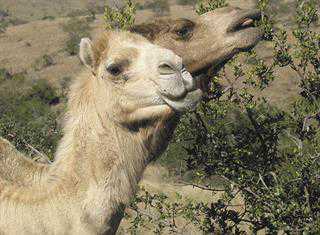
Can camels solve the sweet thorn problem?
A new trial found that camels could help control and possibly eradicate sweet thorn encroachment, which may be a far better solution than Boer Goat browsing or fire control.

Practical research looks at better caracal control
Current research into caracal control, conducted on nature reserves or game reserves, isn't always the best measure of effectiveness on a farm. A new study, conducted under practical farming conditions, aims to find the best solutions for small-stock farmers.
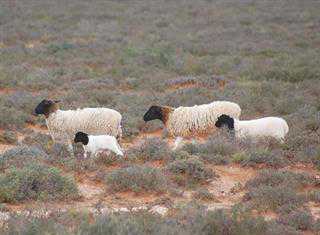
Satellite can help improve veld production estimates
Satellite images could soon be used in South Africa to quantify veld production, estimate livestock carrying capacity and help farmers plan fodder flow, reports Roelof Bezuidenhout.
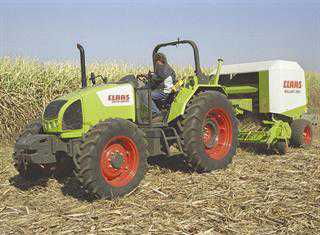
Using cane residue to cogenerate powe
The sugar industry is under pressure to reduce cane burning before harvesting – creating new possibilities for cane residue to cogenerate electricity. Joe Spencer reports.
Predator management – a lesson from the US
When it comes to predator management, South African agricultural and environmental authorities look more like the farmer's foe than friend in comparison with the US's wildlife service.
- ADVERTISEMENT -
- ADVERTISEMENT -
MUST READS
- ADVERTISEMENT -



