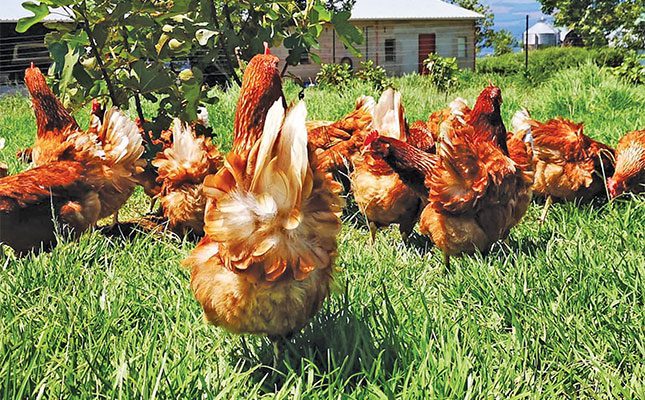
The rolling green hills of the Dargle Valley in KwaZulu-Natal make the perfect backdrop for producing food aimed at welfare and environmentally conscious consumers. Here, the Highveld Stud farm has been producing free-range and cage-free eggs for the past 15 years.
The picturesque farm, which also includes cattle, sheep and pig divisions, produces 25 000 eggs per day. The choice not to house these hens in cages was as much a business decision as a personal one for farm owner Craig Alison.
“Farming is a lifestyle choice,” he says, “and with that comes a focus on welfare.”
This philosophy guides his management practices, which emphasise strengthening the hens’ immune systems through proper nutrition and a diverse diet to limit veterinary intervention and vaccinations.
Managing the coop
After studying agriculture, Alison spent time working abroad. He noticed a trend towards free-range eggs taking hold in the UK, and upon his return to South Africa decided to pursue such a venture on the family farm. Since the market for free-range eggs was small in South Africa at that stage, Alison was able to ease into production without overwhelming the market.
Today, cage-free eggs remain a niche market, but by partnering with a marketing and distribution company – Midlands Eggs – Alison has been able to expand his flock from 500 hens in 2010 to 35 000 today.
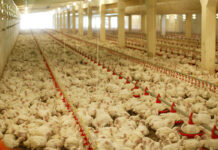
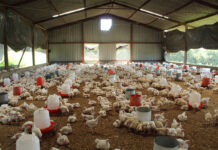
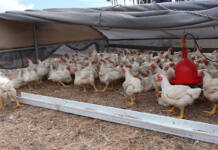
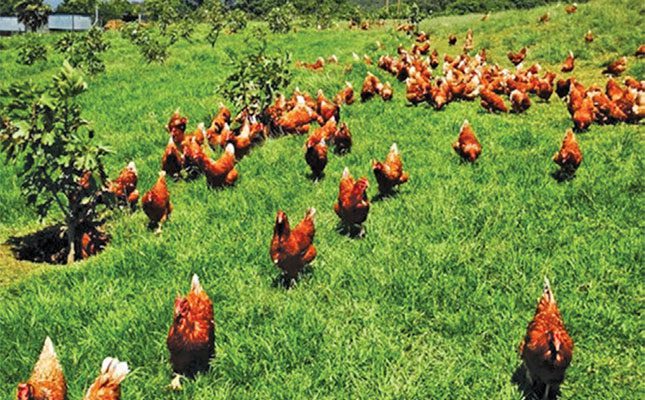
The eggs are produced under two systems, with 15 000 hens in a free-range system, and another 20 000 in a barn, or cage-free system. While there are no fixed regulations in South Africa about the exact amount of space each hen must have in each system, Alison follows international norms. For free range, this means that no more than nine birds can be housed per 1/ m², with at least 4m² per bird of outside space. The outdoor space must provide natural vegetation.
Barn eggs can be produced by hens contained indoors at the same stocking rate as free range, but who are still able to roam freely within the coop.
Alison notes that only a very small percentage of consumers understand the difference between the two, which makes obtaining sufficient prices to cover the additional operating costs challenging. Since no inspections are done by a regulatory body in South Africa to certify production systems, there is much room for unscrupulous farmers to label caged eggs as cage free, and collect the premium.

Highveld Stud farm is however audited annually to ensure the production systems meet the standard. Alison also maintains an open-door policy to ensure transparency in his production processes.
The lower density of hens compared to a traditional caged system means that Alison’s production costs are higher.
“We have one staff member overseeing 5 000 hens. If we had a caged, automated system, we’d need one staff member per 100 000 hens.
“The feed costs are also higher as active birds require more energy. We feed at least 10g/bird/day more, resulting in a total of about 135g/bird/day of feed,” he says.
Recognising the need for a higher energy ration, Alison has worked with his feed supplier to produce custom feed suited to the hens’ activity level. Since implementing this higher energy ration, his hens’ health has improved.
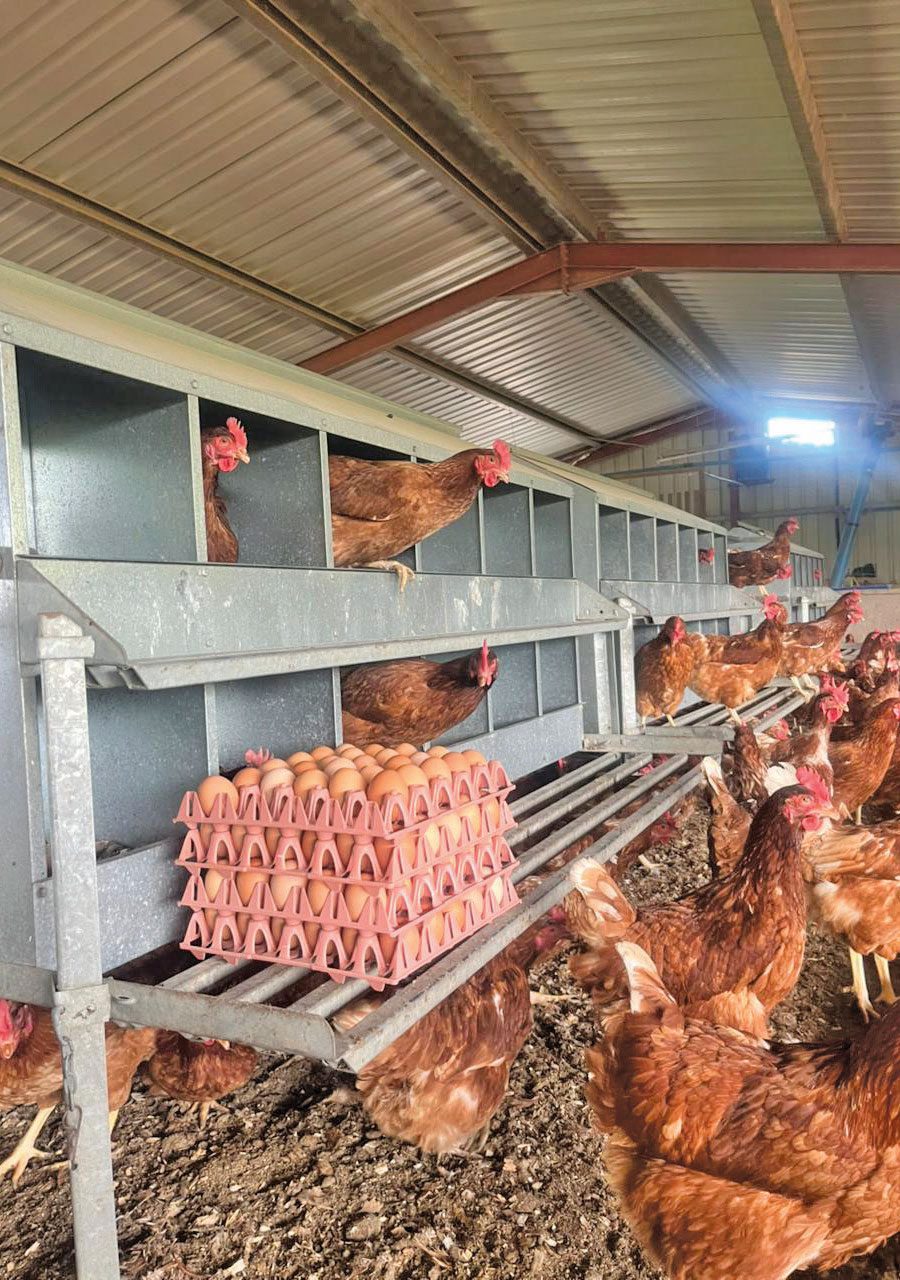
Collecting 25 000 eggs per day from free roaming chickens presents a further challenge for cage-free farmers. Alison uses nest boxes in the coops, which the hens are trained to lay their eggs in for easy collection.
“When a new flock is brought into the barn, the nesting boxes are placed on the ground. Chickens like to lay their eggs in dark, warm places, so they naturally gravitate towards the boxes. Once they are used to laying in the boxes, we lift them higher to make it easier for staff to collect the eggs. The hens will then jump up into the boxes to lay their eggs,” Alison explains.
He notes that it is important to keep a clean coop, not only for hygiene reasons but to limit the amount of dirty or cracked eggs that can’t be marketed.
Thinking free
Hy-Line Brown is Alison’s breed of choice. He notes that out of all the breeds they have farmed over the years, the Hy-Line Brown is best suited to a free-range system. They also produce a bigger egg, which consumers of cage-free eggs expect.
Alison buys in day-old chicks in batches of 6 000 at a time, raising them until they can enter production. While raising day-old chicks is a specialised activity, Alison explains that it has been a necessary adaption to improve production.
“Previously when we bought in point of lay hens, we would always have issues. The hens would struggle to adapt to the open space and didn’t know how to run around, always huddling into one corner. They also don’t know how to interact with other hens in big groups, since they were raised in a system of three hens in a cage. This all adds stress, compromising their immune system and resulting in birds that require more veterinary intervention.
“Since we started raising our own point of lay hens, we have birds that are better adapted to our farm, climate and production system, so there are fewer issues.”
Hens are replaced when they are between 80 and 90 weeks old. These hens are sold as live birds to the local market.
Healthy hens
Providing free-range chickens with natural vegetation means that Alison needs to have two separate camps on either side of the barn to rotate the fields, since flocks can quickly decimate vegetation.
Once the vegetation on the one side diminishes, the entry from the barn is blocked, and the doors on the opposite side of the barn are opened to allow for grazing on another field. While the natural vegetation does grow back when left alone, Alison plants the fields with a variety of crops that are palatable to chickens. This includes sorghum, millet and sunflower.
Recent trials with herbs like thyme, origanum and comfrey are proving to be successful in boosting hen health. “Herbs provide the same medicinal properties to chickens as to humans, boosting their immune systems. We gave the hens biotonics containing herbs in the past to boost their immune systems, so I thought we could just as well plant herbs for the chickens to feed on.
We’ve definitely seen an improvement in their health since we added the herbs to their diet.
“We also add peppermint drops to their water in the winter as it helps to open their airways, which reduces infections.”
These natural interventions, coupled with producing their own point of lay birds, have kept Alison’s vet bills low.
“The hens receive their standard vaccinations, which are mostly administered before they enter the production coops so as to limit handling of the hens, which causes stress.
“But we also made a conscious decision to reduce vaccinations beyond what is absolutely necessary.
We found that every time the vet paid us a visit there would be more medications added to the list – never any that were removed. This pushes up costs and requires more labour. We decided to focus on gut health to boost their immune systems so that they would require less medication.”
In addition to the natural vegetation that aids gut health, birds also receive probiotics and insects to add diversity to their diets. Alison says that besides the nutritional value of the insects, the hens also enjoy scratching in the litter to find them.
“Scratching for food is natural behaviour for chickens and this provides them with an opportunity to do what they inherently enjoy. There is also an added bonus in that the scratching aerates the feed.”
The insects are however costly and Alison is still in the process of negotiating with suppliers to make this addition feasible.
Free-range chickens who are exposed to outside elements and wild birds present a higher risk for being contaminated with pathogens like bird flu.
While this is a concern, it is out of Alison’s control.
“We look at the farm as a holistic system in nature. Wild birds, hawks and eagles are part of that, and we can’t try to rid the farm of them by shooting them. There is a balance that must be maintained in nature. But what we can do is ensure there are trees in the paddocks to draw wild birds away from the coops, and shelters for the chickens to hide if predatory birds are lurking.”
Alison makes sure to manage that which is in his control and therefore has a strict biosecurity programme in place. Movement in and out of the farm is controlled, vehicles disinfected when they arrive, and staff take care to use foot baths when moving around on the farm.
Balancing supply and demand
When Alison started producing eggs, he spent much time trying to sell them, doing house calls and restaurant deliveries. He says the best decision he has made was partnering with a distribution company who could handle the sales.
“I’m a farmer and I want to concentrate on farming, not marketing and logistics. If you are doing this yourself, there is a lot of admin added to your day that takes your focus off the production,” he says.
Highveld Stud’s eggs are sent to Midlands Eggs to market and distribute. They focus mainly on the market in KwaZulu-Natal, supplying supermarkets and the hospitality sector. With large distribution networks, the company is able to absorb large quantities of eggs, which has meant that Alison has been able to grow his business over the years.
He however notes that since cage-free eggs have higher production costs, they need to command higher prices. This means large quantities can’t be dumped on the market and care must be taken to grow the market as production grows. Herein lies another challenge, since South Africa’s struggling economy offers limited room for premium products.
“The biggest challenge is educating consumers on what free-range and barn eggs entail, and why they should command a premium. But even so, it is a small percentage of consumers in South Africa that can afford to pay extra for food. The majority of the population struggles to put food on the table, which means the cheapest option will always be considered.”
Although many food companies have introduced policies to source a certain percentage of their eggs from cage-free producers, Alison says this has had little effect on demand.
“There is a lot of talk, but not much that is happening in practice. They too face the challenge of keeping food costs low so that everyone can afford to eat. And with no oversight and regulation in the industry in terms of what can be labelled as cage-free or not, there is no telling whether the cage-free eggs are really cage-free,” says Alsison.
Despite these challenges, he is optimistic that cage-free eggs remain a viable business. By focusing on hen health and reducing vet bills, he has developed a holistic system that delivers on the promise of eggs produced with animal welfare in mind.
For more information email Craig Alison at [email protected].