
“This reaffirms what we have repeated time and again, namely that it pays to produce sound wool and prepare it well for the auction,” Jacques Taljaard at BKB, said.
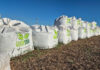
Only 6 628 bales were on offer, with 71% testing 20 micron and finer. Despite the stronger rand, prices remained firm in US dollar terms.
According to Cape Wools SA, only 85% of the wool was sold due to the composition of the offering.
The all-Merino indicator shed 1,3% to close at R249,35/kg, while the certified indicator declined by 1,8% to close at R253,39/kg. The highest price of R331,87/kg (clean), equivalent to R234/kg greasy, was paid for a single-bale lot of 16,2-micron Merino wool.
The major buyers were Standard Wool South Africa (1 310 bales), BKB Pinnacle Fibres (962), Stucken & Co (843), and Tianyu SA (813).
The Australian market was still in recess for Easter, and sellers were hopeful the rebound on 2 April, after two consecutive losses, would continue when sales resumed on 13 April.
That rebound, according to Australian Wool Innovation (AWI), was driven by competition from buyers securing volumes before the recess.
A reduced offering, combined with growing awareness that available stocks of stored wool are diminishing, continues to shape the broader market outlook. As a result, the market is expected to become increasingly reliant on freshly shorn wool.
Meanwhile, AWI reports that buyer preference remains clearly focused on higher-specification wool, reinforcing the premium for well-prepared clips with low vegetable matter and reliable fibre specifications.
The next sale in South Africa will be on 22 April when approximately 10 359 bales will be on offer.