Blueberry production in South Africa has expanded steadily over the past decade, with annual production now averaging between 25 000t and 26 000t. Yet despite this growth, producers are operating in an increasingly competitive global market.
According to Corne Oosthuizen, general manager of Le Arc blueberry farm near Franschhoek, which forms part of Six33, one of the most significant pressures comes from Peru, which currently produces around 400 000t of blueberries a year.
He points to stark differences in scale and pace of expansion. While South African growers typically plant or replant between 2ha and 5ha annually, Peruvian producers operate on a far larger scale, often establishing or renewing 100ha blocks when new varieties become available.

Farm sizes there commonly range between 500ha and 600ha, compared with the 20ha to 30ha average in South Africa.
This scale advantage is reinforced by substantial government support and a highly integrated value chain. In Peru, dedicated vessels move fruit rapidly into export channels. A highly specialised workforce is deployed across every stage of production, from teams focused solely on planting or installing shade netting, to those dedicated to harvesting, packing and quality control.
The result, according to Oosthuizen, is a system that delivers significant cost advantages through scale and logistical efficiency.
Premium quality focus
For Six33, competing in this environment is less about matching volume and more about standing out on quality. The business has deliberately positioned itself at the premium end of the market, where consistency and differentiation matter as much as yield.
“Farming is highly mechanised in Peru due to its scale, which can result in inconsistent quality. We focus on producing excellent fruit and offer niche packaging for buyers seeking something different. That is difficult to achieve in mass production,” he says.
South Africa does have some structural advantages against competitors. Labour is more readily available than in many European countries, but this is offset by cost and efficiency challenges.
“While wages are lower than in developed markets, they remain a significant expense locally, and productivity can be as much as 50% lower,” Oosthuizen explains.
Genetics and efficiency
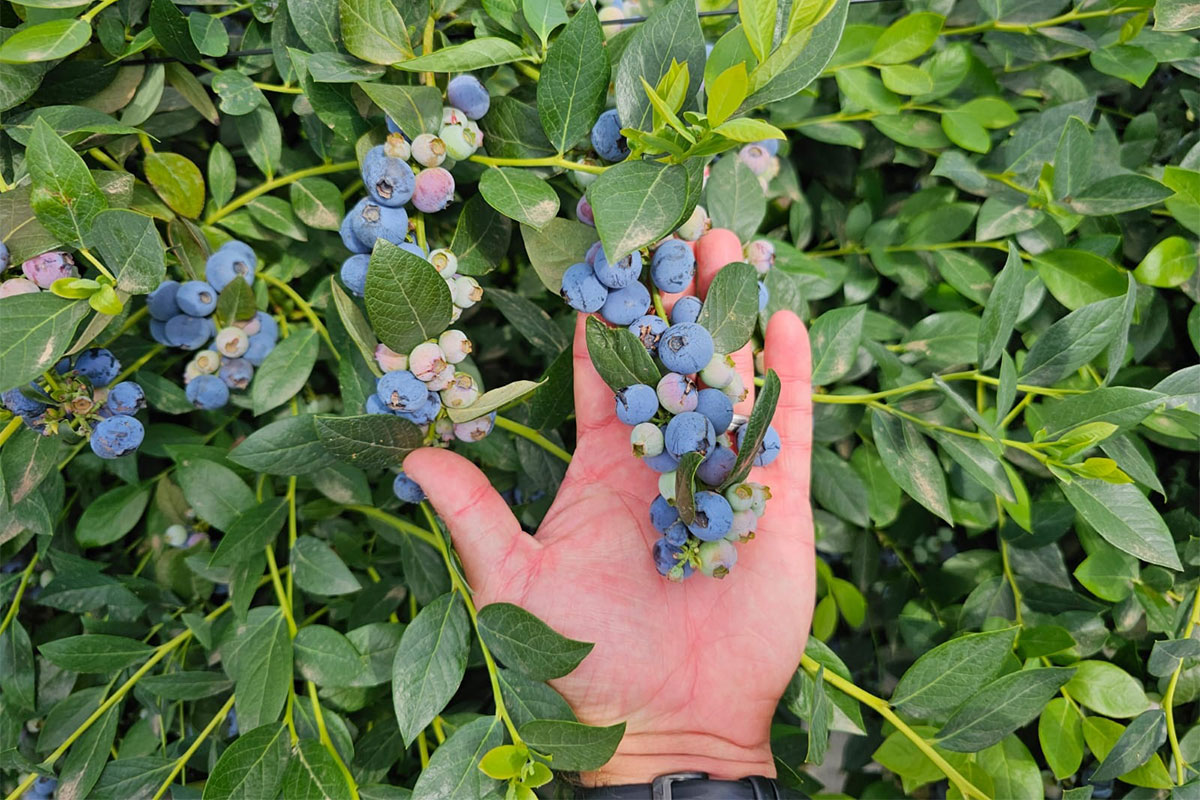
Against this backdrop, Six33 is focused on improving output per hectare through a combination of genetics and on-farm refinement. A key shift has been towards newer blueberry varieties that produce larger, heavier fruit, making harvesting quicker and more efficient.
Where older cultivars typically yielded berries weighing around 1,8g to 2g, newer selections can reach between 2,4g and 4g. These varieties often bring additional advantages. Larger berries are in higher demand, offer better shelf life, and are generally easier to pollinate.
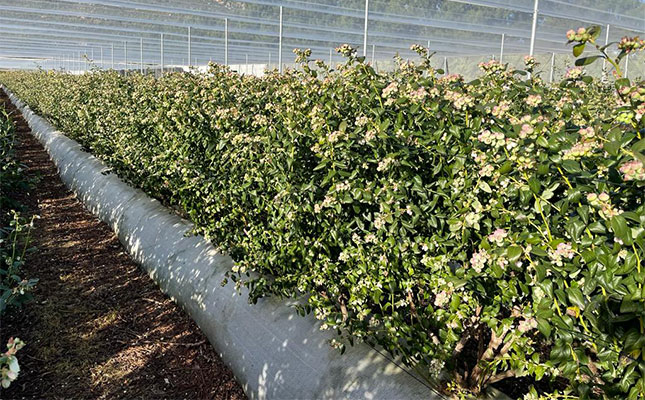
Some older varieties, Oosthuizen notes, have flowers with very small openings, making it difficult for bees to access them effectively.
Even so, no variety is adopted without thorough testing. Trials on the farm play a critical role in determining whether a cultivar will perform under specific local conditions.
“It is not enough to hear that a berry is in high demand and has numerous advantages. You need to ensure it is suited to your production environment,” he says.
“Our neighbour and we, for instance, are producing a variety that almost all producers in the rest of the country have withdrawn, because it works on our farm, but not on theirs.”
Managing labour dynamics
Labour remains one of the most complex and unpredictable parts of the system, requiring a careful balance between motivation and oversight. At Six33, this is managed through a combination of training, incentives and performance tracking.
Training forms part of ongoing upskilling efforts aimed at improving picking efficiency and consistency in the field.
Workers are also given clear targets, with earnings linked directly to output. The more they pick, the more they earn. This is supported by attendance bonuses aimed at reducing absenteeism.
Incentives alone, however, are not enough. The business uses technology to monitor performance at an individual level, tracking output per worker and per hectare, and analysing patterns across teams and production areas.
These insights have revealed some of the behavioural dynamics at play. For instance, some workers slow their pace toward the end of the day if they realise they are unlikely to reach a bonus threshold, while younger workers appear more likely to skip shifts than older colleagues.
A refined approach
“Understanding these patterns has allowed Six33 to refine its approach, adjusting targets and incentives to keep workers engaged and productive. The goal is not only to improve efficiency, but also to create a system where performance is consistent and aligned with the demands of producing high-quality fruit,” Oosthuizen says.
Alongside this, a worker committee has been established to improve communication between staff and management, and to address issues before they escalate. The committee consists of 20 members elected by the workers.
“You need a broad committee to ensure the decisions are truly representative of the workforce. People are far more open to listening to someone they have voted for than to someone appointed over them,” he adds.
In a market shaped by scale and efficiency elsewhere in the world, Six33 is betting on control rather than volume. From varietal selection to labour management and worker engagement, the focus is on refining what happens inside the orchard and ensuring that quality, rather than quantity, remains its strongest competitive edge.
For more information, email Corne Oosthuizen at [email protected].