
At a glance, Mozambique can look like an attractive farming alternative to South Africa: lower labour costs, fewer apparent constraints, and strong demand just across the border.
To understand the true value that Mozambique presents, Farmer’s Weekly spoke to farmers who farm in both countries. They tell a tale of complex economic realities, including a high dependency on imported inputs, export-only markets, and significant logistics and compliance costs that quickly erode the perceived advantage.
However, the farmers agree that the relationship between the two countries presents an opportunity, not for competition, but for complementarity, where different climates, crops and production strengths can support regional food security, trade resilience, and farmer diversification.
“In practice, certain crops are easier and more efficient to produce in South Africa and supply into Mozambique,” says Joachim Prinsloo, owner of Sunreaped.
“Other subtropical crops are better suited to Mozambique and are supplied into South Africa. It is crucial that South Africa maintains a good relationship with Mozambique from a food-security and trade perspective. If trade flows are respected and managed well, the two countries can support each other’s food supply during local shortages or climatic shocks, and help keep the cost of living lower by maintaining steady flows of staple foods and fresh produce in both directions. Both countries have the opportunity to grow their economies, using their different climatic strengths in a complementary way.”
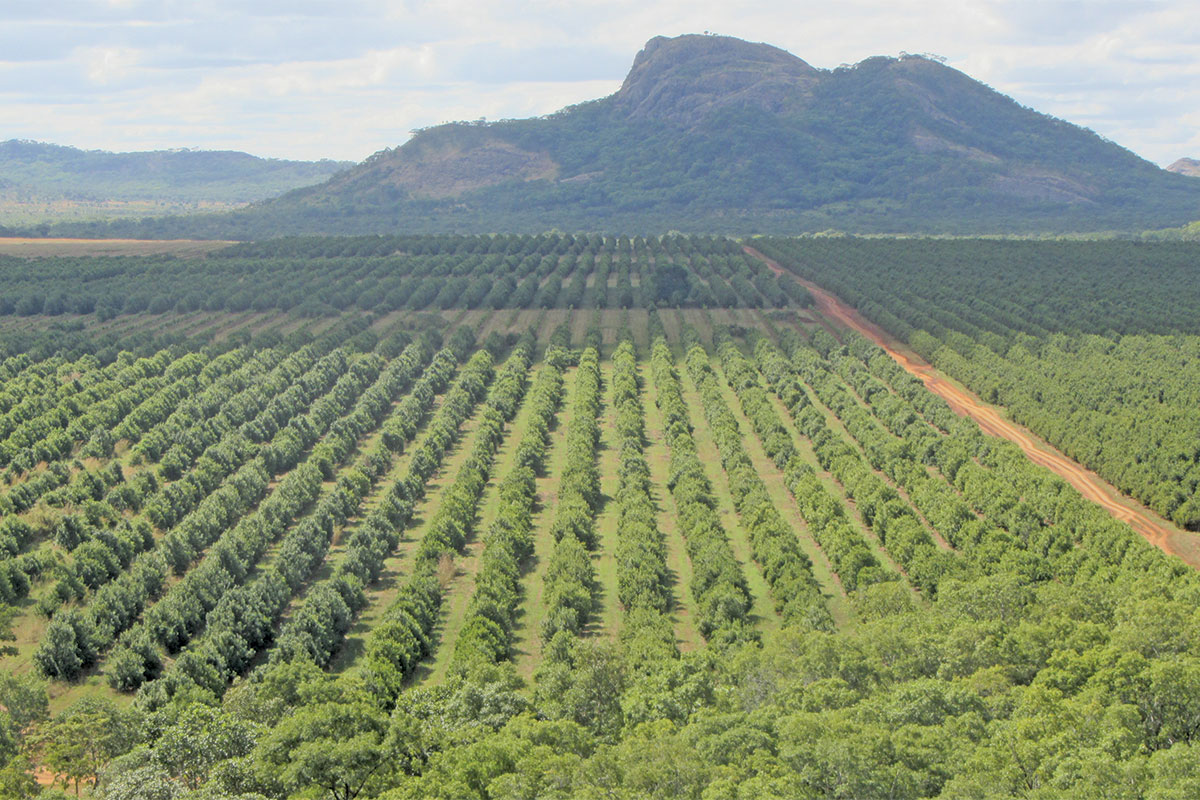
Prinsloo farms avocados, ginger, macadamias, and bananas in Mpumalanga, South Africa. In Mozambique he farms ginger, turmeric, bananas, mangoes, and macadamias. The Mozambican operation was set up in 2006 in a bid to diversify Prinsloo’s risk profile, and to allow for the expansion of banana production. Finding additional, suitable land for banana production in South Africa proved difficult.
“We therefore looked for a climate and soil profile suitable for the same crops we were already producing, and a region close enough to South Africa to make practical use of South African input suppliers, technical support, and markets. We also looked for an environment with scope for expansion in terms of land and water availability.
“In addition, we believe that regional development within SADC [Southern African Development Community] is important, and that South African farming experience can add value in Mozambique if applied responsibly,” Prinsloo explains.
Venturing across the border
The need to expand banana production was a driving factor for Charlie van Dyk, director of Novasun, to venture across the border too. Today, Van Dyk farms bananas and macadamias in Mozambique, and macadamias in Mpumalanga.
Novasun began farming in Mozambique in 2008, following the settlement of a land restitution claim in South Africa.
“That claim involved approximately 3 000ha under irrigation, including sugar cane, bananas, citrus, mangoes, and litchis. Given our family’s prior negative experience with land expropriation in Kenya in the early 1970s, we made the decision to rebuild our banana operations in Mozambique to continue supplying our South African customers.

“My family has been farming in Africa since 1686, and remaining in agriculture was a priority. Relocating banana production to Mozambique allowed us to continue serving the South African market while mitigating long-term land tenure risk. However, it required starting from scratch – developing farms, infrastructure, compliance systems, and supply chains in a new jurisdiction.”
Van Dyk states that the notion that Mozambican farming is ‘cheap’ does not hold up under audited cost comparisons.
“Farming in Mozambique is more complex and often more costly. Most farming inputs must be imported, and all produce must be exported, which adds significant logistics, administration, banking, forex, and compliance costs. By contrast, South African farmers who export can source inputs locally and only incur export costs on the final product.”
Farmers who can overcome these challenges have much to gain, says Van Dyk, since Mozambique’s climate is exceptionally well suited to subtropical fruit production, with many regions more tropical and stable than parts of South Africa.
The cost of opportunities
When it comes to farming in Mozambique, it would appear as if every opportunity is paired with a cost. Prinsloo notes that farming in Mozambique comes with significant complexity and risk, not simplicity.
“In Mozambique we mainly farm exports, so the entire business must be structured and geared as an export operation. All of this adds complexity and cost to every unit we produce. We are not running a simple local business with a short supply chain; we are running an export business with additional compliance, administration, and risk. When you add that to the additional costs that come with farming in Mozambique, it’s clear that it is not a low-cost environment. In many respects it is more expensive and more complex to farm there than in South Africa.”
Comparing line items, Prinsloo notes that electricity tariffs are similar in both countries, but since formal public transport systems are limited in Mozambique, farms often have to run their own transport for workers, which is expensive and hard on vehicles, especially on poorer roads.
While South Africa has a dense, well-developed agriculture supply network with large companies and field technicians, Mozambique is still developing. This means many inputs and spare parts must be imported, adding additional tariffs and logistics costs.
Labour in Mozambique is also still in a skills development phase.
“The average farmworker in South Africa generally has some farming experience, and familiarity with a working environment and the routine of a full-time job. In Mozambique, the job you give a labourer is often the first one they’ve had, which means they know little about farming practices or driving tractors. They are also not necessarily adapted to working a full-time job, and the discipline this requires,” Prinsloo explains.
Additional costs erode any gains made in unskilled labour costs, which are lower in Mozambique. Van Dyk says that while there is a saving on the salary bill of R13,85 per carton of bananas, compared to South Africa, the delivered cost is still higher for Mozambican fruit.
“Our audited schedule shows cross-border costs add R17,82 per carton. Taken together, this yields a net additional cost of roughly R4,87 per carton for Mozambican bananas into South Africa.”
Agronomists and specialist technical services that are fairly accessible in South Africa are scarcer in Mozambique. “You either bring those skills in or pay a premium. And you often need to carry more stock and order further in advance to avoid long periods of downtime,” says Prinsloo.
Beyond the normal farming challenges of weather and markets, Mozambique adds several specific challenges, including a language barrier, different culture, and operating systems. The labour law framework and its interpretation also differ from South Africa and require good local advice and careful management.
Prinsloo explains that the institutional and business environment operates in Portuguese, with different underlying assumptions to South Africa.
“Engaging with government, departments and associations requires language skills and cultural understanding, which takes time to build. Logistics and cross-border movement can also be challenging. Moving both development inputs and fresh produce involves complex cross-border logistics. Documentation, customs procedures and delays add risk and cost, and demand careful planning and good clearing agents.”
Van Dyk adds that key challenges also include strict and actively enforced compliance requirements (with fines for non-compliance), and political unrest. “Last year alone, we lost approximately 25 working days due to political unrest following elections. Managing all these risks requires strong local teams, robust compliance systems, and constant engagement with authorities on both sides of the border.”
Despite the many hurdles, farmers in Mozambique are prevailing. Prinsloo says that committing to the long term helps to mitigate many of the risks. “We invest in our own infrastructure, build local teams, learn the language and system, and accept that we cannot run Mozambique as if it is South Africa. Our planning and mindset had to adjust.”
Protecting farms from phytosanitary risks
South Africa’s borders often come under fire for not having adequate measures in place to protect against phytosanitary risks. Prinsloo and Van Dyk note that the Mozambican border has strict phytosanitary standards in place, with a strong monitoring system implemented by technicians on the ground.
“These technicians are committed and take pride in their work; they ensure that inspections, monitoring, and documentation are correctly handled. The standards are clear, actively applied and maintained,” says Prinsloo.
For farmers this entails complying with Mozambican regulations on orchard registration, pest and disease monitoring, and record-keeping. Farms must undergo inspection and certification by the Mozambican plant health authorities, who issue the phytosanitary certificates required for export.
Farmers must ensure that production, packing and cold-chain practices meet South Africa’s import requirements, as South African officials may also verify documentation and consignments at the border.
The right attitude
A farmer who spoke to Farmer’s Weekly on condition of anonymity says that one of the biggest challenges to overcome when establishing an operation in Mozambique is being able to make a paradigm shift.
“Once you make peace with the fact that it is a different country with different rules and requirements, different cultures and people, you stand a chance to make it.”
He notes that having an ‘I’ll show them’ approach will only lead to difficulties.
“Being a different environment in terms of climate, water, and soil than you are accustomed to in South Africa, you must be prepared to learn anything new and to challenge all preconceived ideas you might have had on how to cultivate your crop. We were very fortunate to have other farmers from Mozambique and Zimbabwe who are willing to drop some pointers.
“The faster you learn to understand the legal and regulatory requirements surrounding your venture, the faster you can flourish within these set constraints.”
Adapting to the local community is another key requirement. The farmer explains that in South Africa, the sense of community varies from place to place, most likely driven by the abundance of choice.
“I can choose my friends, and my activities over weekends. In Mozambique, you are not spoiled for choice in any form. Your neighbour is your neighbour, and often some kilometres apart, and it is that neighbour who is going to help you when you get stuck if you have a good relationship.”
The limited availability of resources is a challenge that also requires a paradigm shift.
“In Mozambique, you need to work today while planning six or even 12 months ahead. Most of the things you will require at some stage, like agrochemicals, fertilisers and sometimes down to that one small O-ring, will most likely need to be imported. Getting items imported is by no means difficult, but it is a timeous and costly effort, sometimes riddled with unplanned hold-ups and delays. The luxury in South Africa of picking up the phone and ordering or driving to town and having your requirements satisfied the same day is not guaranteed in Mozambique. You need to outweigh the opportunity of applying the input at the required time versus the potential income loss at harvest were it not applied.”
He adds that planning in Mozambique requires a ‘make a plan’ attitude. “Some curve balls will be thrown your way that you need to contend with out of the blue. You would then, for example, need to know the basic workings of most, if not all, your equipment.”
In setting up the business, the farmer encourages having realistic cash flow values that allow for additional or hidden costs.
“The probability of getting the cash requirements and flow correct while sitting at the design table is highly unlikely. This is not because you do not know how to work your calculator, but you are not on the field experiencing the hidden costs and getting to know the system. You must plan for this as it will be a shame to start executing a great plan, only to run out of funding at the 65% or 80% implemented marker.”
A successful cross-border operation also requires finding the correct consultants who have experience in the chosen region. By gathering a team that already has some experience, you will save time and money. These consultants can be found locally or internationally, as long as they have proven experience with the intended crop in similar surroundings.
Finally, the farmer advises that marketing agents or logistics agents be included in the planning phase.
“It is not every marketer who can or wants to effectively navigate the additional logistical challenges on the other side of the South African border. There are many different components that need to line up to make this work; talk to them all. If something does not line up, you alone will carry the cost.”
A win for regional food security
Successful cross-border operations allow for the knowledge, expertise and resilience South African farmers are known for to benefit a wider community.
Prinsloo believes that Mozambique and South Africa have a naturally complementary relationship and can play a major role in each other’s food security.
“You can see the interdependence when you stand at the border: there are continuous truck movements of tomatoes, potatoes, and onions from South Africa into Mozambique, and bananas, litchis, and other subtropical products moving from Mozambique into South Africa. In that sense, cross-border farming and trade between the two countries can be a powerful tool for regional food security and more affordable food in Southern Africa.”
The ability to hedge risk by diversifying farming regions is another benefit for farmers and consumers. Van Dyk notes that this is especially important since climate change is increasing the frequency and severity of extreme weather events across Southern Africa.
“Regional food security is strengthened when production is geographically diversified across SADC countries, spreading climate, political, and operational risk. Concentrating production in a single country, particularly one still grappling with land reform uncertainty, increases systemic risk. Regional farming partnerships help stabilise supply and protect consumers.”