
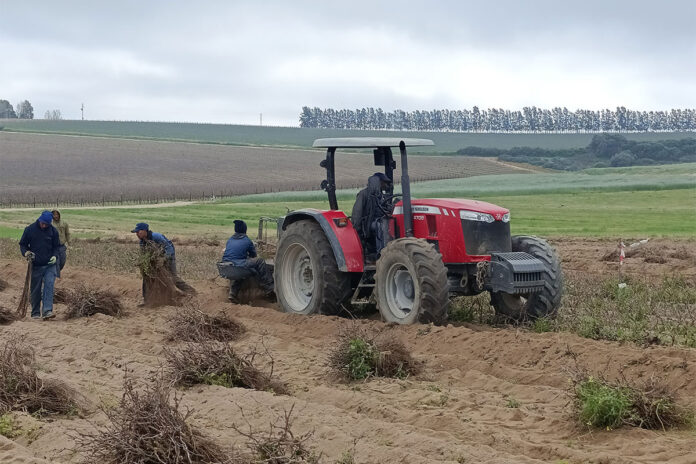
In experimental vineyards at Bosman Adama in Wellington, Western Cape, unfamiliar wine grape cultivars are being put through their paces. Some originate in warm Mediterranean regions, while others have been bred specifically for improved disease resistance.
When Farmer’s Weekly last visited the operation four years ago, many of these cultivars were still in the early stages of evaluation. Since then, some of the most promising ones have been planted in vineyards and are producing enough grapes for experimental wines.
The programme aims to identify cultivars that can withstand hotter, drier conditions or greater disease pressure without compromising wine quality and, by doing so, improve the resilience and competitiveness of South African wine producers.
Heritage and innovation
Julia Moore, communications officer at Bosman Adama, says the Bosman family’s approach to sustainability is rooted in both its history and willingness to adapt.
The original farm, Lelienfontein, dates back to 1699 and has been farmed by the Bosman family since 1810. Eight generations later, the family remains involved in its farming, nursery, and winemaking operations.
Each generation has had to respond to the challenges of its time. One of the most consequential for the wine industry was the arrival of phylloxera in Europe in the 1860s and in South Africa in the 1880s, decimating vineyards. This tiny insect pest fed on grapevine roots and forced producers to graft European wine grape cultivars onto resistant rootstocks.
The Bosman family began grafting vines in 1888. Petrus Bosman Snr formally established a commercial vine nursery in 1947 and later helped develop standards for the nursery industry.
The family made wine, which they sold to wholesalers, but they stopped producing in 1956 to concentrate on the vine grafting business, delivering their grapes to the local co-op instead. Winemaking resumed half a century later, after the historic cellar was renovated in 2006, with the first Bosman-labelled wine produced in 2007.

“Looking at the Bosmans’ history, it’s evident that sustainability, heritage, and innovation are interdependent,” says Moore.
“You cannot be sustainable unless you are constantly innovating, but you also can’t forget your heritage and traditions that have sustained you thus far. Those pillars hold each other up.”
Looking beyond conventional cultivars
Petrus Bosman, Petrus Snr’s grandson, is CEO of the Bosman Adama agribusiness, which encompasses the Bosman Adama Vine Nursery, the Cultivar Management division, and Bosman Family Vineyards. As the effects of climate change became more apparent, he began an international search for cultivars adapted to warmer, drier conditions.
His search led him to Sicily, whose climate resembles that of warm, sunny Wellington, and to Nero d’Avola, a red cultivar widely planted on the Italian island.
Only two of the cuttings he brought back survived the importation process. These were propagated and eventually formed the basis of the Bosmans’ first commercial Nero d’Avola plantings in 2011, followed by the cultivar’s first wine in 2014.
At first, they were unable to market the wine as Nero d’Avola, because the cultivar had not yet been approved by the Wine and Spirit Board of South Africa. It was therefore sold under a different label until approval was granted in 2015.
Bosman now produces a single-varietal, barrel-fermented Nero d’Avola and Nero rosé, and uses the cultivar in blends. According to Corlea Fourie, head of vineyards and wine at Bosman, international tasters recognise its Sicilian roots while also identifying a distinct South African expression.
“Nero d’Avola ripens at about the same time as Shiraz but is much happier under warmer, drier conditions. It maintains naturally lower acidity while performing exceptionally well under limited water,” she explains.
Expanding the search
The successful introduction of Nero d’Avola demonstrated how cultivars from warmer regions could broaden the options available to South African producers. It also laid the foundation for Bosman Adama’s wider search for heat-tolerant and disease-resistant vines.
In 2025, Wian Mouton was appointed to head the company’s Cultivar Management division and take the programme to the next level.
He explains that the programme has two distinct, yet related, components. The first evaluates established Vitis vinifera (common grape vine) cultivars from hot, dry regions that may be better able to tolerate heat or retain desirable characteristics like acidity as temperatures rise.
The second focuses on cultivars bred for improved disease resistance to reduce crop losses and the number of plant protection applications required.
A cultivar’s vineyard performance is only one part of the equation; it must also produce quality wine, fit into existing production systems, and ultimately find acceptance among winemakers and consumers.
Experimental winemaking allows the team to assess qualities that cannot be judged in the vineyard alone, including flavour, aroma, colour, acidity, tannin structure, and ageing potential.
Promising newcomers
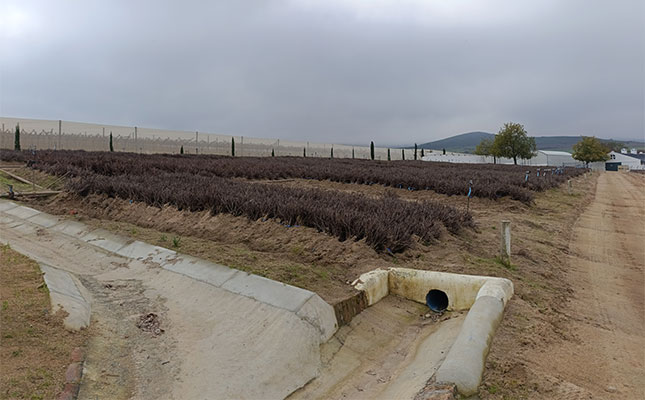
So far, Bosman Adama has imported 29 hybrid cultivars, with another five or six still in quarantine.
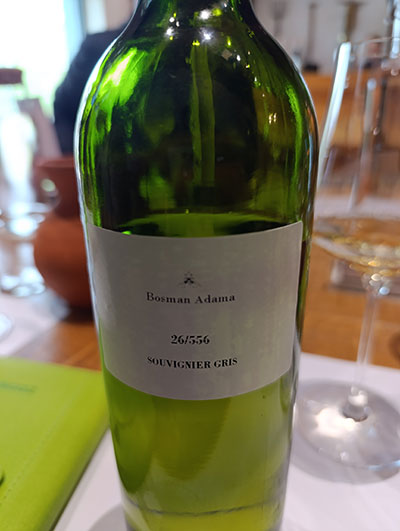
During the visit, Farmer’s Weekly tasted several of the resulting experimental wines. One of the standouts was Souvignier Gris, a fungus-resistant white cultivar developed at the State Viticultural Institute (WBI) in Freiburg, Germany, in 1983 from a cross between Seyval Blanc and Zähringer.
Souvignier Gris, not to be confused with Sauvignon Gris, has already gained considerable traction in Europe, with more than 1 000ha planted in Germany alone. Its appeal lies largely in its resistance to downy mildew, powdery mildew, and black rot.
The Bosmans planted their first 0,5ha block of Souvignier Gris in 2024. Harvested on 21 January this year, its first crop yielded more than 20t/ha.
Fourie says the resulting wine exceeded their expectations.
“What excites us is that even at these high yields, the grapes still produce remarkably concentrated flavours,” she says.
“It has excellent potential for producing aromatic white wines, while also offering growers a practical option for more challenging production areas.”
Another promising newcomer is Muscaris, an aromatic white cultivar bred at WBI in 1987 from Solaris and Gelber Muskateller.
Like Souvignier Gris, it combines attractive winemaking characteristics with strong disease resistance. Planted in 2025, it also yielded more than 20t/ha when harvested on 3 January this year.
Fourie says the team is experimenting with pruning strategies to determine whether the harvest can be delayed slightly. While harvesting around the beginning of January can be inconvenient because it falls during the holiday season, early ripening offers an important production advantage.
“These vineyards require far less irrigation because they are harvested before the hottest part of summer, rather than remaining in the vineyard until March or April,” she explains.
The next breeding frontier
The disease-resistant hybrids Bosman Adama is currently evaluating were developed through conventional crossbreeding. Mouton cautions that their resistance does not eliminate the need for fungicides; however, it could substantially reduce the number of applications required.
While the company’s immediate focus remains on conventionally bred hybrids, he believes gene editing could offer even greater possibilities in the future.
Gene editing enables breeders to make precise changes to a vine’s own genetic material and can be used without leaving foreign DNA in the resulting plant. Mouton says this could make it possible to combine several forms of disease resistance in one cultivar more efficiently than through conventional crossing.
“Think of it as having one goalie to protect the plant from one disease compared with three goalies protecting the plant from three different diseases,” he explains.
Control from import to vineyard
Bosman Adama strengthened its control over grapevine material in 2014 when it acquired Ernita, a registered plant improvement organisation.
The acquisition brought specialised laboratory expertise into the business, along with responsibility for maintaining propagation material that meets prescribed quality and phytosanitary standards. This ranges from nucleus and foundation material to the mother blocks that supply certified material to nurseries.
The laboratory expertise also helped Bosman Adama establish a post-entry quarantine facility at its Wellington premises. Together, the laboratory and quarantine facility allow the company to import and handle grapevine tissue culture rather than relying solely on dormant cuttings.
Mouton explains that most new grapevine material originates in the Northern Hemisphere. Traditionally, it was imported during the northern winter as dormant cuttings, which meant it arrived during the South African summer.
Bringing the material back into step with local growing conditions could add almost an entire season to the quarantine process, while some cuttings failed to survive.
Tissue culture largely overcomes this seasonal mismatch. Minute plantlets are maintained under controlled, sterile conditions and can therefore be imported at any time of year. The method also lowers the risk of introducing pests and pathogens and enables clean material to be multiplied more rapidly.
Each import requires a government permit stipulating the relevant phytosanitary and quarantine requirements. On arrival, the plantlets remain in quarantine while Bosman Adama’s laboratory team gradually develops them into plants large enough for government testing. Material that tests negative for the prescribed viruses and other pathogens is then released.
According to Mouton, dormant material generally takes between 18 and 24 months to clear quarantine. Tissue culture material typically takes six to seven months, although Bosman Adama has achieved release within four months under favourable conditions.
Valuable plant material found to be infected with a virus can sometimes be cleaned through heat therapy. The plant is kept at 38°C for 100 days, causing it to grow faster than the virus can move through its tissue.
A 0,5mm meristem tip (at the very tip of a shoot or root) is then removed under a microscope and cultivated to produce a new plant, which is tested to confirm that it is virus-free. The treatment may need to be repeated, and the full cleaning process can take up to 24 months.
Release from quarantine is only the first step towards commercialisation. The material enters Bosman Adama’s nucleus collection and is multiplied through foundation blocks and nurseries before mother blocks are established.
New cultivars are evaluated over several seasons to assess their performance under local soil and climatic conditions, while plant material is gradually multiplied for commercial release.
During this period, each new source is classified as a candidate clone and tested annually for six prescribed viruses: fanleaf, grapevine fleck, leaf roll, corky bark, stem pitting, and stem grooving. It can be registered as a certified clone only after producing consistently negative results for five consecutive years.
Scaling up
Once sufficient clean material is available, Bosman Adama’s nursery capacity enables a successful cultivar to be multiplied commercially.
Rootstock preparation starts around mid-April, with about 250 000 rootstocks processed daily, amounting to at least 1,2 million a week. The material is disinfected for 10 minutes, soaked for 12 hours, and stored in cold rooms until grafting begins at the end of July.
About 90% of the vines are grafted mechanically using a V-grafting system, with between 250 000 and 280 000 grafts completed daily. Thinner scion material from Merlot, Pinotage, and Pinot Gris, for instance, which cannot be handled effectively by the machines, is grafted by hand at a rate of 70 000 to 80 000 grafts per day.
The graft unions are dipped in wax to protect the wounds and transferred to a warm, humid callusing room for healing. Circulating, aerated water promotes faster and more uniform callus formation than conventional cold callusing.
By integrating its laboratory, quarantine, plant-improvement, and nursery functions, Bosman Adama can maintain plant health controls and traceability from the arrival of a tissue culture plantlet to the establishment of vines in commercial vineyards.
These capabilities also enable the company to export grafted vines to countries such as Egypt, demonstrating the potential for South African propagation expertise in other warm-climate production regions.
Building the market
Encouraging vineyard and winemaking results don’t guarantee that a cultivar will be a commercial success. Moore says consumers are unlikely to embrace unfamiliar single-varietal wines like Souvignier Gris and Muscaris overnight.
“We are under no illusion that consumers are immediately ready for alternative single-varietal wines,” she says.
Instead, the cultivars could initially find a place in blends, where relatively small proportions may contribute aroma, flavour, or structure. Under South African wine regulations, a certified wine may carry the name of a cultivar if at least 85% of the wine was made from that cultivar, giving winemakers some flexibility to incorporate other varieties.
The new cultivars are also being planted at different sites to evaluate their performance under a range of climatic conditions before they are released more widely.
Bosman Adama’s experience with Nero d’Avola has shown that establishing a new cultivar requires time, not only to build up healthy plant material and understand its performance, but also to secure regulatory approval and develop a market for the resulting wine.
Therefore, according to Petrus Bosman, the company limits the distribution of new cultivars until consistent production standards and market demand have been established.
“We’re not holding these cultivars back,” he says.
“We’re simply making sure they go to producers who are serious about producing quality wines.”
More choices, not replacements
No single cultivar will solve every producer’s climate-related challenges. Some sites may require vines that cope better with heat and water constraints, while others may benefit more from disease resistance, different ripening windows, or the ability to retain acidity under warmer conditions.
Thus, the search is about expanding producers’ options rather than replacing South Africa’s established cultivars wholesale.
For the Bosman family, such long-term thinking comes with farming across generations. The propagation skills that helped the business respond to past challenges are now being used to prepare for those ahead.
The experimental wines may represent only small volumes, but they offer an early indication of what South Africa’s vineyards could look like in a warmer future.
For more information, email [email protected], or visit bosmanadama.co.za.