
Latest articles

Why can’t the markets do the same?
Last week, I wrote about the impressive new markets being established in Namibia.

Nematodes: not all bad
It may surprise many farmers that not all nematodes (eelworms) are harmful to crops.
Namibia plans ahead
As I write this, I’m midway through a two-week training programme at the Ongwediva Fresh Produce Business Hub (OFPBH) in the north of Namibia, en route to Angola.
The benefits of mycorrhiza
The name ‘mycorrhiza’ (a combination of two Greek words meaning ‘fungus’ and ‘roots’) is unlikely to ring a bell with most farmers as its use has been promoted only recently.
Market prices – up, down & up again
As I write, the markets are awash with produce. Prices have tumbled in many cases. Our mild winter has resulted in extended production periods for some crops, which has meant an oversupply.
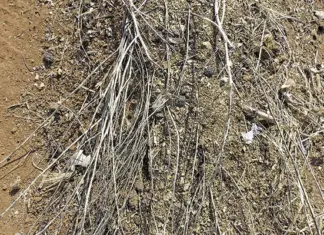
The value of bacteria
Each group of organisms living in the soil has a different function and these organisims’ interaction with one another should create a balance that benefits plants.
It’s all about attitude
Fresh produce markets and their agents face a multitude of challenges and it’s inevitable that comment on the market floor will be vociferous.
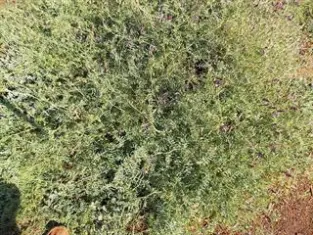
Fungi and bacteria: the balancing act
Healthy ‘living’ soil can contain up to 15t/ha of bacteria, actinomycetes, protozoa, algae, fungi, nematodes, earthworms and arthropods.
Value versus cost
When a farmer decides to buy a new tractor, does he choose the shiniest, most expensive model?

Humus, soil organisms and plants
Last week, I mentioned how humus formation depended on nitrogen (N). Even when a large quantity of organic matter is present, very little humus can be created if the nitrogen level is too low.
Will the Markets last?
A highly experienced market man recently told me he reckoned fresh markets would be gone within 10 years. That comment got me thinking.

Humus – learn to appreciate it
Chemical fertilisers came into their own after the Second World War. They were convenient to use and food production became much easier, relatively speaking.
Market agents – a special breed
An agent on the Durban Market recently made an interesting remark to me.

Cations and percentages in a soil analysis
Usually, a soil analysis gives the percentage of each cation as a measure of the total cations in the soil.
Why top brands sell
Winter came late this year and the impact on the markets has been almost disastrous for many products.

Know your soil – Part 5: the value of phosphorous
Continuing with our discussion of the soil analysis, we now come to phosphorous (P).
Why does Tshwane Market want to reinvent the wheel?
South Africa’s fresh produce commission markets have a number of unique features that set them apart from other markets around the world.


Know your soil – Part 3
As a soil’s fertility and condition improve, so the value of the soil increases dramatically. Generally, the price per hectare of farmland does not vary much across a region, but the land’s true value does vary according to its productivity.
Banana wars?
Shortly after the Second World War, a ‘Banana War’ erupted between the small producer countries in the Caribbean and the supermarkets, which were starting to flex their buying muscle.