
The temptation is understandable. A prospective beekeeper sees a neat wooden hive, buys a protective suit and smoker, finds a colony, and starts imagining the first jars of honey sitting on the kitchen counter a few months later. But the reality starts somewhere else.
“Don’t start by buying bees. Start by learning how to read them,” says Sidwell Banne, a South African beekeeping development specialist and former researcher at the Agricultural Research Council’s (ARC) Plant Protection Research Institute (PPRI) in Pretoria.
Banne worked for more than a decade at the ARC’s-PPRI, focusing on apiculture, and received the 2005 IH Wiese Bee Researcher of the Year award for his contribution to local beekeeping development. He now runs Honeybadger, a beekeeping and bee products enterprise in Kameeldrift East, near Pretoria, where he provides training, products, and beekeeping services.
His advice to beginners is that the first year should be treated as an apprenticeship rather than a race to produce honey. Learning to recognise a healthy colony, understand bee behaviour, and interpret what is happening inside the hive can mean the difference between becoming a beekeeper or simply owning a box containing bees.
Start before you buy
The best investment a prospective beekeeper can make may be time spent with an experienced beekeeper. Banne recommends that beginners learn the fundamentals of colony organisation, bee behaviour, seasonal cycles, swarming, brood development, nutrition, and common pests and diseases before buying equipment or bees.
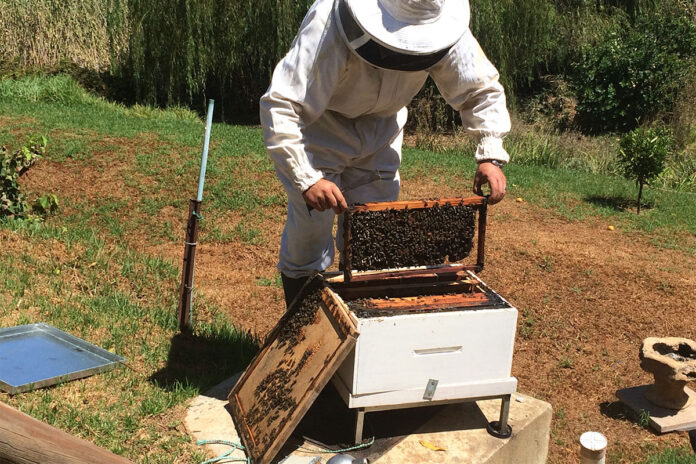
Practical experience is particularly important. A mentor can demonstrate how to approach a hive, how much smoke to use, how to remove a frame without crushing bees, and, perhaps most importantly, when to leave a colony alone.
The South African Bee Industry Organisation (SABIO), beekeeping associations, and practical training providers can help newcomers find training and connect with experienced beekeepers.

The ARC-PPRI is another important source of information. Its beekeeping research and development programme covers areas including bee health, management, and training, while its Beekeeping in South Africa handbook provides information for both beginners and experienced beekeepers.
The objective at this stage is not to become an expert. It is to learn enough to recognise what a healthy colony looks like before taking responsibility for one.
Safety comes first
Honeybees are livestock that require careful handling, not pets that can be approached casually. A beginner should never open a hive without appropriate protective clothing and the necessary equipment, including a smoker. Initial inspections should ideally take place under the supervision of an experienced beekeeper.
The location of the apiary also has a safety dimension. Hives should be positioned where normal bee activity will not create unnecessary risks for neighbours, children, visitors, livestock, or people using the property. Particular care is needed around people who may have severe allergic reactions to bee stings.
A beekeeper also needs to learn how bee behaviour changes under different conditions. Weather, disturbance, colony strength, and the availability of forage can all influence how bees behave. Good beekeeping therefore begins with respect for the colony and a clear understanding of the risks involved.
Choose the site before the hive
A colony can only perform as well as its environment allows. Banne says the choice of apiary site therefore deserves more attention than the appearance or cost of the hive.
A prospective beekeeper should assess the availability of flowering plants and other forage throughout the year, access to water, protection from extreme weather, accessibility for inspections, and the proximity of people and livestock.
“The landscape around the hive effectively becomes part of the beekeeper’s management system,” says Banne.
An apiary that provides abundant forage during one season but very little during the rest of the year, may produce an impressive honey crop temporarily while leaving colonies under nutritional pressure later.
Water is equally important, particularly during hot weather. Providing a reliable water source close to the apiary can also prevent bees from becoming a nuisance by visiting neighbours’ swimming pools, taps, or animal water troughs.
Get to know South Africa’s bees
South African beginners also need to understand that advice developed for European honeybees cannot necessarily be transferred directly to local conditions. The African honeybee, Apis mellifera scutellata, and Cape honeybee, Apis mellifera capensis, have evolved in different environments and display distinctive characteristics.
“The African honeybee is highly adapted to the South African environment,” says Banne.
Its behaviour, swarming tendency, and response to environmental conditions form part of what a beekeeper must learn to manage.
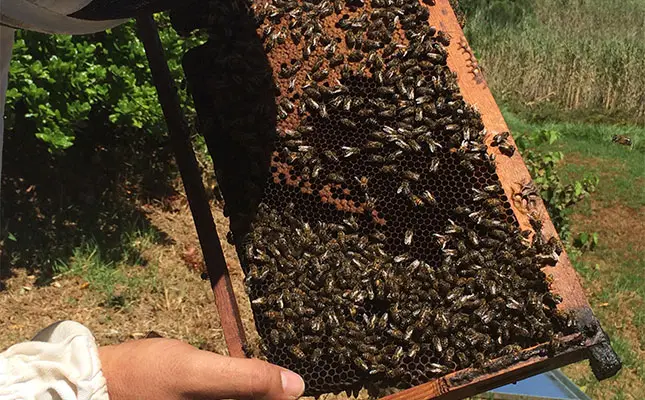
The Cape honeybee adds another consideration for South African beekeepers because it differs from the African honeybee in important biological and reproductive characteristics. The two occur in overlapping areas, making it important for beginners to understand which bees they are working with and how this can influence colony management.
Before opening a hive, a beekeeper should watch the entrance. The number and behaviour of bees entering and leaving, pollen coming into the hive, orientation flights, and unusual activity can all provide clues about what is happening inside. The objective is not to turn every observation into an immediate diagnosis. It is to develop an understanding of what is normal for a particular colony so that changes can be recognised.
Buy the basics, not the shop
Once a beginner understands the commitment involved and has identified a suitable site, the equipment can be purchased. The basic requirements are relatively straightforward: an appropriate hive, protective clothing, a smoker, and essential hive tools. The market offers plenty of additional equipment, but much of it can wait.
Banne recommends resisting the temptation to spend heavily before gaining practical experience. A mentor or training course can help distinguish essential equipment from items that are convenient but unnecessary for someone starting with one or two colonies.
Starting small also makes sense. The objective during the first year should be learning to manage colonies successfully rather than accumulating hives.
Be careful about your first colony
Getting the bees is not necessarily the most difficult part of starting. A beginner may be offered a swarm, a nucleus colony, or an established colony, but these are not interchangeable. The source and health of the colony matter.
Simply collecting a swarm because it has settled on a property can introduce problems. The beekeeper may know little about its history, health, or genetic background and may not yet have the skills to handle it safely.
Banne recommends obtaining bees from an experienced and reputable beekeeper or supplier. That gives a beginner information about the colony and, ideally, someone to contact when questions arise. A new beekeeper should also understand the relevant registration and movement requirements before acquiring bees.
Learn to read the hive
The first hive inspection can be intimidating. There is a tendency for beginners to look immediately for the queen. Finding her, however, is not necessarily the most important objective.
Banne says beginners should learn to assess the colony as a whole. Is there a healthy brood pattern? Are bees bringing in pollen? Are there adequate food stores? Is the colony expanding? Are there signs of queen problems, pests, or disease? Is the behaviour of the bees consistent with what would be expected from a healthy colony?
These observations become meaningful through practice. The aim is to build a mental picture of the colony and understand how it changes over time.
Watch the entrance before opening the hive
The hive entrance can tell a beekeeper a surprising amount about what is happening inside.
Look for:
- Bees entering and leaving normally;
- Pollen being brought into the hive;
- Orientation flights by young bees;
- Unusual fighting or aggression;
- Dead or dying bees;
- Unusual debris around the entrance;
- A marked reduction in activity when weather conditions would normally allow bees to forage.
These observations do not provide a complete diagnosis, but they help a beekeeper recognise what is normal for a particular colony and identify changes that may require closer attention.
Know when not to interfere
This may be one of the hardest lessons for a beginner. New beekeepers understandably want to check that everything is going well. They may inspect repeatedly, move frames unnecessarily, or intervene whenever something looks unfamiliar.
Banne cautions against this approach.
“Good management is not about inspecting as frequently as possible. It is about knowing why the hive needs to be opened and what you are looking for when you do it.”
Every inspection has a cost. Opening a hive disrupts its environment and consumes the beekeeper’s time and the bees’ energy. The beekeeper’s role is to support the colony, identify problems, and intervene, when necessary, not to micromanage it. Learning what constitutes normal behaviour is therefore fundamental to good management.

Learn the landscape
Honey does not begin in the hive. It begins in the landscape. Nectar and pollen availability influence colony development, brood production, honey storage, and the colony’s ability to survive periods when forage is scarce. Banne says beekeepers should learn which plants provide forage, when they flower, and how weather affects their availability.
The same apiary can behave very differently from one season to the next, depending on rainfall, temperature, and flowering conditions. Keeping bees successfully requires an understanding of the environment surrounding the apiary. Honey production is not simply a matter of putting bees into a hive and waiting. It is the result of a healthy colony interacting with a favourable environment.
Honey comes later
The prospect of harvesting the first honey is one of the attractions of beekeeping, but Banne says it should not be the first-year objective. A new colony needs time to establish itself, build comb, produce brood, and accumulate sufficient food reserves.
Taking honey too early can undermine the very colony the beekeeper is trying to establish.
“The first successful harvest should consequently be regarded as the result of good colony management rather than the purpose of it,” he says.
Honey should therefore be viewed as the reward for establishing and maintaining a healthy colony, rather than the first measure of success.
Keep records and learn from them
Record keeping may seem unnecessary when there are only one or two hives, but it quickly becomes one of the beekeeper’s most useful tools. Banne recommends recording inspection dates, observations about brood and food stores, queen status, swarm activity, treatments, feeding and honey harvests.
These records can reveal seasonal patterns and help identify problems earlier. They also provide a history of individual colonies, allowing the beekeeper to compare their performance over time and learn how they respond to changing conditions.
South African beekeepers must also comply with the applicable requirements governing honeybee keeping, including registration and identification of hives, while additional municipal requirements may apply depending on where bees are kept.
The Department of Agriculture should be consulted before establishing an apiary.
The first year is about becoming a beekeeper
The equipment is easy to buy. Learning the bees is harder. Banne’s message to prospective beekeepers is that the first year should be measured not by the amount of honey harvested or the number of hives accumulated, but by the skills acquired.
A good first year may produce relatively little honey but leave the beekeeper able to recognise a healthy colony, understand seasonal changes, identify warning signs, work safely, and make informed decisions about when to intervene.