
Which is best for farm efficiency: capital investments into machinery or a labour workforce?
The answer is not clear cut as it depends on a host of factors, ranging from scale of production to type of farming to social considerations.
In certain scenarios it is crucial to invest in the best machinery to remain competitive.
Large-scale commercial grain farming is not viable with manual labour, for example.
On the other hand, many fruit or vegetable production scenarios require human-based feel and judgement, such as selecting properly ripe fruit during harvest, for example, or planting a bulb to face in the correct direction.
In cases of small-scale or seasonal operations, investment into machinery could turn into a liability if it fails to contribute enough to reach break-even point on the initial capital investment.
In this article, we unpack some of the facts on both sides using localised examples, including costing considerations, as well as regulatory and wage dynamics. We will look into several different industries, including macadamias, grains, vegetables and pigs, to outline pros and cons of both approaches.
What does the research say?
Farmers are working in an incredibly competitive global playing field with tight margins.
One critical choice is whether to commit financial resources for expensive, efficient machinery (capital investment), or instead focus efforts on staff expansion or upskilling (human capital).
The decision translates directly into efficiency, productivity and profitability at farm level. In the South African context, though, there are broader considerations that feed into the role of farming in the rural socio-economic context, with impacts on rural communities also weighing on decisions in some cases.
Agbiz chief economist Wandile Sihlobo says the benefits of mechanisation lie in the efficiency gains. In this regard, he believes South Africa to be on par with countries like Australia, the US, Canada and others in terms of production efficiency and uptake of mechanisation.
“South African farmers spend a lot of money on mechanisation, which is why farm debt is high. This is because farmers borrow a lot of money that they then reinvest in farm implements, equipment and farm infrastructure.”
Sihlobo says South African farm debt was standing at R225 billion at the end November 2025, and is rising at 9% each year. This is not because farmers are not paying their debt, but rather that they are reinvesting in technology and machinery, which is in turn resulting in efficiency gains.
“If you look at the growth of the South African agriculture sector from 1994 to today, it has more than doubled in value and in volume terms. In addition to better seed cultivars and genetics, one of the key contributing factors is mechanisation and the efficiencies and scale that mechanisation has brought to the sector.”
According to a document published by the University of the Free State (UFS) in 2017, titled ‘Guidelines for mechanisation and labour planning’, machinery typically makes up about 25% of total farming costs, and labour around 15%.
Considerations that will factor into the decision about whether to mechanise or opt for a labour force include issues ranging from the scale of the operation, to seasonality of the type of farming, to availability of staff, labour legislation requirements and more.
Machinery for scale and risk management
Machinery is capital-intensive and one of the biggest hurdles when it comes to investing in machinery is the initial capital outlay. A tractor, harvester, transplanter or automated feeder system demands an upfront purchase, or financing, which is a long-term commitment.
One also needs to factor in depreciation, maintenance and operating costs.
Once in place, though, machinery can provide consistent output, predictable scheduling, farming at larger scale, and a faster process.
It also removes many of the issues associated with managing a large workforce.
- Operational efficiency and yield – Modern equipment offers a technical advantage that human labour cannot match on large-scale operations. This is particularly true in time-sensitive sectors.
According to an article published in Frontiers in Environmental Science in 2022 titled ‘Impact of Agricultural Mechanization on Agricultural Production, Income, and Mechanism: Evidence From Hubei Province, China’, machinery is mandatory for maize and wheat farmers. It states that the ability of a combine harvester to complete tasks within short, optimal weather windows prevents yield loss and avoids financial penalties resulting from high moisture content.
The article further states that precision agriculture systems, such as GPS-guided applicators, ensure exact placement of inputs, which maximises output.
“Research indicates that a 1% increase in the level of mechanisation can increase overall crop yields by over 1,2%,” it states.
- Mitigating cost and labour risk – For many farmers, mechanisation is viewed as a means of protection against the volatility experienced in the labour market. This includes threats such as strikes, incompetence, regulatory obstacles and so forth.
One of the big benefits in this regard is cost certainty. In other words, once the asset has been acquired, machinery costs are fixed to financing and variable inputs (fuel, maintenance).
This can be easier to manage than labour costs that are regulated by government and subject to annual increases.
Machinery provides operational resilience against strikes, absenteeism, and disputes. A study examining farm labour substitution in the Western Cape found that a shift to capital-intensive methods saved one farm R95 101 annually (19,5%) in comparative production costs, while successfully mitigating the risk of labour instability. (Source: ‘A case study on farm labour substitution’, Unisa Press Journals, 2017).
- Barriers to entry – The high acquisition cost is generally one of the major challenges in the move to mechanisation. According to a working paper by the Competition Commission in 2019, the high level of debt required to finance machinery limits access for smaller and emerging farmers in particular.
- Depreciation and obsolescence – According to the UFS guideline document, machinery is an asset that depreciates rapidly. In addition, a farmer needs to carefully calculate whether or not the machinery will add value to the operation.
Best practice is to accurately calculate the break-even threshold (see box), or the minimum hectares required to justify the cost of the asset as opposed to using contractors and/or manual labour. Failure to meet this threshold turns the asset into a liability.
People and skills also have a place
South Africa has huge unemployment, particularly in rural areas, providing farmers with access to a multitude of job seekers. The catch, though, is in finding reliable, competent employees with skills relevant to the job at hand.
Added to this is the reality of labour costs. In terms of the latest sectoral determination for farm labour wages, this increased from R27,58/h (2024) to R28,79/h (1 March 2025), a year-on-year adjustment of R1,21/h. This may seem negligible, but when multiplied over thousands of labour hours per season (especially in horticultural harvests), the cumulative effect is substantial.
Here are some of the pros and cons to investing in human capital:
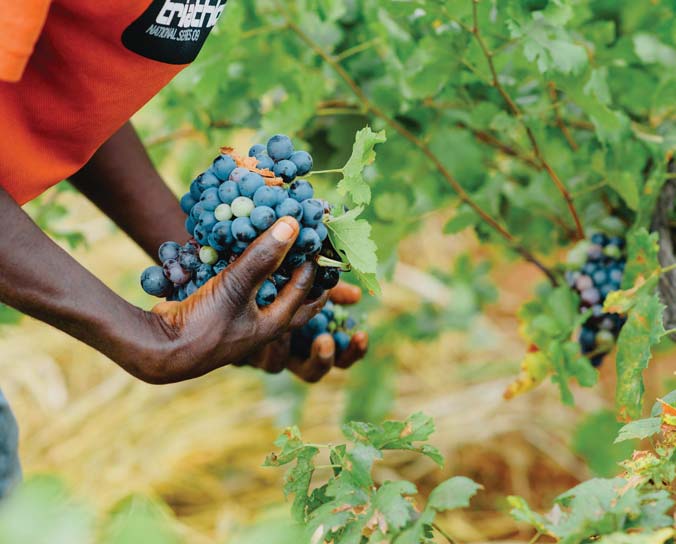
- The quality control factor – In certain niche or high-value sectors there is a need for human sensitivity or attention to detail. One such example is selective harvesting required for vegetables, grapes or nuts. In such industries, people need to selectively pick and grade to ensure that only ripe or appropriate quality produce reaches the market.
- Flexibility and variable costs – Labour is easily scaled to meet seasonal peak demands such as harvest or pruning. It is also a variable cost as opposed to a fixed financing commitment for machinery. Farmers can adapt and align the labour requirement against expenditure and revenue cycles, which is especially helpful for smaller or cash-constrained operations.
This is relevant for many emerging farmers. According to the Competition Commission, a labour intensive model provides the necessary low-entry cost and cash-flow flexibility needed to begin commercial farming.
- Challenges and constraints – Rising costs are a major challenge, with increases to national minimum wages pushing up the base cost of employment. This, combined with the administrative burden of regulatory compliance, can negatively impact the labour-efficiency cost calculation.
There are also often skills gaps. Operations relying heavily on seasonal labour often battle with high turnover and inconsistency in output quality. Investment is also required to upskill permanent farmworkers who are increasingly required to operate and maintain modern systems.
Seasonal tasks such as hand-picking, weeding, sorting, or thinning can quickly accumulate cost, especially on medium to large crop farms. Management overheads – supervision, training, housing, and transport – add further layers that are sometimes overlooked in basic cost-per-hour estimates.
Complementary elements
Sihlobo does not believe that South Africa is at a level where farmers are reducing labour demand in favour of focusing on more machinery. He believes the labour-machinery relationship to be more complementary in nature.
“The mechanisation that we use is about us being able to operate at scale, but the jobs that require labour still remain,” he says.
This will not necessarily remain the status quo indefinitely, though. He says the core theory is that when the price of labour exceeds the price of technology, there is a “substitution effect” between technology and labour.
“We are not there yet in South Africa. Although we complain that wages are high, they are not yet at a level where people can be replaced by machines.”
He says South African farmers are well advanced and on par with international compatriots in terms of technology uptake. “I think the multinationals like John Deere, Case and many others with equipment available in South Africa help us a great deal in making sure we stay on par.
“I also think having the liquid capital that enables us to import and do necessary investments – and also having an open farming policy that allows for mechanisation in the country – assists us in ensuring we remain on a good level.”
He adds that mechanisation and the adoption of other technology, including biotech, also assists the South African agriculture sector in remaining competitive.
“In addition, stability of the rand in the recent past has further facilitated us to remain competitive in South Africa, and I think there is a greater appreciation and understanding of that.”
Sihlobo also warns South Africans not to be taken in by “exaggerations” about the pace of technology elsewhere in the world.
“Look at places like Europe where they still struggle with issues like crops rotting in the field.
If they had the technology available to actually access those waterlogged fields, they would have used it, and not left their crops to rot,” he says.
Contractors as an option
The UFS guideline states that as much as 40% of farm production costs can go towards labour and machinery. Both are essential; both are expensive; and both scale differently.
There are other options to consider, though. For example, farmers don’t always need to buy machines outright. A growing share of producers, especially fruit, grain and vegetable growers, now opt for contractor services or custom hire without taking on the capital burden. This is especially relevant for tasks that only occur a few weeks in the year.
In such cases, shared machinery pools can make more economic sense. A challenge with this, however, is availability at critical periods, because numerous producers in a specific niche in a specific region could require access to the pool at the same time.
Staff solutions can also be addressed in this manner. By utilising a labour force contractor for seasonal or temporary staff, you can negate many of the regulatory hurdles, as well as issues around absenteeism that the contractor has to deal with directly.