In compiling this article, Farmer’s Weekly spoke to several producers who have experimented with biogas for electricity and biogas production, often at a significant cost.
Their experiences highlight recurring challenges: high upfront costs, ongoing maintenance, conflicts with service providers, complex system design, and difficulty making electricity generation financially viable.
One producer who asked to remain anonymous said that selling biogas would probably be the most lucrative application, but it doesn’t make sense in South Africa without infrastructure and a market to support it.
He said the next most viable use for biogas was on the farm, to heat broilers, for example.
According to him, producing electricity is a no-go in South Africa in the absence of government subsidies, on which many European producers have built their systems. And he went as far as calling it a ‘sinking ship’ here.
Another farmer made it clear that, for him, biogas generation is a side project. From the start, his main goal has been to improve waste management on his farm. In his words, the dairy waste that passes through the biodigester is cleaner and has fewer pathogens than the waste that goes through his waste treatment plant.
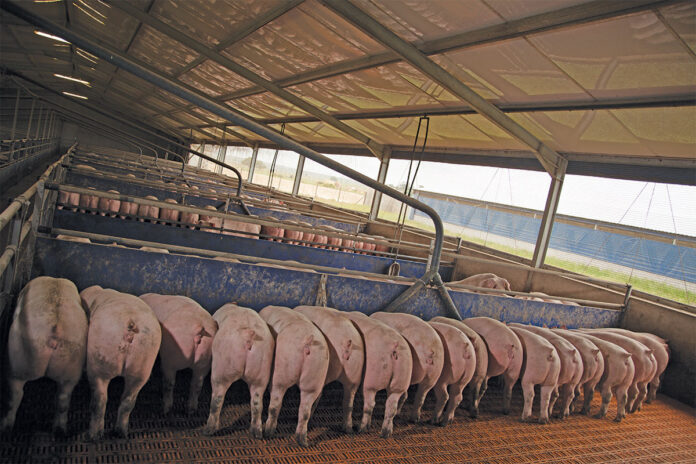
One producer who was willing to share his experience in detail was Mauro Delle Donne, owner of Zandam Cheese and Piggery in Durbanville, Western Cape. His journey into biogas production illustrates the technology’s potential and the difficult lessons that come with implementing it in South Africa.

Early days
In 2016, Delle Donne installed a biogas plant in partnership with a company called Ibert.
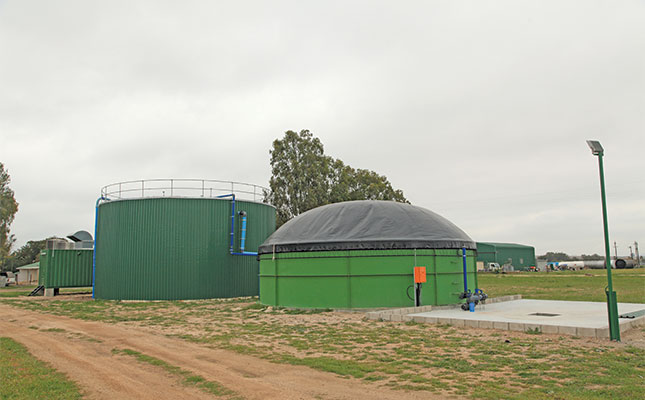
The plant featured a 500m³ digester capable of converting about 22t of reduced-water piggery waste per day into biomethane at a rate of 40m³/h. The biogas was used to heat a broiler house and power a generator, producing roughly 105kW of heat and 75kW of electricity.
The two partners shared the R8 million cost. Zandam handled the immovable infrastructure, while Ibert was responsible for the movable parts, which it rented for R400 000 a year. It sold back the electricity generated by the plant at a discounted rate of R1,01/kW, compared with Eskom’s rate of about R1,10/kW at the time.
Initially, Delle Donne was satisfied with the arrangement, but problems soon emerged.
“Ibert wasn’t making enough money to service its debt with the income received from selling electricity and gas to me. After about two years, they cut their losses and left. They eventually had to liquidate,” he explains.
In hindsight, he believes the project struggled not because the biogas itself was flawed but because of how the system was structured. The plant was overcapitalised, with a 7m-high concrete digester and the use of top-quality equipment, including stirrers and generators, increasing costs substantially.
“Eskom’s prices climbed significantly after that,” he says. “Ibert might have made it if they had been able to stay on for a couple more years.”
A short while later, another company, Global Energy, offered to partner with Delle Donne. Having already lost money in the first venture, he decided to take a step back financially and limit his exposure.
Global Energy chose not to use the original biodigester and instead constructed four new digesters made from lined sink dams and cheaper components.
“We were both happy for the first few months,” Delle Donne recalls. “But after less than a year, one of the digesters ruptured. They fixed it, but shortly after that another broke, which pushed their cost up dramatically and became a safety issue.”
According to Delle Donne, Global Energy attributed the failures to poor tank material.
“But it could just as easily have been because the digesters were not built properly. The company, too, liquidated,” he says.
Pressing pause to reset the herd
Despite these setbacks, Delle Donne plans to produce biogas again within the next two to three years. For now, however, he is focusing on depopulating his pig herd to start afresh with a disease-free herd.
“I’ve had a standard-health pig herd up until now, which means the pigs have to be constantly vaccinated,” he explains.
“Last year, the vaccination and medication cost against lung diseases ran up to R500 000 per month at one point, so I decided to take the leap to a high-health herd. We were unable to do this previously because we were too close to another pig farm, which has since shut down.”
Zandam piggery will be empty by August, after which repopulation begins with high-health gilts. During this time, the plan is to carry out essential maintenance and repairs to prepare for the high-health herd.
Delle Donne says every producer he has spoken to who went this route has been happy with the decision.
“The key to success, however, is biosecurity, as the pigs will also get ill if a disease is introduced to them.”
Focusing on waste management
Delle Donne emphasises that producing biogas was for him never really about cost savings or electricity generation, but rather about waste management.
“We have a permit to use treated waste on our lands, but allowing the waste to go through the biodigester before using it on the land is much more efficient cleaning than the treatment. We currently also supply the City of Cape Town biodigester with pig manure as feedstock.”
When biogas production resumes in two to three years’ time, he plans to reuse the original Ibert biodigester, but modify it over time by replacing internal blades with external agitators and blowers like those used by Global Energy.
“I have seen that you get better results with more cost-effective parts and systems. Also, placing parts on the outside instead of inside of the biodigester helps to lengthen the lifespan of the parts, and it’s easier for maintenance,” he says.
Crucially, the system will be designed to produce biogas only, rather than electricity.
“The generators simply do not last because of corrosion. This time I will only produce biogas that will fuel broilers. I will probably be able to produce 15% of my heating requirements initially, which can be expanded over time. The beauty is that when you produce too much gas, you can just flare it,” he explains.
For Delle Donne, the value of biogas is now far more clearly defined than when he first invested in the technology.
“Biogas is an excellent way to reduce waste on a farm like ours,” he says. “From an environmental perspective, it’s something that regulators and environmentalists support.”
His experience reflects a broader pattern among South African producers: while biogas is often promoted as an energy solution, its greatest strength on farms may lie in improved waste management, provided systems are carefully designed and expectations remain realistic.
For more information, email Mauro Delle Donne at [email protected].