
Speaking to growers at the Vinpro regional meeting in Stellenbosch, Van Zyl argued that IPM is not a collection of tools. Instead, it is a decision-support system that helps farmers determine when, where and how to act against pests and diseases.
Drawing on the military strategist Sun Tzu, he noted that strategy without tactics is the slowest route to victory, while tactics without strategy is the noise before defeat.
“The point is that you need both,” he explained. “You need a strategy that guides your decisions, and then you need the right tactics to implement that strategy.”
Van Zyl’s view is not new. It closely aligns with the definition proposed by American entomologist Marcos Kogan, who described IPM as a decision-support system that helps farmers select and coordinate pest-control tactics based on economic, and social considerations.
The distinction may seem subtle, but it has major implications for how farmers manage their crops.
Monocultures create challenges
But why is such a decision-making framework necessary in the first place?
To answer this, Van Zyl asked growers to consider the reality of modern agriculture. Most commercial vineyards and orchards are monoculture systems, with vast areas planted to a single crop. While highly productive, these systems often provide pests with a continuous food source and shelter, allowing populations to survive and build from one season to the next.
At the same time, beneficial insects often struggle to establish and multiply because of insufficient food and too few refuge sites to sustain their populations. The result is an unstable agroecosystem that depends heavily on human intervention.
According to Van Zyl, this often results in growers practising what is effectively integrated pesticide management rather than integrated pest management. The focus shifts to deciding which product to use, which active ingredients to rotate to delay resistance, when to spray and how much to apply.
“True IPM with a broader set of questions” Van Zylsaid.

Economic sense
Every pest-management decision should, according to Van Zyl, be evaluated against three objectives: Will it improve profitability? Will it reduce selection pressure and resistance risks? And will it maintain environmental quality?
The first question is often the simplest.
“Growers should not apply products simply because they are available or because they have become standard practice. Every input, intervention or management strategy should make money and therefore be justified by a measurable benefit,” Van Zyl said.
He added that he was concerned about situations where international retailers or market requirements encourage producers to include products in their IPM programmes without sufficient evidence that they improve pest control.
To illustrate the point, he referred to field trials conducted in 2023 and 2024 on two farms to evaluate three biological products that were added to spray programmes to improve weevil control.
The products failed to deliver the expected results.
“The theory was that these products would infect weevil larvae in the soil and reduce damage. However, the environment was possibly not conducive to facilitating contact of the active to the larvae, so the treatments had no significant effects compared to the farm practice,” Van Zyl explained.
The trial demonstrated a key IPM principle: a product is only as effective as the system in which it is used. Understanding how and where a product works is often more important than simply adding it to a programme.
Not all biological interventions proved ineffective, however. Van Zyl pointed to separate work on woolly apple aphid management, where some biological actives showed promise.
“These are products that may become increasingly important in future as access to certain highly hazardous pesticides becomes more restricted,” he said.
The lesson was clear: an intervention only has value if it delivers a measurable benefit. But profitability is only one part of the equation. Farmers also need to ensure that today’s management decisions do not undermine tomorrow’s control options.
Protecting the tools that still work
The second objective of IPM is to minimise selection pressure and slow the development of pesticide resistance.
For Van Zyl, this is no longer simply a scientific concern. It has become a business reality.
Using codling moth control in pome fruit production as an example, he pointed out that growers have very few active ingredients left that comply with export market requirements, particularly in the European Union.
The danger is that growers become increasingly dependent on the same chemistry year after year. While this may provide effective control in the short term, repeated use of the same active ingredients places enormous selection pressure on pest populations, increasing the likelihood that resistance will develop.
“If we continue relying on the same actives, we will eventually lose them,” Van Zyl warned.
This is where IPM differs fundamentally from a spray programme. Instead of asking which product to apply next, growers need to consider what other tactics can reduce pressure on the chemistry they still have available.
These tactics may include monitoring, mating disruption, physical barriers, exclusion netting, biological control agents and cultural practices that reduce pest populations and complement chemical strategies.
“The objective is not to replace pesticides entirely. Rather, it is to preserve their effectiveness for as long as possible,” Van Zyl said.
Disease forecasting models can provide additional support. By identifying periods when infection risk is genuinely high, growers can better position fungicide applications and avoid unnecessary sprays. This not only reduces costs but also lowers the selection pressure that drives resistance development.
“Every unnecessary spray today increases the risk of losing valuable control tools tomorrow,” he said.
Working with the ecosystem
Yet preserving effective chemistry is only part of the challenge. Long-term pest management also depends on maintaining the health of the farming system itself.
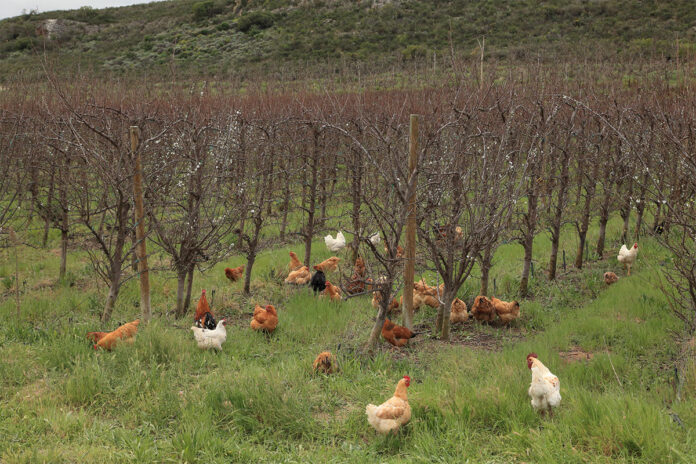
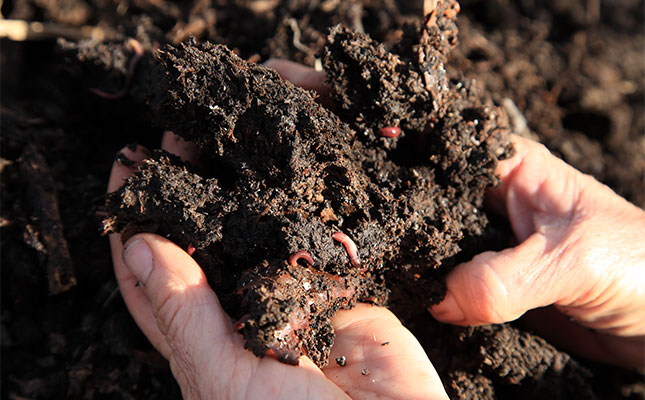
“Maintaining environmental quality is about protecting the ecological capital of the farm. Healthy soils, beneficial organisms and diverse agroecosystems can help suppress pests naturally, reducing reliance on costly interventions while supporting long-term productivity. The healthier and more functional the agroecosystem, the easier and often cheaper it becomes to manage pests,” Van Zyl explained.
This, however, does not mean eliminating pesticides or turning commercial farms into nature reserves. Rather, it means managing the agroecosystem in a way that supports production while preserving the biological processes that help regulate pests and diseases.
This is where ecological pest management and IPM intersect.
“IPM can only be sustainable in certain aspects if it is supported by a good ecological pest management model,” he said.
The benefits of this approach are often seen over the long term. Van Zyl referred to a project on a ZZ2 farm in the Koue Bokkeveld where orchards were composted and mulched annually for more than a decade.
Over time, soil health improved substantially, creating conditions that supported a more balanced and resilient production system. For years, the farm experienced little need to control pests such as red spider mite and woolly apple aphid.
The project also demonstrated that agroecosystems are dynamic and that management practices need to evolve as conditions change. As soil conditions continued to improve, excessive vegetative growth eventually created new challenges that required a different management approach.
For Van Zyl, this reinforces a central principle of IPM: “It is not a fixed recipe. You need to understand what is happening in your system and adapt your strategy accordingly.”
Plan, monitor and adapt
For Van Zyl, successful IPM starts long before a pest or disease appears “You cannot start the season without a plan,” he said.
One of the first steps is to conduct a pest and disease analysis for every production block. Van Zyl uses a rating system to classify orchards according to pest pressure, allowing growers to develop low-, medium- and high-risk management programmes.
“We never spray all our orchards the same,” he explained. “Many blocks have no significant issues, so why should they receive the same programme as blocks with known problems?”
The exercise also helps identify why a pest problem persists. The cause may lie in monitoring failures, poor applications, ineffective control measures or other management practices.
Planning, however, is only effective when supported by accurate monitoring.
“You need trained scouts who can correctly identify pests and diseases and collect reliable field data. Misidentification can lead to unnecessary interventions. In blueberries, for example, predatory mites are sometimes mistaken for pest species, resulting in sprays that do more harm than good,” Van Zyl said.
Monitoring is not simply a record-keeping exercise. The information collected should directly determine whether action is required and where resources should be allocated.
Van Zyl illustrated this with codling moth management, where trap catches allowed growers to target only affected blocks instead of spraying entire farms. Similarly, monitoring revealed that red spider mite control was only necessary in blocks experiencing environmental stress, while neighbouring orchards required no intervention.
Forecasting models can further improve decision-making by helping growers predict infection periods and pest pressure.
Using downy mildew as an example, Van Zyl explained that disease forecasting models showed only two significant infection periods during a dry season. Growers who relied on these models were able to reduce fungicide applications, lowering costs, environmental impact and resistance pressure.
By contrast, some producers continued spraying according to routine schedules and applied fungicides outside the actual infection windows.
“The timing of applications is critical, he said. “If the spray is not positioned correctly, you can spend the money without getting the protection.”
According to Van Zyl, this is where many IPM programmes succeed or fail.
“You can have the best strategy in the world, but if your monitoring is poor, your timing is wrong or your application is ineffective, the results will be disappointing.”
Van Zyl believes that many growers still view IPM as a toolbox filled with pesticides, biological products, and beneficial insects. In reality, those are merely tactics.
The true value of IPM lies in providing a framework for deciding which tactic to use, when to use it and whether intervention is justified at all.
“Ultimately, successful IPM is not measured by how many products are applied, but by how well decisions are made. Put simply: successful IPM starts with better decisions, not more sprays,” he said.
For more information, email Dr Gideon van Zyl at [email protected].
Read Marcos Kogan’s research: Integrated Pest Management: Historical Perspective Contemporary Developments, published in Annual Review Entomology, 1998. 43: 243 to 70. Kogan.1998.Ann.Rev.Ent.IPM.pdf.)