
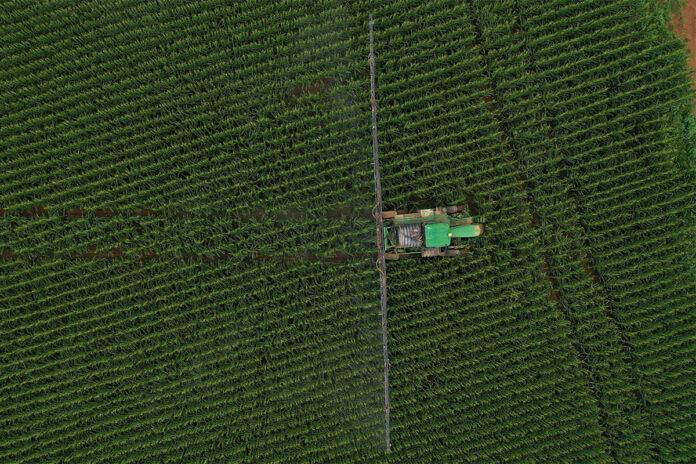
Fungi are the number-one cause of crop disease and consequent yield losses worldwide. With increasing pressure to improve productivity, farmers must employ strategies to reduce the risk of diseases affecting both crop yield and quality. One of the options is applying fungicides as a proactive measure.
“Because every season is different, it remains important for farmers to take a holistic approach to crop management. Tailor-made crop management programmes that take into account each producer’s unique needs form the foundation of sustainable farming,” says Hanlie Geldenhuys, agronomy lead at Syngenta South Africa.
The likelihood and possible impact of a disease should be considered even before planting when compiling a sensible risk management strategy. It is, therefore, important to know which factors to look at when developing a preventative disease control plan.
Economic damage levels and thresholds, together with prediction models, can be used to determine the most appropriate control measures based on the severity of the disease or expected disease pressure.

Laying the groundwork for disease control
Seed- and soil-borne disease pathogens thrive in a wide variety of environmental conditions. According to Jurgens Minnaar, Syngenta’s seedcare business manager for South Africa, seed-applied fungicide technology delivers two fundamental benefits simultaneously: protection against soil- and seed-borne pathogens during the critical establishment window, and vigour enhancement that drives more uniform, faster emergence. Together, these lay the biological and agronomic foundation for everything that follows.
Dirk Uys, independent crop protection consultant at Agbridge, stresses that three factors are required for disease development: a susceptible host, a disease-causing pathogen, and the right environmental conditions.
“This is referred to as the disease triangle, and it highlights that a disease cannot establish if all three don’t occur together. With access to advanced digital systems, these can now be modelled, and it has become important to make pest and disease scouting records available to enable predictive modelling and help farmers avoid risks,” he explains.
“This data may be seen as intellectual property, but if it is used wisely, farmers and their advisers will be able to manage their fungicide applications proactively, as diseases don’t respect borders.”
Important factors that influence the success of a disease management strategy include:
- Climate
- Disease pressure or inoculum levels in crop residues
- Historical disease occurrence
- Fungicide and disease properties
- Crop susceptibility (sensitive growth stages)
- Monitoring
- Correct diagnosis
- Effectiveness of controls
Correct diagnosis
Before fungicides can be applied effectively, the disease must first be correctly diagnosed.
“Incorrect disease diagnosis prevents one from selecting an appropriate fungicide. Misidentification of pests and diseases is one of the most common causes of failed crop protection,” emphasises Geldenhuys.
Seed- and soil-borne disease pathogens thrive across a wide variety of environmental conditions, making accurate disease prediction one of the greatest challenges in crop production.
“Pythium flourishes in cool, waterlogged soils where free moisture enables its zoospores to spread rapidly.
“Fusarium, while it generally favours warmer conditions, varies significantly by species. Some are most aggressive in warm and wet environments, while others are more prevalent under warm and dry conditions.
“Rhizoctonia presents a unique challenge. Infection typically occurs in cool, wet soils, but visible symptoms often only emerge when plants are subsequently stressed by warm and dry conditions,” explains Geldenhuys.
Minnaar adds that these differences in environmental preferences make predicting the prevalence and severity of each pathogen extremely difficult.
According to Pieter Burger, digital agriculture services lead at Syngenta South Africa, detecting plant pests and diseases at the earliest stage, before they spiral into emergencies, is crucial.
“Early detection can act as the first line of defence, offering a significant advantage in protecting valuable harvests.”
He notes that Crop Doctor, a feature of Syngenta’s Cropwise Grower app, uses photo-based artificial intelligence to provide farmers with instant, accurate identification of plant diseases, along with linked control recommendations.
Geldenhuys further notes that the value of scouting and risk assessment cannot be underestimated.
“It is important that farmers get out into their fields to identify possible problems. It is not only crucial to know if a problem exists but also to know the extent of the disease pressure.”
She also advises using a magnifying glass when examining lesions to accurately identify disease symptoms.
Geldenhuys adds that it is important to understand the risk factors.
“Certain practices, such as minimum tillage, monoculture, and high levels of crop residue, as well as certain weather conditions, can all increase disease development and pressure.”
Choosing the right fungicide
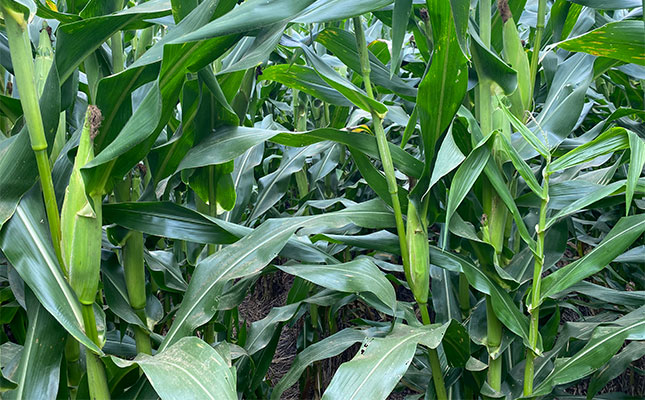
Sean Brereton-Stiles, BASF’s head of marketing for South and Southern Africa, says product choices will vary year-on-year because each season’s environmental conditions are different, bringing unique challenges.
“Disease risks will vary over time and areas, so applying the right product for a specific problem is crucial.”
In addition, he advises farmers to choose a product with a long-lasting residual to ensure crops are protected between applications and potential disease onset.
“Early applications of fungicides without a strong residual may only delay disease onset and ultimately still open the door for late-season losses.”
Burger points out that different active ingredients control different diseases, each with its own mode and site of action. Therefore, a combination of products is often recommended for controlling a broader spectrum of diseases.
“Triazoles have a wide spectrum of control with short curative action, whereas strobilurins and [succinate dehydrogenase inhibitors] provide preventative and long-lasting control,” he explains.
However, he cautions farmers that some supermarket groups and export countries restrict the use of certain active ingredients and, in certain instances, encourage products containing a single active ingredient.
“This should also be kept in mind not only in product choices but also in timing, as withholding periods are crucial, especially when exporting.”
Timing is everything
Fluctuating weather conditions and disease severity complicate decisions about when to apply fungicides.
According to Geldenhuys, timely fungicide applications deliver the greatest potential return on investment by protecting crops when they are most susceptible to diseases and stress.
“The timeous application of fungicides not only prevents yield-robbing fungi from ravaging crops but also supports overall plant health by reducing physiological stress.”
She notes that disease profiles shift with changing climatic conditions, so farmers must continually think about the best time to apply a fungicide to achieve optimal disease control.
“Apply too early, and crops may be vulnerable to late-season disease development. Apply too late, and susceptible crops might not be able to recover from the onslaught of disease pressure or environmental stress.”
Scouting is also essential when determining fungicide application timing.
“You need to start looking at the lower canopy leaves for initial signs of disease,” says Geldenhuys.
Brereton-Stiles adds that this is particularly true of leaf diseases such as grey leaf spot and northern corn leaf blight, which remain an ongoing concern in many maize-growing regions.
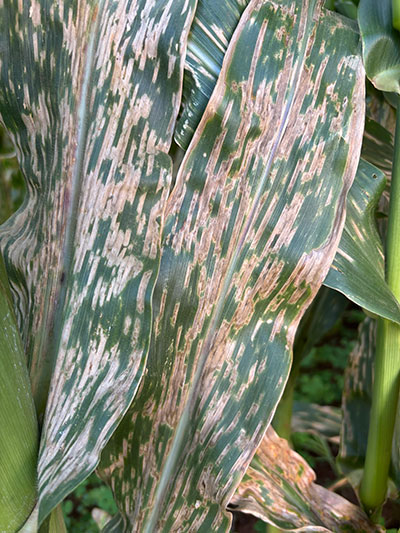
“Under favourable conditions, these diseases can spread rapidly through a crop and reduce yield long before the damage becomes obvious in the field. For farmers, the challenge is clear: protect the crop early and maintain plant health throughout the season,” he says.
According to Burger, preventative fungicides create a chemical barrier or systemic defence before pathogens enter plant tissue, whereas curative fungicides attempt to stop an already established infection.
“From a technical standpoint, 90% of the time, a preventative strategy is more efficient. Curative applications are often ‘rescue’ treatments, and even though they might stop the spread to new leaves, they cannot restore the photosynthetic capacity of tissue already compromised,” he stresses.
“By acting early, you’re preserving the plant’s genetic yield potential rather than just managing its decline.”
According to Geldenhuys, curative control is limited to a window of just 24 to 72 hours after initial infection, with efficacy dropping sharply after the first 48 hours.
Minnaar points out that four of the most common root rot diseases that occur in barley and wheat, namely Pythium root rot (also known as seedling wilt), Fusarium root rot, Fusarium ear scorch, and Rhizoctonia root rot, are caused by fungi that live in the soil.
What makes the situation more complex, he says, is that root rot is often caused by a disease complex comprising more than one type of pathogen.
“Fungal and oomycete species are the predominant participants in the complex, while bacteria and viruses are also known to cause root rot,” explains Minnaar.
“Because the infection occurs at a very early stage, it is not always correctly diagnosed. Poor germination and emergence can be attributed to other causes, such as poor-quality seed or other soil-borne diseases caused by Rhizoctonia spp. or Fusarium spp.”
He adds that seed treatments offer an excellent complementary solution for preventative disease control.
“One of the best ways to achieve early crop protection is by treating the seed to prevent infection. Seed treatments will also protect the emerging seedling for some time after germination, allowing it to develop a strong and healthy root system.”
However, seed treatments are just one component of an effective disease management programme. Applying the wrong fungicide at the wrong time can negatively affect crop health, leaving it more susceptible to disease and providing little disease protection.
It is also important to consider the crop’s growth stage. The best growth stage for application varies depending on the crop and the disease the farmer is dealing with.
For both maize and soya bean, the optimal fungicide application window coincides with critical growth stages when disease has the greatest potential to reduce yield. Applications should protect the upper canopy from the reproductive stages through to physiological maturity.
- Maize application timing
In maize, the greatest yield losses occur at the VT-R1 growth stage, when tasselling and silking take place. Foliar fungicides applied at this stage provide optimal disease control by preventing disease onset when the crop is most susceptible to stress.
Applications at this stage improve overall disease control, stalk integrity, and harvest efficiency. At this crucial stage in development, fungicide applications are more likely to result in a yield response and improve profitability.
- Soya bean application timing
For most foliar soya bean diseases, the ideal fungicide application window is at the R3, or ‘beginning pod’, growth stage. Foliar fungicides applied at this stage have the greatest impact on yield preservation because disease severity begins to increase rapidly, and stress during the R4 to R6 stages that follow can cause severe yield losses.
However, fields with a history of disease may require an earlier application, especially if extended periods of cool weather are forecast. In these cases, consider applying a fungicide at early to late bloom stages.
- Grain application timing
Brereton-Stiles points out that in the case of grain production, timing depends on disease pressure.
“If leaf disease pressure is high early in the season, an early application may be considered, but this can leave the flag and penultimate leaves at risk. As a result, the crop may require a second application around flag leaf emergence, and perhaps even a third if Fusarium head blight is also a concern.”
Application rates
Brereton-Stiles adds that fungicides should be applied at the recommended rate specified on the product label to effectively manage disease.
“Calculation errors can easily be made when determining the correct rate, treatment area, or amount of active ingredient.
“The treatment area needs to be known to determine how much fungicide to add to the spray tank. In addition, the water volume per hectare plays an important role in ensuring the target area is covered. An error in any of these areas can result in the misapplication of fungicides,” he explains.
Geldenhuys adds that environmental conditions should always be considered before spraying.
“Take note of weather forecasts when planning to spray. Avoid spraying during rainy or windy conditions, or in the middle of the day when plants may be under stress.”
While environmental conditions are critical for foliar fungicide applications, Minnaar says seed treatments require a different approach. The focus is on protecting seed against fungal infection before planting so that crops can develop healthy, robust root systems.
“Well-formulated products not only protect the seed and seedling but also promote uniform crop establishment and the development of healthy root systems that lay the foundation for optimal crop yield and quality,” he adds.
According to him, seed treatments offer the following benefits:
- Ensure healthy, vigorous seed
- Protect germinating seed and young seedlings when they are most vulnerable
- Help achieve the planned plant population by protecting seed during planting
- Promote early development of strong, healthy root systems to ensure efficient water and nutrient uptake
- Target specific fungal pathogens through purposefully formulated compounds
For more information, email Hanlie Geldenhuys at [email protected], Jurgens Minnaar at [email protected], Dirk Uys at [email protected], Pieter Burger at [email protected], and Mary Willemse at [email protected].