
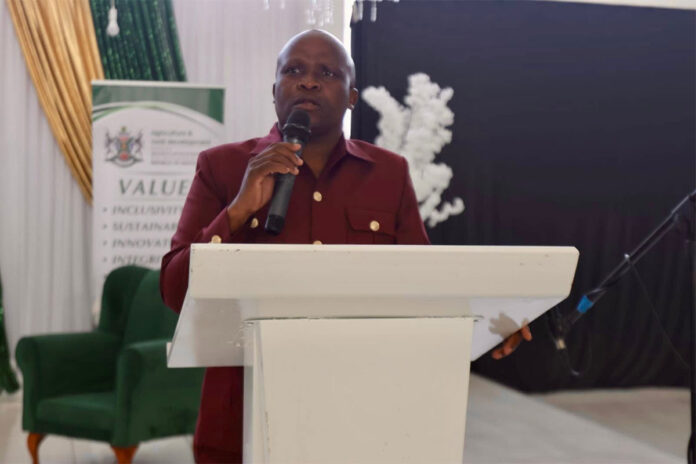
The funding forms part of the North West Department of Agriculture and Rural Development’s (the department) nearly R1,3 billion budget and was announced by North West MEC for Agriculture and Rural Development Madoda Sambatha during his budget vote speech in Mahikeng on 24 June.
The budget vote was attended by various stakeholders, industry partners, community representatives, and other invited guests, reflecting what the department described as the importance of collaboration and shared commitment in advancing agricultural development and delivering on its programmes and services.
The bulk of the allocation, R235,2 million, will be channelled through the Comprehensive Agricultural Support Programme (CASP), which will fund infrastructure development, production inputs, extension services, training, project planning, and market development.
According to Sambatha, R153,1 million, or 61% of the CASP allocation, has been earmarked for infrastructure and production inputs, including investments in livestock water infrastructure and animal handling facilities on communal, state, and privately owned farms across the province.
Production support will also assist farmers with essential inputs such as seed, fertiliser, and diesel, particularly for maize, sunflower, and dry bean production.
Communal livestock development has been prioritised in the Bojanala Platinum and Dr Ruth Segomotsi Mompati districts.
Focus on value addition
Beyond primary production, the department plans to expand support for agro-processing, with approximately 23 enterprises expected to benefit during the current financial year. A further eight producers involved in high-value and emerging commodities, including turmeric, saffron, castor oil, potatoes, rabbit farming, moringa, and cannabis, are expected to receive implementation support from the second quarter.
“The future of agriculture in North West is not solely dependent on production; it also depends on value addition through agro-processing,” Sambatha said.
He added that the department will continue working with the Agricultural Research Council (ARC) to introduce technologies aimed at reducing post-harvest losses, improving product quality, and encouraging local processing.
Potato industry expansion
The department is also expanding its Potato Enterprise Development Programme, established in 2022 to boost potato production and participation by small-scale and black farmers.
Although North West remains one of South Africa’s 16 potato-producing regions, with around 3 000ha under cultivation every year, Sambatha acknowledged that production has gradually declined.
Working with the ARC, the department will continue supporting emerging farmers to establish sustainable 2ha potato enterprises while developing Kgora as the province’s seed potato production centre.
Sambatha added that lessons from the programme have highlighted the importance of adequate farm infrastructure, farmer training, and compliance with water-use regulations.
Support for beekeeping
The department also plans to expand support for the province’s beekeeping industry after distributing 2 000 bee supers during the previous financial year through a partnership with the Mineworkers Development Agency (MDA). Support has included awareness campaigns, beehives, protective clothing, and hive-making equipment for emerging producers.
Partnerships with the ARC, the MDA, and mining company Sibanye-Stillwater will continue during the current financial year, while North West will host BeeCon 2026, in partnership with the South African Bee Industry Organisation, with at least 20 provincial beekeepers expected to exhibit at the event.
Improving communal livestock production
The department has also committed to strengthening communal livestock production through genetics and improved infrastructure.
During the current financial year, at least 71 breeding bulls will be distributed through a programme implemented with the Department of Cooperative Governance and Traditional Affairs. Beneficiaries will include traditional authorities, youth and women structures, military veterans, and people living with disabilities.
In addition, Sibanye-Stillwater has donated 12 breeding bulls for communal farmers in Marikana, with the provincial government adding two more ahead of a planned handover in July.
The Department of Land Reform and Rural Development has also contributed around R54,4 million towards improving communal livestock infrastructure following recent outbreaks of foot-and-mouth disease in the province.
The funding will be used to provide movable kraals, handling facilities, boreholes, crush pens, walk-in refrigerators, and mobile cold rooms to improve livestock management, strengthen disease control measures, and support communal grazing systems.
Sambatha said these investments form part of government’s efforts to build a more resilient, competitive, and inclusive agriculture sector that improves food security, creates jobs, and expands opportunities for emerging farmers across North West.