
Alan and Belinda Stewart were eager to grow their family of three to four. After many years of praying for a second child, a moment of hope arrived one Sunday when their pastor told them he believed their baby was on the way.
However, by the time the couple had reached their 40s nearly a decade later, the baby still hadn’t arrived.
Belinda quipped that perhaps the pastor meant calves and lambs and not a human baby, and she suggested they buy a piece of land and start farming.
In 2011, she and Alan secured a plot just outside Bronkhorstspruit, Gauteng, and the couple set about building a home.
“And then I fell pregnant,” laughs Belinda. “We figured the timing was great because now our child could grow up on a farm.”
However, the way forward wasn’t entirely clear. “Alan was a handyman and I was a swimming teacher, but we were too far out of town for it to be feasible to keep our jobs. We prayed for a way to earn an income off the land and, in 2016, it came,” she says.
“Our neighbour was producing herbs and lettuce, which she delivered to a steady list of clients. But she was moving and asked us if we wanted to take over the business.
“We decided to leap in, and she gave us a run-down of how to produce the crops and work with the clients. We also took over her staff, who came with a lot of knowledge and really helped us continue production.”
Today, the couple’s farm, HaShem Farms, is well diversified, producing vegetables, herbs, eggs, and cheese. These are sold at the Pretoria Boeremark in Silverton, to restaurants, and directly to the public.
First-time farming is no easy feat, and Belinda admits to paying a lot of ‘school fees’. “But it keeps you humble,” she smiles.
Diversity drives resilience
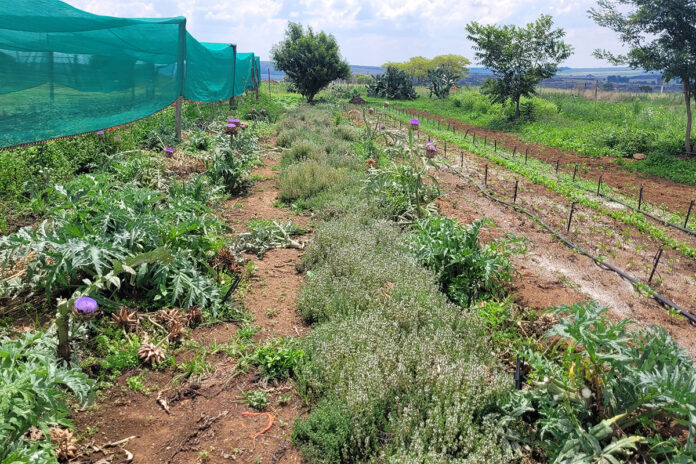
Vegetable production, dominated by spinach, lettuce, and butternut, takes place on around 1ha. About 10 different kinds of herbs are also planted, in addition to strawberries and artichokes, and Belinda is eager to add new crops to the mix, based on customer demand.
The spinach and butternut are chopped and packaged, making them very popular with Belinda’s client base.
Production mainly takes place in summer, as winter temperatures in the area can drop as low as 0°C. Therefore, more tunnels are being added to allow for winter spinach production.
“We realised over time that everyone has spinach in summer, so the prices can dip very low.
“However, in winter, there is generally a shortage of spinach, so if we can supply it, we’ll get higher prices,” she explains.
The Stewarts don’t follow a specific crop rotation programme, although rows are alternated between the different herbs, leafy greens, and artichokes. The butternuts are planted in a field of their own.
Seedlings are bought from a nursery in Pretoria. Belinda has built a strong relationship with the supplier, and together they plan which crops to plant and when, ensuring seedlings are ready when needed.
Production is entirely organic, and the Stewarts spend a lot of time researching and trialling the best way to combat pests and feed the crops. Companion planting was implemented initially, with nasturtiums and wild garlic planted between the crops.
“It was a beautiful sight to behold when everything was in bloom, but the insects still came. So we decided to remove the companion plants, as they just took up space,” adds Belinda.
One of the first lessons she learnt was that rosemary and strawberries don’t grow well together.
“The strawberries and rosemary were initially planted side by side, but I couldn’t get the strawberries to grow. At some point, I read that they’re poor companions, and when I separated them, the strawberries flourished.”
Crop rotation and organic pest control are used to protect the harvest. The pest control mixture, made of borax, vinegar, soap, and chillies, is sprayed onto the crops.
Belinda adds that because various crops are grown side by side, the absence of a monoculture helps keep pest pressure low.
Since pests aren’t entirely eradicated in an organic system, Belinda occasionally receives a phone call from a disgruntled client who has found a worm on their leafy greens.
“Then I ask, ‘Is it alive? Because if it is, the produce is safe to eat,’” she laughs.
“In all seriousness, I often need to take the time to educate consumers about organic production and what that means in practice. But I’ll happily give that consumer an extra packet of spinach the next week, just to apologise and keep them happy.
“We wash the produce, but when you’re packing hundreds of bunches, mistakes can slip through.”
Rabbits and porcupines have caused the Stewarts many a headache, as they feasted on the produce. Thus, fencing must be dug into the soil to prevent the animals from burrowing underneath.
Fertilisation relies on a compost mixture of manure, plant matter, and vermicast.
HaShem has four worm farms, which are fed vegetable peels and scraps, and horse manure from a neighbouring farm.
Belinda notes that worms find horse manure easier to digest than cattle manure.
Empty egg trays are collected from customers when Belinda delivers full ones, and any damaged trays are shredded and given to the worms. The heaps are kept moist and turned about twice per month.
Compost and bonemeal are added to the rows every time a new batch of seedlings is planted, and manure from the cattle herd is scattered.
The vegetables are irrigated via micro sprayers. Nitrosol, an organic fertiliser, is added to the irrigation cycles when the seedlings are young.
Since the farm is reliant on borehole water, which dwindles in winter, the Stewarts are planning to convert to a drip irrigation system, which uses less water.
Since most fields are fallow in winter, the land is planted to cover crops to protect the soil. Belinda notes that oats are useful for replenishing depleted soil, and in spring, they are harvested and fed to the cattle.
Lucerne is also grown for animal feed. These fields are rotated with the vegetable fields each year to keep the soil fertile and prevent disease build-up.
Cheese and eggs for a discerning market
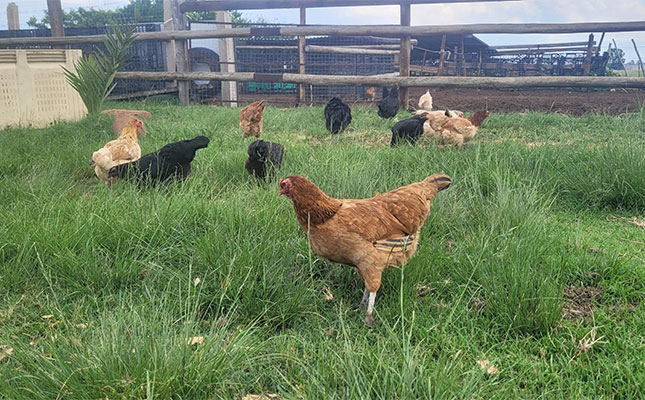
Keeping the focus on natural production systems, HaShem produces pasture-raised eggs. The farm has 150 layer hens of mixed breeds, which are kept adjacent to the cattle pens. This means they can feast on fly larvae that hatch in the cattle manure, which helps to reduce the fly load.
The chickens are also fed vegetable scraps and layer feed. Belinda says her customers want to be reassured that the hens are pasture-raised, with many asking for eggs produced by hens that have not been fed genetically modified organisms (GMOs).
“But non-GMO feed is double the price, which would significantly raise the price of the eggs,” she explains.
“We are, however, in the process of raising a batch of layers in a moveable cage system so that they can feed on the land and be less dependent on grain feed. These hens will receive GMO-free feed.”
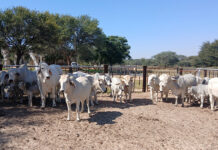
HaShem keeps five head of cattle for beef production. When the cows calve, the excess milk is used to produce cheese.
The herd was initially a mix of Bonsmara, Pinzgauer, and Brahman, but since last year, it has gradually been changed over to Jerseys to increase milk production.
Belinda’s customers have also specifically requested milk from Jerseys, as it contains the A2 enzyme, which makes it easier to digest.

Adding value with artichokes
Artichokes are a relatively unknown crop in South Africa and, aside from being used as a pizza topping, rarely feature in the country’s cuisine.
However, adding this niche crop to the mix has been beneficial, not only extending HaShem’s product range but also increasing the crop’s shelf life.
Artichokes are processed, pickled, and sold in jars, which means Belinda reduces the risk of the fruit not selling before it spoils.
Artichokes were first cultivated in June 2025, with Belinda taking a leap of faith and planting 200 seedlings at once.
“It was a shot in the dark, but I was on a mission to improve my diet through foods that aid the gut microbiome, and artichokes fit the bill.”
The artichokes were planted between the other crops, receiving the same fertiliser and irrigation as the rest of the field. By September, the plants were in full production, and the fruit was ready for harvest.
“They really took off, and we had an abundance of fruit. I actually felt guilty because so many people at the Boeremark said it was really difficult to grow artichokes, but ours were flourishing.”
Fruit must be picked when it’s about the size of a fist and before the leaves start to open. Once the artichoke opens, it becomes hard and inedible.
After picking, a halved lemon is rubbed on the stem to prevent browning. The fruit is then placed in a bucket of water, and if the stem hasn’t been treated with lemon, the water turns brown, and so does all the fruit.
In the kitchen, the outer leaves are removed, significantly reducing the size of the fruit. These cut-offs are fed to the chickens or worms.
The fruit is halved and placed in water that contains lemon juice. In the centre of older artichokes is a ‘choke’, a hard, fibrous, inedible part that must be removed. The fruit is then boiled for just under an hour, until fork-tender, and finally bottled in a brine solution.
Belinda notes that she initially sold fresh artichokes, but apart from a few customers who had Italian grannies who knew how to prepare them, they were too foreign for most.
Now that the artichokes are sold pickled, demand has picked up, and she plans to expand production.
The plant will continue to produce fruit for around four years, and two harvests can be obtained in a year: one in spring and the other autumn. The plants should be pruned back after every harvest.
Another lesson she learnt early on was to pick all the fruit as soon as it was ready.
“There was so much fruit at the first harvest, and I only picked what I was able to process and sell in a week. But soon all the fruit started flowering, rendering them inedible, so we lost a big portion of the harvest.
“I’ve now bought a 35ℓ pot so I can boil more fruit at once and get through the whole harvest in time. Artichokes can keep for many months once pickled.”
Consistency keeps the market afloat
The initial client list Belinda took over from her neighbour comprised 14 restaurants. She eventually expanded it to 24, but when the
COVID-19 pandemic struck, most of the restaurants were forced to source from a central warehouse, and HaShem’s clients disappeared overnight.
“We realised that we needed to expand our market and product offering so that we wouldn’t have all our eggs in one basket,” she explains.
In 2020, layer hens and cattle were added to the farm. Belinda says that since they handle all the deliveries themselves, the cost of a trip is the same whether they supply one product or 10. So, by increasing their offering, they could earn more from each journey.
Since then, they have built their client base back up again to comprise 14 restaurants, five food clubs, the Boeremark, and direct sales. The food clubs place orders every two weeks, creating customer-ready boxes containing a variety of farm-fresh produce.
Belinda has set up several WhatsApp groups to market her produce directly to customers, with deliveries done once a week.
The Bronkhorstspruit group has been especially helpful in reducing waste.
“When the Boeremark is nearing closing time on a Saturday morning, I take photos of whatever hasn’t sold and ask the group who wants what. Then I deliver it on my way home from Pretoria.”
Belinda first took up her stand at the Boeremark in the winter of 2024. This proved good timing, as the market attracts fewer customers in the colder months, giving her time to ease into the process.
“That first Saturday, Alan wanted to go big and takes heaps of produce. But I said we should start small, lest we end up with too much unsold produce. It was just as well, because sales weren’t very high in the first few weeks.
“A woman across from me who sells sourdough bread said it took her two years to build a clientele that brought in the kind of income she needed to be able to bake full time,” explains Belinda.
“With a market like the Boeremark, you need to prove consistency in your offering and presence. You need to build trust and relationships with your clients to ensure steady sales each week.”
Today, Belinda struggles to keep up with demand and has more than doubled her sales in just 18 months. Many customers place orders on Fridays to guarantee their selection is available on Saturdays.
Belinda’s consistency has earned her a permanent spot at the Boeremark, which means she doesn’t need to set up a stand every week.
Making diversity work
HaShem’s production system is complementary, with one division generating benefits for another.
Vegetable offcuts from the value-adding process are fed to worms, which produce vermicast, and to chickens, which produce eggs. The chickens scratch through the cattle manure, removing fly larvae, and the manure is then added to the vegetable fields. Cover crops are used as cattle feed and help replenish the vegetable lands.
This system is key to making a diversified operation viable, as it reduces waste and input costs while spreading risk.
Belinda notes that while a diversified farm is far more labour-intensive, it’s worth the effort. Their flexibility means crops can be quickly added or removed according to match customer demand.
“Because we deal directly with our clients, we can quickly ascertain if there is an opportunity to add something else to the mix. Many asked for dill, for example, which we didn’t plant at that stage, but it was easy to add 10 plants to the mix and fulfil the demand.”
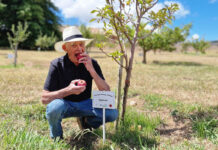
Making the best use of their land, the Stewarts have introduced fruit trees between the rows of vegetables. Belinda notes that the trees provides some shade in the summer, protecting the leafy greens from the heat.
“The lemons are providing a good harvest, but we don’t get much from the peach and fig trees, since the birds get stuck in before we can harvest.
“I don’t mind, because they need to get their food from somewhere, but Alan disagrees,” laughs Belinda.
The nature of a diversified farm means the couple is never confined to a set routine, which suits them well.
“Alan is very experimental and is always looking for better solutions to solve problems or new products to add to the farm. I love digging into the soil with my hands, so you’ll never catch me with a manicure.
“We’re doing what we love most while providing ourselves and the public with fresh, healthy organic food.”