
In South Africa’s competitive equine industry, success in Thoroughbred horse breeding is not achieved by chance, but through precision, discipline and a deep understanding of both genetics and management.
Speaking to Farmer’s Weekly, John Everett, owner of Narrow Creek Stud, says his success in Thoroughbred horse production is rooted in focus, disciplined management, and a deep understanding of bloodlines within a distinctly South African production environment.
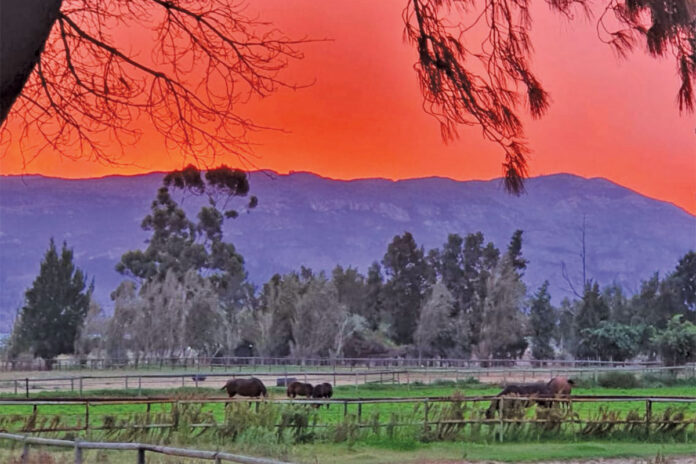
Situated in Wolseley, an area characterised by favourable grazing conditions and a moderate climate, the stud has developed into a specialised enterprise built around a single principle: doing one thing well.
“I have always believed that it is better to do one thing properly than to spread yourself too thin and underperform across multiple enterprises,” says Everett.
This philosophy has shaped every aspect of the operation. While many farmers diversify to spread risk, Everett took a deliberate decision to avoid crops and other livestock, choosing instead to dedicate all available resources and expertise to horse breeding.
“I do not see horse breeding as traditional farming. It requires land, but the level of attention, management and decision-making is very different. It is a specialised discipline,” he says.
A production system built around turnover
A defining feature of Everett’s model is the strong focus on turnover. Thoroughbreds offer a significantly shorter production cycle compared with other horse breeds, making them well suited to a commercially driven system.
“With Thoroughbreds, you are able to market horses between one-and-a-half and two years old. Other breeds often require three to four years before they are ready for sale,” he explains.
This accelerated cycle allows for more frequent income generation and more efficient use of infrastructure. It also influences how the farm is structured, particularly in terms of paddock design and stocking density.
“The land in this area would support most horse breeds, but the way the farm is laid out supports a quicker turnover system. If you were producing slower-maturing horses, you would need to adjust your entire set-up,” he says.
He adds that in a South African context, where input costs continue to escalate, this efficiency is not just advantageous, but necessary.

Feeding for precision and predictability
Nutrition at Narrow Creek Stud is managed with a high degree of control. Everett prefers a system that allows him to regulate exactly what each horse consumes, rather than relying heavily on natural grazing.
“I follow what I call a ‘feed-out-the-bag’ approach. While there is grazing available, I do not depend on it as a primary feed source. Grazing plays a role in keeping the horses occupied and supporting gut health, but the core nutrition is controlled,” he says.
This method ensures consistency across the herd while allowing targeted adjustments based on age and physiological demands.
“The type of feed remains broadly similar, but the quantities and nutritional composition change. Young horses receive higher protein levels to support growth and muscle development. Older horses require more volume and roughage, while broodmares in foal need additional protein to support the developing foetus,” he explains.
Such precision feeding reduces variability in growth rates and body condition, which is critical in a market where buyers expect uniformity and quality.
Camp-based management and behavioural conditioning
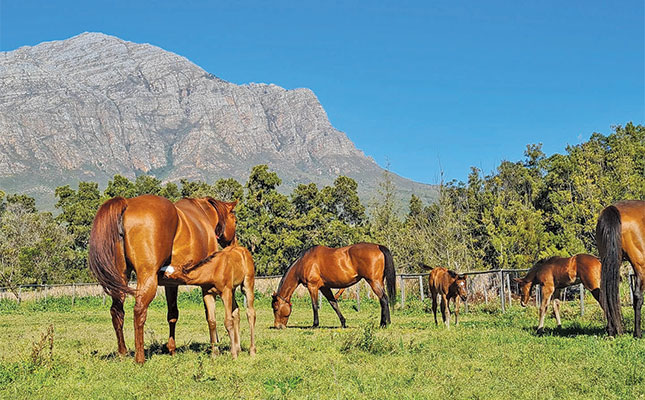
Everett’s management approach favours camp-based systems over intensive stabling. Horses are kept in groups, allowing for natural movement and social interaction.
“Camp-based management introduces competition during feeding, which I believe is beneficial. Horses develop resilience and learn to compete, which is part of their behavioural development,” he says.
However, this system requires careful observation. “In any group, there will be stronger and weaker individuals. The weaker ones may not compete effectively, so you need to identify them early and manage them separately,” he explains.
This often involves regrouping animals to ensure that all individuals maintain condition and continue developing as expected.
Stabling is used strategically rather than routinely.
“Horses are only brought into stables when they are being prepared for sale. Otherwise, they remain out in the camps, exposed to natural conditions,” he says.
This approach supports both physical development and overall hardiness.
Health management: prevention over cure
Health management at the stud is centred on prevention, with a strong focus on identifying risks early and maintaining consistent routines.
“The most common condition you will encounter in horse production is colic. It is essentially a digestive disturbance, but it can become severe very quickly,” says Everett.
He attributes many cases of colic to feeding practices.
“Incorrect feeding, sudden dietary changes or poor-quality feed can all contribute. It is something you must manage continuously,” he explains.
Beyond colic, South African producers face the ongoing threat of African horse sickness, a vector-borne disease with significant implications for both animal health and the broader industry.
“It is one of the biggest risks we face. Fortunately, in the Western Cape, outbreaks are limited, but in other regions it is a major concern,” he says.
Strict vaccination protocols and movement controls are enforced to mitigate risk.
“The vaccination schedule is regulated, and movement permits are required. These measures are critical because an outbreak can impact exports and the entire industry,” he says.
Routine health practices remain equally important.
“Deworming, supplementation and general monitoring are essential. Parasite control, in particular, must be consistent,” he adds.
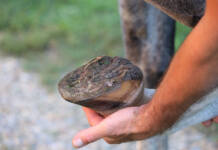
Hoof care is another critical component. “A horse without sound feet is not functional. The level of care depends on the terrain, but it is always a priority,” he says.
Genetics: combining science with instinct
Breeding decisions at Narrow Creek Stud are informed by both data and experience. Everett uses pedigree analysis tools such as Tesio to explore potential mating combinations.
“I enjoy working with different crosses, but there is no guaranteed formula. You need to combine knowledge with intuition,” he says.
When selecting stallions, he adopts a cautious approach.
“I will use a new stallion sparingly until I have seen the quality of its offspring. If the progeny meet my expectations, I will increase its use,” he explains.
Broodmare selection is equally rigorous.
“Race performance is important from a marketing perspective, but pedigree depth is just as critical. I pay close attention to the sire line and the strength of the bloodline over generations,” he says.
He adds the importance of consistency.
“Strong bloodlines tend to reappear over time. It is important to build a programme around proven genetics.”
Record-keeping and reproductive efficiency
Accurate record-keeping is fundamental to the operation, particularly during the breeding season. “Each horse has a detailed record that tracks its health history, treatments and reproductive data,” says Everett.
During covering season, monitoring becomes highly intensive.
“The veterinarian examines mares regularly, and we record follicle development, covering dates, ovulation and foaling. These records guide our decisions and improve efficiency,” he explains.
Foetal development is also tracked to ensure normal progression.
“Monitoring growth throughout pregnancy allows us to identify any issues early and maintain consistency,” he says.
This data-driven approach enhances reproductive performance and reduces uncertainty.
Infrastructure and operational demands
Everett stresses that infrastructure is essential but must be supported by commitment.
“This industry requires hard work. If you are not prepared to work long hours, including nights during foaling season, it is not the right field,” he says.
Foaling season, typically from August to December, places significant demands on labour and time.
“You are working full days and then attending to mares at night. It is physically demanding, but also rewarding,” he says.
Key infrastructure requirements include paddocks, stables and feed storage.
“Feed storage is particularly important. If you are forced to buy feed during winter, costs increase significantly. Planning ahead makes a big difference,” he says.
Climate and environmental factors
Climate plays a subtle but important role in horse production.
“Horses handle heat and cold well. In fact, they often perform better in more extreme temperatures. However, they do not cope as well with rain and wind,” says Everett.
In the Western Cape, winter rainfall can affect comfort and management.
“There are a few months where conditions are less favourable, but overall, the region is well suited to horse production,” he says.
He says drier regions such as the Karoo may offer ideal conditions for horses, although they present other challenges.
Entry costs and scaling a business
Starting a horse breeding operation requires substantial investment, particularly for land.
“Land prices vary widely depending on location. Farms closer to Cape Town are more expensive, while more remote areas offer more affordable options,” he says. Location also affects operational logistics. “Proximity to stallions is important, as transport costs can increase significantly if you are far away,” he explains.
Initial livestock investment varies depending on the producer’s goals.
“You can purchase mares at very different price points. It depends on your strategy and market positioning,” he says.
Everett advises new entrants to start small and grow gradually.
“I began with four mares and built the operation over time. Taking in broodmares can provide additional income while you establish yourself,” he says.
However, he cautions against entering the industry without experience.
“It is important to understand the industry and build relationships before starting your own operation.”
Land size and production capacity
Commercial viability does not necessarily depend on large landholdings.
“A farm of 25ha to 35ha of usable land can support around 40 mares and still be profitable,” says Everett.
Smaller farms require more intensive management but can achieve strong returns. “With careful management, smaller operations can be highly productive,” he explains.
Market dynamics and pricing
Thoroughbreds are primarily marketed through auction systems, with sales held in major centres such as Johannesburg and Durban.
“Prices vary significantly. Ultimately, a horse is worth what buyers are willing to pay on the day,” says Everett.
Two main factors influence value: pedigree and conformation.
“Bloodlines and physical structure are the primary drivers of price,” he explains.
Price ranges can vary widely.
“Horses can sell from around R50 000 to several million rand, although top-end prices are rare,” he says.
To remain profitable, producers must achieve consistent averages.
“You need to average around R200 000 per horse. Below that, margins become very tight,” he adds.
Rising costs and financial pressure
Input costs remain one of the biggest challenges facing producers.
“Feed is one of the largest expenses. Prices have increased significantly, and it places pressure on the entire operation,” says Everett. In addition to feed, labour, veterinary services and fuel contribute to overall costs. “All these factors must be managed carefully to maintain profitability,” he says.
A disciplined path to success
Everett says that success in Thoroughbred breeding depends on discipline, observation and long-term commitment.
“You need to understand your animals, pay attention to detail and remain consistent. If you do that, the system works,” he says.
His experience highlights a broader lesson for South African agriculture: specialisation, when combined with strong management and informed decision-making, can create a sustainable and competitive enterprise.
“It is not an easy industry, but for those who are passionate and willing to put in the work, it is incredibly rewarding,” he says.