
Of all of the frequently mentioned advantages of cover crops – improved soil health, better yields, and reduced input costs – the biggest one is surely their versatility, even in the unusually harsh conditions of the Western Cape.
The province is unique among grain producing regions in that the cultivation of cover crops isn’t possible during the non-growing season.
“Traditionally, a cover crop is defined as a crop planted in between cropping cycles and is not harvested,” explains Rens Smit, researcher at the Western Cape Department of Agriculture’s Langgewens Research Farm.
“In the Western Cape, on the other hand, cover crops are rarely planted during the off season; it is simply too dry. Our growers have to alternate entire seasons between cash crops and cover crops, which means they have to be able to earn an income with them.”
Smit has yet to meet a grower who has abandoned cover crops after introducing them.
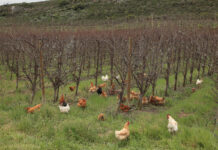
In 2016, Cobus Bester, grain, a sheep and cattle farmer from Moorreesburg, introduced cover crops into his crop rotation as a way to diversify grazing for his animals, some years after employing medics to improve soil carbon levels.
“Our cover crop mixture consists mainly of Japanese radish, black oats, and vetch, along with Balansa clover and rye,” he says.
“The health of our livestock improved considerably; when grazing solely on medics or oats, they developed digestion and metabolic problems, such as prussic acid poisoning. Much like humans who eat a balanced plate of food, our animals fared better on a balanced diet.”
It took him about seven years of adjustments and adaptation to settle on a system that works best in his circumstances. This involves planting cover crops during April and letting them grow for 10 to 12 weeks before introducing livestock.
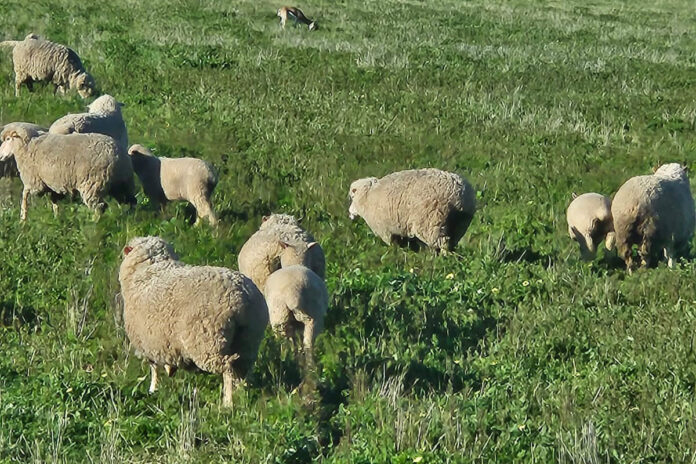
Cattle feed on the taller crops, with sheep following once the plants are shorter.
“We graze the cover crops quite heavily for two to three months, leaving the remains to act as a soil cover throughout summer.”
Bester notes that soil improvement under this system is much slower than in systems where cover crops are planted between growing seasons.
However, cover crops have significantly accelerated soil carbon sequestration compared with monocropped medics, and the soil texture is also much softer.
Since his region’s average annual rainfall is barely 300mm, Bester keeps his stocking rate low. However, the cover crops have enabled him to double his grazing capacity.
“The amount of soil coverage ultimately determines your stocking rate; it’s not about how many animals you can graze, but how much organic matter you have left when you have to plant cash crops. Soil cover is essential, during summer to retain as much moisture as possible and protect the soil, and in winter to get the most out of every millimetre of rain,” he says.
Soil change
Adjacent to Bester’s farm, at the Western Cape Department of Agriculture’s Langgewens Research Farm, research coordinator Samie Laubscher has witnessed significant changes in cropping systems over the past 32 years, first the introduction of conservation tillage and about 10 years ago, the introduction of cover crops. The benefits have been undeniable.
“Weeds have always been a problem on this farm, even before herbicide resistance started manifesting. The cover crops have definitely helped to improve control of weed infestations. The soil is healthier, our fertiliser use has dropped and our livestock have access to high-quality grazing,” he says.

He was struck by changes in the soil structure earlier this year when flattening contours on one of the lands, which is planted with cover crops two out of every three years.
“In the past you would not have been able to get a spade or a fork into that soil, but now it is beautifully soft and malleable. This, of course, will save you money during the planting season, because you need much less power and diesel to get a tine planter through that kind of soil.”
Yet Laubscher cautions that cover crops do have a cost implication and that the benefits are not instant.
“The bigger the variety in cover crop seed, the bigger the cost, especially if you start adding radishes and vetch. On our farm we get around this by producing our own seed.”
Pasture strategy
Leon Badenhorst, who farms dairy cattle on irrigated and dryland in the Hemel-en-Aarde Valley between Caledon and Hermanus in the Western Cape, used to cultivate oats for haymaking on dryland.
“Initially the oats performed well, as the land had previously been under clover. It responded well to fertiliser and weeds were not a problem. But over time I started having problems with weeds, especially Bromus diandrus. The high input costs associated with monocropping were causing me a lot of stress,” he tells Farmer’s Weekly.
A mishap with a boom sprayer during a herbicide application convinced him to re-evaluate his approach.
“A small patch that I missed with the boom sprayer performed well. To this day I don’t know what caused the problem, but I did realise my practices were not sustainable and I had to replace the haymaking with a low-input pasture approach.”
He established a cover crop mix of lupin, various clovers, medics, vetch, white oats, tiller radish, annual ryegrass and also three hardy perennial grazing crops, chicory, lucerne and plantain.
“My reasoning was that it would not be necessary to replant the cover crops every year, as the annuals would reseed themselves. The perennials would establish a strong root system, and be able to flush and provide additional grazing if we are to get summer rain. I also want to start planting some oats in the cover crop for haymaking,” says Badenhorst.
He found that the chicory, lucerne and plantain could survive multiple months without rain, capture and retain dew on the ground while also shielding the soil from the hot sun. He no longer applies fungicides, insecticides or herbicides on dryland. He wants to reduce and ultimately stop applying chemical fertilisers and is experimenting with compost to improve soil fertility.
“It is not an overnight solution and I am still refining my system, but the camps where cover crops have been planted the longest, are performing the best, which shows me that this has been a good investment.”
Badenhorst says the biggest mistake he made in his transition to cover crops on dryland was to cut back on fertiliser application too quickly.
“What counts against us in our climate is that when we have moisture in the ground, we have no sunshine, and in summer when we have plenty of sunlight, we don’t have moisture in the soil. The benefit of cover crops which allows us to reduce fertiliser applications, will develop very slowly. The privilege of reducing soil nutrition has to be earned under our conditions.”
Solving the problems of your choice
According to Smit, the real benefit of cover crops is their versatility.
“The first question to ask if you are considering cover crops, is what you wish to accomplish. You can change the application and species of your cover crop mixture according to your requirements.
If you want to use it as a pasture crop, compile a mixture that animals find tasty and consist of both grains and legumes. Animals and the soil require a balanced diet.
“Grains supply carbohydrates to animals and carbon to the soil. Legumes supply proteins to animals and nitrogen to the soil. If you require more carbon in the soil, add more grains to your mixture. For nitrogen, add more legumes. Animals’ protein requirements vary according to species and age, and you can manipulate the mixture accordingly,” says Smit.
Cover crops are also a powerful ally against problematic weeds.
“If you have a problem with ryegrass, for instance, you can use the ryegrass as a part of your cover crop mix where you plant legumes. If you plant less grains and grasses than legumes, the ryegrass becomes part of your animals’ carbohydrate source. This reduces your seed cost and turns the problem into part of the solution.”
Badenhorst does not follow an ultra-high-density strip grazing where animals are moved hourly, but rather a strategy where the animals remain in the same place between one and three days, depending on the condition of the cover crops and their expected recovery time.
In his system it is important to not overgraze the cover crops completely, and also to move animals to the next strip of land before the crops start resprouting.
“In winter, the crops regrow quickly, but in summer, this can take up to three days, so it is possible to keep them in the same place for longer outside of the growing season,” he explains.
“It is important to maintain a balance between animal performance and the time it takes the pasture to recover. I achieve that balance by varying the amounts of concentrate or silage I feed the animals, depending on how much pasture is available.”
Smit emphasises that proper grazing management is crucial.
“Too few cover crops have too small an effect, and too much costs you money, both in terms of planting and the loss of land you would otherwise use for cash crops.
“If you overgraze and nothing remains of your cover crops, it gives you food for your animals without the benefits of soil health improvement and better-quality or higher yields when you use the same land to plant cash crops in the following season.”