

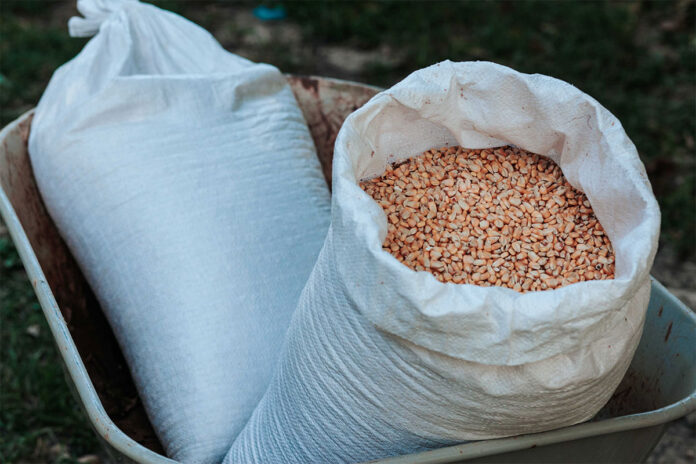
What initially appeared to be an innocent attempt to sell oat seed to other farmers on social media turned out to be a major infringement of several intellectual property (IP) rights, according to the South African National Seed Organization (SANSOR) and KISCH IP.
In a joint news release issued on 28 July, SANSOR and KISCH IP said a bootlegging operation unlawfully advertising and selling a protected Syngenta oat variety (Avena sativa L. SSH4185) was uncovered and stopped.
Following engagement between the parties involved, a settlement was reached. Under the terms of the agreement, the identity of the party involved in the infringement will not be made public.
“South Africa’s agriculture sector depends on innovation. Every improved plant variety represents years of research and millions of rands before it reaches the market. Plant breeders’ rights exist to protect exactly that investment and to encourage the continued development of improved genetics that benefit producers, processors, and consumers alike,” Dr Lukeshni Chetty, CEO of SANSOR, said in the statement.
Chetty said the case also highlighted the importance of international efforts to combat illegal seed practices.
In 2024, the International Seed Federation signed a memorandum of understanding (MoU) in Rotterdam in the Netherlands to strengthen the fight against illegal seed practices and to implement legal seed and plant practices around the world.
“At the signing, it was stated that these legal practices promote value creation in the agriculture and horticulture sectors and foster innovation for farmers and growers. Through SANSOR and the AFSTA [African Seed Trade Association], South Africa is party to this MoU,” Chetty added.
Multiple infringements uncovered
“During the investigation, it became clear that at least 65t of protected propagating material was being multiplied, conditioned, and commercially marketed outside the authorised distribution chain, without a licence and without regulatory compliance.
“Subsequent investigations indicated that the dispute potentially extended far beyond mere unpaid royalties into the realm of unlawful competition, trade mark infringement, and even several criminal offences,” At van Rooy, patent attorney and plant breeders’ rights specialist at KISCH IP, explained.
According to him, the specific infringements and statutory contraventions included the following:
- Infringement of registered plant breeders’ rights in a protected oat variety;
- Unauthorised (irregular) multiplication of protected propagating material;
- Unauthorised conditioning (cleaning and treatment) of protected seed;
- Unauthorised marketing and commercial sale of protected propagating material;
- Unauthorised use of registered trademarks in connection with the marketing of protected seed;
- Non-compliance with statutory requirements governing the production, conditioning, and commercial movement of propagating material;
- Off-label use of agrochemicals, thus transgressing the Fertilizers, Farm Feeds, Agricultural Remedies and Stock Remedies Act (No. 36 of 1947);
- Failures relating to traceability, record-keeping, and labelling requirements; and
- Conduct capable of attracting civil remedies and, where applicable, criminal sanctions under the Plant Breeders’ Rights Act (No. 12 of 2018) and the Plant Improvement Act (No. 11 of 2018).
“The unauthorised commercial sale and use of protected propagating material is seldom a single-issue dispute. Plant breeders’ rights frequently intersect with trademark protection, unlawful competition, statutory regulation of propagating material, seed certification, traceability, and broader agricultural compliance. A single instance of unauthorised multiplication may therefore transgress multiple areas of South African law simultaneously,” Van Rooy said.
He added that the options available to Syngenta include interdictory relief, orders requiring the surrender of the infringing propagating material and the attachment of crops planted with infringing seed, as well as payment of reasonable royalties, damages, legal costs, and any additional relief provided for under the applicable legislation.
“Litigation ultimately proved unnecessary, as the parties involved were able to resolve the dispute by regularising the infringing actions through the framework established by Regulation 5(3)(c) of the Plant Breeders’ Rights Regulations, 2025.
“The resolution included agreement on reasonable remuneration for the use of farm-saved propagating material together with associated commercial arrangements and a contribution towards legal fees,” Van Rooy noted.
Balancing innovation and farmers’ rights
“The successful resolution of this matter serves as an important reminder that intellectual property protection is fundamental to a thriving seed industry and a competitive agriculture sector. Seed companies invest heavily in research and development to bring improved varieties to market, and those investments must be protected if innovation is to continue,” Dr Chetty remarked.
“As an industry, we are committed to working alongside farmers and other stakeholders to build awareness of the Plant Breeders’ Rights Act. A strong agriculture sector depends on trust, collaboration, and respect for the systems that enable continued investment in innovation. Ultimately, that benefits farmers, consumers, and South Africa’s food security,” she added.
For generations, retaining seed from one harvest for planting in the next season has formed part of agricultural practice.
“The original purpose was food security for small-scale farmers, not abuse by multimillion-rand entities,” Van Rooy said.
He explained that the challenge for every modern plant breeders’ rights system is balancing two legitimate interests: the long-standing practice of farm-saved seed, and the legitimate commercial interests of those who invest in developing improved plant varieties.
According to Van Rooy, while the Plant Breeders’ Rights Act establishes the exclusive rights afforded to breeders, Regulation 5 provides the practical framework through which Parliament has given effect to the qualified farmer’s privilege recognised in Section 10 of the Act.
“Rather than imposing a blanket prohibition on farm-saved seed, the Regulations recognise that different categories of farmers operate under different circumstances, and that commercial seed saving carries corresponding responsibilities,” he said.
Farm-saved seed under the law
Hendrik van Staden, Syngenta Seeds’ business head for South Africa and head of field crops for Africa and the Middle East, said the implementation of the Plant Breeders’ Rights Act, which came into effect on 1 June 2025, marked a significant step forward in South Africa’s seed and plant variety protection legislation.
“The Act introduced significant changes to the protection, management, and enforcement of plant breeders’ rights in the country and aligns South Africa more closely with the UPOV 1991 Convention [the International Convention for the Protection of New Varieties of Plants], strengthening the protection available to breeders while establishing a more structured framework for farm-saved seed,” he explained.
Van Staden added that brown-bagging puts farmers at risk of planting uncertified seed.
“When it comes to crops, the use of uncertified or retained seed can reduce genetic purity, lower yields, and increase susceptibility to pests and diseases. Although the impact is less direct, compromised seed quality can affect food security and the consistency of agricultural output.
“In practice, it leaves a farmer without any quality assurance because traceability is compromised. It also undermines breeder investment, especially in open-pollinated varieties,” he explained.
Van Rooy pointed out that in cases where protected propagating material is retained in quantities exceeding the prescribed thresholds, Regulation 5(3)(c) requires that:
- The propagating material must have been legitimately obtained;
- The breeder or plant breeders’ rights holder be notified of the quantities retained;
- Reasonable remuneration equivalent to a reasonable royalty be agreed upon in a written licence agreement; and
- The identity of the protected variety be preserved through appropriate labelling.
According to Van Rooy, these requirements underpin three principles of a modern plant breeders’ rights system: transparency, fair remuneration, and traceability.
“They also provide a practical mechanism through which disputes can be resolved commercially while protecting continued investment in plant breeding,” he added.
According to Van Rooy, the recent oat seed dispute demonstrates that effective IP protection is not measured solely by the ability to institute legal proceedings.
“While South African law provides plant breeders’ rights holders with extensive civil remedies and, in appropriate circumstances, criminal sanctions for unlawful conduct, litigation should not become an end in itself.”
He emphasised that the objective throughout the case remained the protection of innovation, the integrity of the certified seed system, and the restoration of lawful commercial conduct.
“Once the parties were able to regularise their position within the framework established by Regulation 5(3)(c), the dispute was resolved without the need for protracted litigation, preserving commercial relationships while ensuring that the legitimate interests of the plant breeders’ rights holder were recognised,” he noted.
According to Chetty, most seed companies support the notion that strong IP protection and a sustainable agriculture sector are complementary objectives.
“Where rights must be enforced, they will be enforced firmly. Equally, where the law provides an opportunity for parties to achieve compliance through transparency, fair remuneration, and responsible commercial conduct, that opportunity should be embraced,” she said.
Van Rooy added: “The recent resolution demonstrates that protecting innovation does not require unnecessary conflict. Rather, it requires a principled commitment to the rule of law, responsible stewardship of protected plant varieties, and constructive engagement across the agricultural value chain.”
Chetty concluded: “Seed companies remain committed to working with farmers, seed processors, distributors, and industry stakeholders to ensure that improved plant genetics continue to benefit South African agriculture while respecting the legal framework that encourages continued investment in plant breeding.”