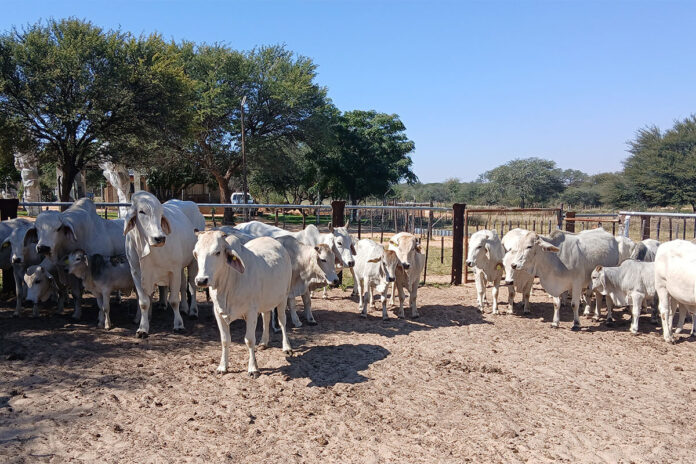
While beef remains the backbone of Namibia’s agricultural economy, the country’s future growth story may lie in sectors ranging from table grapes and biomass to value-added processing and regional trade, says Dr Salomo Mbai, director of the Agricultural Trade Policy Institute (ATPI) at the Namibia University of Science and Technology (NUST).
Namibia’s agriculture sector remains central to rural livelihoods, food security, and export earnings, while underpinning some of the country’s most successful export industries.
Mbai says the challenge is not whether agriculture has a future in Namibia, but how the sector positions itself for long-term growth in an increasingly competitive global market.
“ATPI was founded to provide evidence for agricultural policy formulation in Namibia while also working closely with agricultural value chain actors in Namibia and beyond,” explains Mbai.
Established to strengthen evidence-based policymaking and encourage engagement between government, researchers, and industry stakeholders, the institute focuses on identifying opportunities and constraints across Namibia’s agricultural economy.
“The Windhoek Industrial and Agricultural Show provides multiple opportunities for local, regional, and international value-chain actors. It is a forum for breeders to showcase their cattle, sheep, goats, and other agricultural products on a national scale, while also creating valuable networking opportunities across the sector,” says Mbai.
He notes that the continued success of Namibia’s agriculture sector will depend on how effectively it builds on existing strengths while identifying new sources of growth.
Livestock remains the backbone
At the centre of Namibia’s agricultural economy is livestock production. According to Mbai, livestock farming accounted for 52,7% of Namibia’s agricultural economy between 2013 and 2025, followed by crop farming at 35,9%, and forestry, logging, and wood products at 11,4%.
“The agriculture sector remains a mainstay of the Namibian economy,” he notes. Namibia’s livestock numbers help explain why.
Mbai estimates the country is home to approximately 2,5 million cattle, 1,5 million sheep, and 1,3 million goats, bringing the national livestock population to around 5,3 million animals, excluding wildlife.

“These statistics explain why Namibia is a unique net exporter of cattle and livestock products in Africa,” Mbai points out.
He says a significant competitive advantage lies in Namibia’s animal health status.
“The country has a unique position in beef exports due to its foot-and-mouth disease (FMD)- free status south of the veterinary cordon fence,” he notes. However, maintaining that advantage will require continued vigilance, he adds.
“Sectoral growth can be enhanced through management of risks pertaining to animal disease management such as FMD and contagious bovine pleuropneumonia (CBPP), compliance with sanitary and phytosanitary regulations, curbing the price-cost squeeze, rapid digitisation, building strong resilience, optimal utilisation of limited natural resources such as water, and human capital development,” he explains.
While livestock is likely to remain the foundation of Namibian agriculture, Mbai sees substantial opportunities in a range of other industries.
ATPI has worked closely with the Bureau for Food and Agricultural Policy (BFAP) on agricultural outlook modelling covering commodities such as cattle, beef, lamb, mutton, white maize, potatoes, and table grapes.
Going beyond beef
“Future outlook work could expand to include industries such as charcoal, wood products, poultry, karakul pelts, blueberries, and dates,” says Mbai.
He is aware that growth will not come without challenges.
“Growth in exports is constrained by environmental factors such as drought and outbreaks of disease in some regions of the country through disruptions of to production,” he adds.
“High input costs caused by geopolitics, including fertiliser, fuel, lubricants, and electricity costs, inhibit production and, as a result, stifle export growth,” Mbai further points out.
Despite these constraints, he believes fruit production, potatoes, and biomass products offer some of Namibia’s most promising growth opportunities.
“Fruit, potato, and charcoal production have significant development potential due to the ability to leverage current marketing channels and export growth-led policies in regional and worldwide markets,” says Mbai.
“Fruit production in northern and southern Namibia presents opportunities for employment creation and export diversification, while potatoes offer scope for increased local production and downstream processing.”
A challenge becomes an opportunity
One of Namibia’s more remarkable agricultural success stories has emerged from a challenge that has affected farmers for decades.
The charcoal sector has been steadily growing since 2013, with an export value of more than N$1,6 billion (about R1,6 billion) by 2025.
He notes that bush encroachment affects between 30 million and 40 million hectares of grazing land across Namibia, but believes biomass utilisation is increasingly turning an environmental challenge into an economic opportunity.
“Charcoal manufacturing provides excellent chances for pasture restoration to benefit the livestock subsector,” says Mbai.
He believes future growth could come from a broader range of biomass–based products, creating a more diversified industry while contributing to ecosystem rehabilitation and improved grazing.
Looking at the bigger picture
Trade disputes involving products such as tomatoes, poultry, and vegetables periodically grab headlines in Southern Africa. Mbai believes policymakers should focus on broader opportunities.
While Namibia participates in regional integration initiatives through SACU, SADC, and the African Continental Free Trade Area (AfCFTA), he argues that significantly more can be done to strengthen regional value chains.
“There is a need to investigate potential ways to broaden avenues for expanding the Southern African regional trading bloc’s production, processing, and export commodities, with comparative advantage in each member country,” says Mbai.
He says the bigger opportunity lies in moving beyond the export of raw commodities.
“The future of agricultural trade is in vertical value-added products trade, which will assure sustainable reciprocal growth throughout the regional agricultural industry.”
That means creating value through processing, manufacturing, and integrated supply chains rather than simply exporting primary products, advises Mbai.
Close relationship with South Africa
South Africa remains Namibia’s most important agricultural trading partner.
According to Mbai, around 80% of Namibia’s agricultural imports originate from South Africa, highlighting the close relationship between the two countries’ agricultural sectors.
“As a result, trade relations can be improved by reconciling, among other things, market share promotion with SACU laws and cross-border value chains as a trading bloc,” he says.
At the same time, Namibia offers lessons for its larger neighbour. One example, says Mbai, is the Namibia Livestock Identification and Traceability System (NamLITS), the country’s compulsory and centralised livestock traceability framework.
“South Africa can implement a required state-backed digital registry for cattle movement to track the spread of disease faster.”
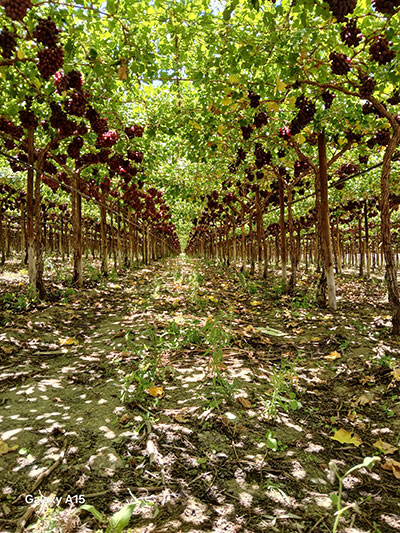
He also believes Namibia punches above its weight in livestock and table grapes.
“Namibia has a significant comparative advantage in the livestock and table grape subsectors, which is primarily driven by biosecurity compliance and climatic micro-windows.
“This applies particularly in table grapes in early harvest and entry into lucrative EU markets,” explains Mbai.
Building towards 2050
Looking ahead to 2040 and 2050, Mbai believes agriculture will continue to play a pivotal role in employment creation, export earnings, value addition, and sustaining livelihoods across the country.
Despite climate pressures, disease risks, and rising production costs, Mbai remains optimistic about the long-term prospects of Namibian agriculture.
“Access to real-time data, optimising production, policy coherence, and modernising agriculture legislation generally all add up towards laying the groundwork for a more multifunctional agriculture sector,” notes Mbai.
Looking beyond 2050, Mbai believes Namibia is very capable of building on its strengths in certain key agriculture areas.
These include livestock, table grapes, dates, and biomass, to become a leading exporter of high-value agricultural products.
“Namibia can be a top exporter of high-value goods by using cutting-edge technology to manage production and processing, making the most of its position as a major trade route.
“In the process, this adds more value to raw materials, learning more about the market, and spending more on research and development,” stresses Mbai.
The Windhoek Show will be taking place from 29 September to 3 October 2026.