
When PepsiCo completed its acquisition of Pioneer Foods in March 2020, a deal valued at US$1,7 billion (around R27 billion), the transaction came with an unusual commitment.
Rather than simply absorbing one of South Africa’s largest food companies and moving on, PepsiCo made a further R600 million public-interest investment, a portion of which would be channelled directly towards developing black farmers and small enterprises across the agricultural value chain.
The result was the Kgodiso Development Fund (KDF), formally launched in 2022 and now one of the more purposeful agricultural development vehicles operating in South Africa. The name itself carries meaning: kgodiso is a Sesotho word meaning ‘to grow’ or ‘to nurture’. It is a fitting description of what the fund set out to achieve.
A clear mandate
Of the R600 million, R300 million was earmarked for agriculture and enterprise development; R200 million for education, skills, and research; and R100 million for small, medium, and micro enterprise (SMME) incubation and technological support.
The architecture was strategic: address the entire agricultural value chain,, not just the farm gate. From bursaries for agricultural science students and working capital for smallholder farmers to training programmes for rural women, KDF’s scope was designed to be comprehensive.
The board was constituted in November 2021, governance structures were established, and the fund opened its doors to investees in 2022. What followed was four years of deployment, learning, and, according to its first integrated report released in May 2026, measurable impact.
“This report is more than an account of numbers and activities. It is a testimony to a vision taking root, to partnerships blossoming, and to futures being cultivated towards a more inclusive, sustainable, and prosperous agriculture sector,” Setlakalane Molepo, chairperson of the KDF Board of Trustees, said in a press release.
He noted that the organisation has “reached meaningful institutional maturity”, describing the inaugural report as “a seminal stepping stone among the various milestones” since KDF’s inception.
The numbers behind the mission
By March 2026, KDF had disbursed R268 million of its R300 million agriculture and enterprise allocation, supporting more than 230 farming and business enterprises.
The fund mobilised R75 million in leveraged co-funding from strategic partners and financial institutions, signalling confidence in its model.
Its loan collection rate stands at 73%, and it recorded a return on investment of around 7% for the 2023/24 production season, surpassing its target. Some R98 million has been repaid, and the fund has recorded three consecutive clean audits.
Critically, the investments are supporting 1 512 jobs across agriculture and other business sectors.
“These results reflect fortitude, strong governance, and an unwavering commitment to inclusive growth in South Africa’s agricultural economy. Together, we are not only financing agriculture; we are also cultivating transformation,” Diale Tilo, KDF’s executive director, said in the press release.
Tilo is candid about both the opportunity and the challenge: “Agriculture remains a vital contributor to South Africa’s economy, accounting for approximately 2,3% of GDP but providing critical linkages to agro-processing, trade, and rural livelihoods.
“Disparities between provinces, as well as inequality between large commercial and smaller enterprises, suggest that public and development financiers such as KDF plug a critical gap in the financial services sector by funding those excluded by traditional financiers.”
The remaining R132 million of the agriculture and enterprise allocation is targeted for disbursement by March 2028, as agreed with the Department of Trade, Industry and Competition.
Plugged into the supply chain
One of the more distinctive features of KDF’s model is its embedded connection to PepsiCo South Africa’s supply chain. PepsiCo procures more than 1,6 million tons of local agricultural commodities – maize, wheat, raisins, oats, and potatoes – every year, which are fed into household staples such as bread, maize meal, dried fruit, and potato crisps.
KDF specifically finances the production of grains, potatoes, raisins, deciduous fruit, and grapes, precisely the crops that feed into that supply chain.
This means that when a black producer in the Northern Cape expands a raisin block, or a young Eastern Cape farmer scales up maize hectarage, there is a real and direct route to market. It is one of the more practical solutions to the market access constraints that have historically challenged smallholder farmers.
Gareth Haarhoff, general manager of PepsiCo Southern Africa, frames it as a larger opportunity: “We believe there is an opportunity to change how the world produces, distributes, consumes, and disposes of foods and beverages, and we are confident that KDF is an active part of the solution.”
The education and skills story
By March 2026, KDF had successfully disbursed the full R200 million allocated to education, producing a different kind of harvest, one measured in qualifications, apprenticeships, and career placements.
Since its establishment, KDF has invested heavily in agricultural skills development. The fund has fully financed 87 university bursaries, supported 47 paid apprenticeships for unemployed youths, funded more than 200 learnerships for unemployed youths, and created 99 graduate programme opportunities.
Together, these initiatives have helped build a pipeline of skilled professionals, artisans, and future agricultural leaders.
Its Graduate and Future Leaders Programme has achieved a retention rate of 91%, producing senior agronomists, brand managers, regional account managers, and senior operations supervisors.
The apprenticeship programme has produced qualified fitters and turners, millwrights, and electricians, trades that remain scarce in South Africa’s agriculture and food manufacturing sectors.
Partnerships with higher education institutions have been central to this effort. The Vine Academy and Model Farm in Kakamas, Northern Cape, is a joint initiative focused on viticulture and plant production, with a combination of accredited academic learning with hands-on practical training.
KDF provided bursaries for 10 matriculants pursuing a two-year NQF 5 Diploma in plant production with a viticulture specialisation, funded technical short courses for 20 emerging raisin growers, and supported development courses for farm managers.
At the University of the Free State, a model farm in Bloemfontein operates as a strategic partnership to develop primary crops (white maize, wheat, red speckled beans, groundnuts, and potatoes), with market access to the PepsiCo South Africa’s value chain, underpinned by climate-smart and regenerative agricultural practices.
North-West University’s research programme focuses on agricultural transformation in the province through region-specific crops such as legumes, groundnuts, and speckled beans.
The University of Limpopo’s initiative combines bursaries for 25 final-year Bachelor of Science in agriculture, with training for at least 120 smallholder potato farmers.
In Keimoes, Northern Cape, the Eksteenskuil Agricultural Co-operative has established a computer training centre to upskill youths, women, and small-scale farmers in administration, financial record-keeping, and other back-office functions, equipping emerging agribusinesses with the digital literacy that commercial farming increasingly demands.
Farmer experiences on the ground
- Mzimasi Jalisa, Eastern Cape
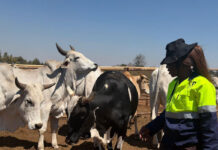
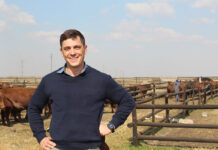
When 31-year-old Jalisa and his business partner Siphe Joyi started Jay Jay Farming in Mphuthi in 2017, with the help of KDF, their ambition was simple: grow affordable, quality food for their neighbours. Today, the enterprise operates across more than 1 000ha, 206ha of which is family farmland and 800ha communal land, producing cabbage, green mielies, potatoes, white and yellow maize, and soya bean at a scale that few emerging farmers achieve.
Jalisa manages stakeholder relations, bookkeeping, marketing, and sales, while his co-director oversees human resources and machinery. Professional accountants and a farm supervisor complete the team. It is a governance structure that larger agribusinesses would recognise, and that is the point.
“KDF didn’t just bring money, they brought relationships and advice that turned our plans into reliable production,” says Jalisa.
“With their help, we scaled irrigation and moved from seasonal cabbage to crop rotations that keep cash flowing and soil healthy. That has made a real difference to our ability to supply nearby towns.”
- Llewelyn Denver Adams, Northern Cape
In Kai !Garib in the Northern Cape, 45-year-old Adams runs a raisin and pecan enterprise that supports permanent and seasonal workers; invests in ongoing training in pruning, food safety, financial management, plant production, and soil identification; and has built the kind of infrastructure that speaks to serious intent: drying facilities, paved access roads, harvest equipment, and farm implements.
“It takes patience to farm here, but it also takes courage to keep investing in the land when the odds are tough,” he says.
“This farm is not just about production for me; it’s about responsibility, family, and creating something that can last beyond me.”
KDF’s support, Tilo notes, is about more than loans: “Farms like [Adams’s] deserve support because they are already contributing to food production, job [creation], and rural dignity. When we invest here, we invest in the future of agriculture itself.”
- Clinton Exzeivier Visagie and Petrus Johannes Coetzee, Northern Cape
Also in Kai !Garib, two other farmers illustrate the fund’s reach into smaller-scale operations.
Visagie, a 41-year-old farmer, runs a raisin and lucerne enterprise that supports a household of five, three permanent workers, and 14 seasonal workers. He has invested in training across pruning, personal protective equipment, soil identification, and food safety, and has put up basic infrastructure, including raisin nets, harvest crates, and a worker’s house.
“People often look at black farmers [like me] and see struggle before they see skill. But farming has taught me that if you stay committed, keep improving, and treat the land with respect, you can build something real,” he says.
Meanwhile, 51-year-old Coetzee has spent the past six years building a raisin operation as a sole proprietor, managing the business, administration, and farm operations on his own while investing in training for himself across pruning, soil identification, food safety, and financial management.
“Raisin farming is not easy, but it has given me a way to build something lasting for my family and my community,” he says.
“With the right support, black farmers like me can grow stronger, produce better, and create real opportunities in rural areas.”
Looking ahead
KDF is looking to deepen its partnerships with financial institutions, universities, and players throughout the agricultural value chain, while expanding its pipeline of emerging farmers and small, medium, and micro enterprises (SMMEs). It will continue to deploy what it calls ‘patient, innovative capital’ to strengthen resilience and long-term food security.
For Tilo, the case for continued investment is both moral and practical. Supporting SMMEs, he argues, helps spread income more evenly, provides better-quality work, and absorbs more labour.
High export values and South Africa’s agricultural trade surplus demonstrate that international demand exists. KDF’s role is to help more producers meet export-quality standards and the volume thresholds that unlock better prices.
KDF’s first integrated report can be seen as both a performance snapshot and an indication of how a fund born from a corporate transaction has developed into a more established vehicle for agricultural development in South Africa.