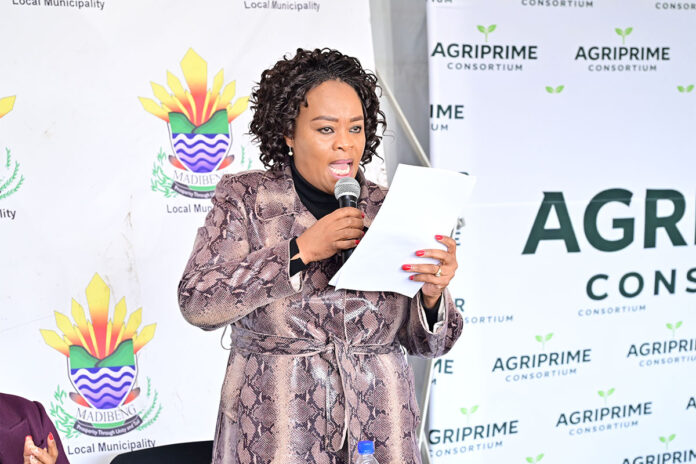
The event, hosted through a partnership between the Madibeng Local Municipality and the Agriprime Communities Consortium, brought together students, aspiring farmers, entrepreneurs, mentors, funders, and industry experts to explore opportunities in the agriculture sector.
Addressing delegates, Mike Mokgatsi, acting director of Economic Development, Tourism, Agriculture and Rural Affairs at the Bojanala Platinum District Municipality, encouraged young people to focus on initiative and entrepreneurship rather than waiting for external support.
“You should not wait for the land or the grant. Just start with something, look at the needs in the community, and make sure you service a need,” he said.
The event aimed to inspire young people to view aAddressing delegates, Mike Mokgatsi, acting director of Economic Development, Tourism, Agriculture and Rural Affairs at the Bojanala Platinum District Municipality, encouraged young people to focus on initiative and entrepreneurship rather than waiting for external support.griculture as a sector filled with business opportunities, innovation, and potential for growth.
It also provided local businesses with an opportunity to showcase business ideas and products, engage with young entrepreneurs, and explore future opportunities within the agricultural value chain with them.
Participants attended presentations, had networking sessions with various exhibitors, and participated in discussions on entrepreneurship, skills development, and agricultural innovation.
Career opportunities
Delivering the keynote address, Seithati Monyaki, director of local economic development at the Madibeng Local Municipality, said young people have an important role to play in the future of agriculture.
“Although they have to bear the weight of food security, we know that young people are creative and have energy. They bring fresh ideas, digital skills, and courage to try new methods. They see agriculture as an economic opportunity,” she said.
“Agriculture is one of the largest employers in South Africa, if not in Africa at large, yet it still has untapped potential for creating wealth and jobs.”
Monyaki also challenged perceptions that agriculture is an outdated sector.
“There is a myth that says many young people see agriculture as old-fashioned or low-income, but the truth remains that modern agriculture is a high-technology sector. From organic produce to running agri start-ups, the opportunities are endless.”

She highlighted emerging technologies and production systems that are transforming the sector.
“Hydroponics can grow food without soil. This is not the agriculture of yesterday. It is the agriculture of the future.”
Monyaki encouraged students and aspiring entrepreneurs to start with manageable projects and gradually expand their operations.
“You can start small by growing crops in a backyard garden or starting a small poultry project at home, which can grow into a private business and eventually participate in the mainstream economy.”
Training and mentorship
Monyaki also urged young people to make use of training opportunities, mentorship programmes, and digital technologies.
“You can continue learning, taking advantage of agricultural training programmes offered by municipalities, the Department of Agriculture, and other institutions. You can also attend online courses and make use of mentorship opportunities.”
She added that technologies such as mobile applications, artificial intelligence, drones, and data analytics can help improve productivity and reduce waste on farms and agricultural enterprises.
In closing, Monyaki encouraged young people to regard agriculture as a viable career choice rather than a fallback option.
“I want all the young people gathered here today not to regard agriculture as just a backup plan but to regard it as a bold career choice, because it can change their lives and create more job opportunities for all of us.”
She also announced that the municipality would continue supporting young farmers through various programmes planned for the 2026/27 financial year.
In a further commitment to youth development in agriculture, Monyaki announced that the Madibeng Agri Youth Day will become an annual event.