
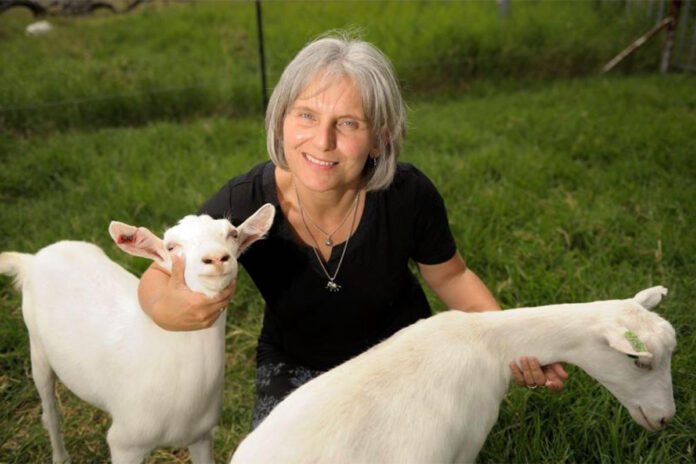
Celebrating more than 30 years of service in the Department of Animal Science at UP, Prof Van Marle-Köster has shaped minds, led research, and championed innovation in animal breeding and genetics at the university. As a true trailblazer in the world of animal science, her legacy built on service, science and a deep commitment to South African agriculture, will live on for many years.
Education and qualifications
At present, Prof Van Marle-Köster is a full professor in animal breeding and genetics. She is the former Head of the Animal Science Department, Faculty of Natural and Agricultural Sciences, at UP. She holds a PhD in Animal Science with specialisation in Animal Breeding and Genetics from the same university. Prior to this, she received a master’s and honours degree from the University of the Free State (UFS) in Animal Breeding, and a BSc (Agric) Animal Science from UP.
Formative years
As a water-loving child she wanted to become a marine biologist and says that over the subsequent years genetics became her major interest.
“I later realised that I want to do science but with a specific application. My father was an animal scientist, and I was exposed to livestock from an early age visiting farms and feedlots. When my father indicated that animal science may not be the best career for a female, I was determined to show him that I can do this. We were only two females in the animal science class of 1986.”
While studying, she says her father showed a keen interest in her research and that they had long hours of discussions on science, genetics, and the implications for food security till the day he passed away. “My father was an important sounding board for challenging and exciting situations in my early career.”
Recognised research and expertise
Her research and expertise in animal breeding and genetics are internationally recognised, and she is considered a researcher who has revolutionised the South African genetic and breeding improvement landscape through the introduction of DNA-based research and livestock genetics in livestock.
Prof Van Marle-Koster’s research focuses on the application of DNA markers and genomics in the genetic improvement of livestock, with a specific interest in beef and dairy cattle genomics. Her work is aimed at the improvement of genetic traits related to animal welfare and sustainability.
The use of DNA technology makes it possible to identify genes that are involved in a variety of animal traits. Under her supervision, the first study on testing the Celtic variant for homozygous polled beef cattle in SA was done and she is collaborating with her former student, Dr Rulien Erasmus, on expanding research on polled beef cattle.
Research contributions, achievements and awards
Over the years she has been involved in various research projects, which included research on the genetic biodiversity of local breeds of chickens, goats, and cattle. Several projects have applied single nucleotide polymorphism markers and genotypic data in genome-wide association studies for an improved understanding of genetic mechanisms determining traits of economic importance.
She is the principal investigator in a project on local SA beef breeds for generation of sequencing data with several Masters and doctoral candidates associated with the project.
She organised the first Livestock Genomic Workshop in SA 2012, which resulted in the formation of the Livestock Genomic task team that was responsible for the application to Technology Innovation Agency (TIA) for the Beef Genomic Programme (BGP). She served on the project committee and the subcommittee for research of the BGP funded by the TIA. She was the coordinator for the Dairy Genomic Programme funded by the TIA between 2016-2019.
She served her profession as the Vice-President of the SASAS and was the body’s first female president, and also the first woman to serve on the Society’s council (from 1999 to 2000). She currently serves as a council member on the South African Council for Natural Scientific Professions (SACNASP).
She has published widely in peer-reviewed journals and contributed to book chapters. She has supervised several master’s and doctoral students to completion. Prof Van Marle-Köster has published more than 100 peer-reviewed publications and has supervised several MSc and PhD students over the past 26 years.
Study visits were spent at the University of Wageningen, in the Netherlands and Technical University of München, in Germany, with the respective animal breeding and genetics research groups. She has several peer reviewed and applied research articles.
Prof van Marle-Köster has a NRF C2-rating. Researchers with a C2 rating are established in their field, demonstrating consistent research productivity and the ability to conceptualise problems and apply research methods effectively. She is a registered professional animal scientist with the SACNASP.
Prof Van Marle-Köster received the Silver Medal from the SASAS in 2016 in acknowledgement of an exceptional contribution to the advancement of professionalism and knowledge in animal science and the livestock industry.
In 2019, she received the prestigious award for Agricultural Writers SA Gauteng Agriculturist of the Year Gauteng 2019, awarded by the Agricultural Writers Society for contribution to the livestock industry.
In March 2024 she was recognised by the Future Agri Perspectives Group as Pioneering women in agriculture for her contribution to the South African livestock industry.
In the same year, her contribution to the animal breeding industry was recognised by the Livestock Registering Federation (LRF) with the 2024 LRF award for Service to the Industry in October 2024.
She continues to be involved in a number of projects as the supervisor for master’s and PhD projects, and is well known for sharing her knowledge with a wide variety of audiences, from students to farmers and industry representatives in the agricultural sector.
Starting out her career
She started her career as an agriculturist at the SA Trust Development Corporation in 1987 where she was responsible for new projects and conducted various viability studies. She also did extension work in the former “homelands”.
“During this time, I completed my Hons in production physiology (1988) and a MSc Agric in Animal breeding (1992) from UFS while working full time.”
In 1993 she relocated to the Northern Cape and worked as a development officer in the National food and nutrition programme of the then Department of Health. During this time she completed a Diploma in Development Studies through the University of South Africa.
She joined the Department of Animal Science at UP in July 1995 as a lecturer and completed a PhD in animal science specialisation in animal breeding and genetics.
“Working in all regions of SA during my first job provided me with the context and experience to later teach animal science. It gave me an advantage of realising early in my career the importance of a holistic approach to livestock production, applying theoretical principles and understanding the farmers and communities relying on agriculture for income and their livelihoods.”
Career highlights
For her, the many students she supervised over the 31 years at the university all stand out as highlights. “I supervised many students, and to date completed 47 Masters and 12 doctoral candidates. The majority of these projects brought new knowledge and working with young scientists are highly rewarding – I regard them all as highlights!”
She adds, however, that being the first female President of SASAS and first female HoD of Animal science were also important highlights in her career.
Not taking no for an answer, she believes, is what makes her good in her job. “I believe we can find solutions for most of our challenges, and I strive to teach my students to seek alternatives.”
Advice for the youth
Her advice to young people is to cultivate a positive attitude and open mind and she advises them to be prepared to work hard.
Challenges and new technology
Looking at the broader industry, Prof Van Marle-Köster notes that as an academic and working with industry, she is experiencing fragmentation among and within sectors. “I hope that we can endeavour to be more inclusive and improve the understanding of the consumer of the industry. After all these years, the public still do not understand what the animal science profession is and what we do.”
She believes, however, that the new technologies available including precision livestock farming, are exciting and that these will drive development in livestock improvement in future.