In 2020, CSC went into corporate rescue amid allegations of poor management and corruption. The company exited corporate rescue in October 2025 following a capital injection of US$9,3 million (around R153 million) from the Mutapa Investment Fund (MIF), Zimbabwe’s sovereign wealth fund, which owns 100% of CSC.
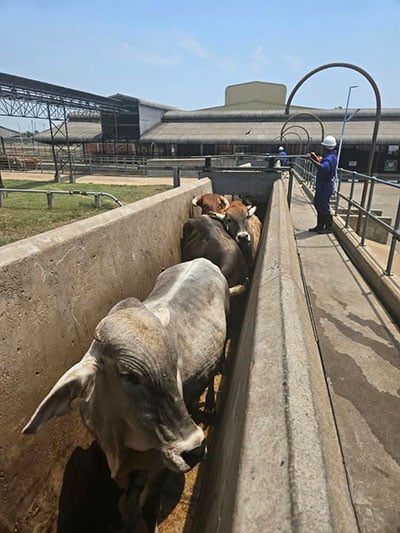
During Minister of Agriculture, Mechanisation and Water Resources Development Dr Anxious Masuka’s visit to CSC’s headquarters and flagship abattoir in Bulawayo on 4 November, Ernest Denhere, MIF deputy chief investment officer, described the company’s efforts to revive its operations.
He said the Bulawayo facility is now capable of processing 320 cattle per day but is currently slaughtering 150. The plan is to increase capacity to 800 cattle per day once the work on resuscitating the company is complete.
“We had to do a lot of capital improvements. We installed chillers, and the refrigerated facilities are now working. We’ve been doing a lot to increase the overall optimisation of the entity,” Denhere said.
CSC seeks additional funding
According to Denhere, MIF’s US$9,3 million capital injection was used to settle creditors and fund the improvements needed to restore the Bulawayo facility.
He added that CSC was seeking two further financing facilities: up to US$15 million (R248 million) to buy cattle for slaughter as part of its El Niño risk mitigation efforts, and US$10 million (R165 million) in working capital for 2027.
“The US$15 million would be but a start. We’re also working closely with the Ministry of Agriculture in terms of their extension capabilities to make sure there’s a coordinated approach to the risk mitigation effort,” Denhere said.
Management is vital
Denhere said rebuilding CSC would require more than capital investment. Strengthening its management team would also be essential.
“The key is really in management capability, and we’ll be making some announcements around our plans to install a highly capable management team for [CSC],” he said.
He described CSC’s Bulawayo facility as a business built around the entire beef value chain, rather than slaughter alone.
“The idea is to get into the canning and tanning industries. We want to capture the entire ecosystem and obviously contribute, as CSC, to the NDS2.”
The NDS2 is Zimbabwe’s five-year National Development Strategy, running from 2026 to 2030.
A market for communal farmers
Denhere also outlined the potential benefits of CSC’s revival for communal farmers. According to him, communal farmers own about 60% of Zimbabwe’s national herd, estimated at 5,6 million head of cattle. They stand to gain a reliable buyer, fairer prices, and access to bigger markets through CSC.
He said CSC’s model was to buy cattle from communal farmers, fatten them at its Willsgrove feedlot, and then slaughter them at its abattoir.
Denhere explained that this would benefit farmers by providing a market for cattle that might otherwise be sold at low prices while still lean, particularly when drought puts pressure on farmers to sell their animals before they lose more weight or die.
CSC would also benefit from a steady supply of cattle to keep its abattoir operating. Fattening the animals would improve their weight and grade, allowing the company to sell higher-grade meat to butcheries and retailers, and eventually export markets.
According to Zimbabwe’s Cabinet, 2,2 million cattle are at risk due to drought. Denhere said CSC’s ranches could help mitigate these losses by providing feed for cattle or buying them for slaughter before farmers lose them. The government therefore views CSC as a drought-mitigation tool.
“CSC is probably one of the most sustainable businesses [MIF] has, so we want to promote and capitalise the sector,” Denhere said.
Drought may lead to panic selling
Masuka said efforts to resuscitate CSC are well-timed, as Zimbabwe is expecting below-normal rainfall in the 2026/27 season. He said farmers in the Matabeleland region and the Masvingo and Midlands provinces were likely to come under pressure, potentially prompting some to “panic-sell” their cattle before they’re ready.
“Our advice [to farmers] is to bring [their cattle] through the CSC facilities,” Masuka said.
He said CSC is reviving its ranches totalling 170 000ha, and that its Willsgrove 5 000-capacity cattle fattening facility is also up and running.
Exports to come after improvements to local market
On exports, Denhere said CSC would first focus on securing the domestic market before building the systems needed to regain access to premium export markets.
“Later, there will be exports not only to the EU but even into Asia and into the Middle East. The road map to get export accreditation really requires a lot of the traceability, and the standard certification needs to be in place.
“We’ve made a lot of improvements in that regard recently. We’re now halal certified, and the idea is to increase biosecurity, improve traceability, and then obviously tap into those export markets,” he said.
Masuka noted that CSC also has a small-stock line focused on goats and sheep and may also process poultry going forward.