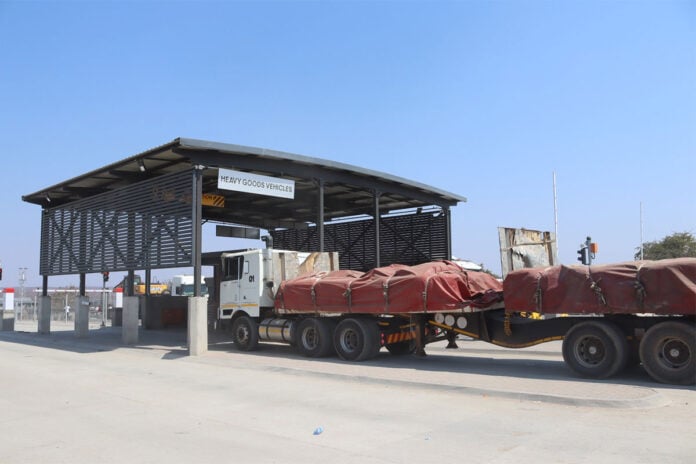
In August, SADC heads of state directed all 16 member states to remove NTBs to agricultural trade and harmonise standards to ensure food moves efficiently from surplus to deficit areas. The directive was issued at the 46th SADC Summit held on 17 August in Durban, and aimed to stabilise supply and prices for farmers and consumers across the region.
A statement dated 17 April 2026 issued by the SADC said a draft publication concerning NTBs had been submitted to a committee comprising justice ministers and attorney generals for consideration and adoption.
Understanding non-tariff barriers
Elliot Lumbe, an independent agricultural economist, told Farmer’s Weekly that NTBs are any policy, regulation, or administrative rule (other than a traditional tax or duty), which makes the importation or exportation of goods and services difficult or costly.
According to Lumbe, seven specific barriers affect SADC agricultural trade the most. These include:
- Import and export permits. Lengthy permit processes for maize, livestock, meat, dairy and fresh produce mean farmers miss market opportunities.
- Unpredictable export bans. Sudden restrictions on staples like maize disrupt regional supply chains and make it hard to plan production and contracts.
- Repeated inspections and paperwork. A truck can face multiple document checks by uncoordinated agencies, raising costs and delays.
- Different health rules. Countries apply different pesticide-residue limits, pest control rules and veterinary certificates without recognising equivalent safeguards in other countries.
- Border delays. Long queues, limited operating hours and poor cold storage are particularly damaging for dairy, meat, fruit and vegetables.
- Transport restrictions. Cumbersome transit procedures and inconsistent enforcement of road rules increase costs.
- Inconsistent product standards. A consignment that meets rules in one country may need re-testing or repackaging in another.
Removing non-tariff barriers
Lumbe said removing NTBs would rely on governments simplifying import and export permits and customs documentation; introducing coordinated border inspections and making more use of digital certificates; recognising credible testing laboratories and certification systems across the region; investing in roads, border facilities, warehouses and cold chain infrastructure; and publishing clear rules and procedures.
He also explained that once NTBs were removed, governments needed to track whether border delays, trade costs and food-price differences declined.
Benefits and risks for farmers
The removal of NTBs would translate to fewer post-harvest losses, according to Lumbe. Faster border clearance was particularly crucial for horticulture, dairy and meat products, as these deteriorate when trucks are delayed, he added.
“If farmers can depend on predictable access to regional markets, they may be more willing to invest in irrigation, improved seed, machinery, storage, livestock production and agro-processing,” Lumbe said.
However, he added that increased imports could put downward pressure on local prices, negatively affecting local farmers’ competitiveness.
“Farmers in a country receiving cheaper imports could face increased competition from more efficient producers in neighbouring countries. Small-scale farmers with high production costs may struggle unless they can improve productivity, quality and market access.”
Lumbe also warned that even if farmers collectively produced enough food for the SADC region, producers and consumers wouldn’t benefit if the transportation of food remained expensive, slow or unpredictable.
Harmonising standards
One of the measures the SADC Summit wanted to implement was the harmonising of standards across the region.
According to Lumbe, ‘harmonising standards’ referred to agreeing on common or compatible rules for quality, safety, grading and measurements of animal products or fresh produce, and trusting the test results of other authorities and countries to avoid goods being rechecked at every border.
He added that harmonisation did not mean that every country needed to produce identical food products, or that all products needed to be sold at the same price.
In terms of major commodities, Lumbe explained that the ‘harmonisation of standards’ could include:
- Agreed upon rules on microbiological safety and fat content in dairy products, as well as temperature and cold-chain requirements and mutual recognition of approved establishments;
- Common rules for abattoir approval, veterinary inspection, grading, traceability and hygiene for meat products. Recognised veterinary certificates across borders would ease the meat trade, while safeguards would remain for outbreaks such as foot-and-mouth disease;
- Common grading for size and maturity, pesticide-residue limits, and recognised plant-health certificates in the horticulture industry.
A hidden tax for farmers
Linda Kachona, a Zimbabwean agricultural economist who is also the founder of an organisation called Sustainable Futures Initiatives Africa, told Farmer’s Weekly that redundant inspections and unharmonised seed and fertiliser registrations have acted as a hidden tax on farmers.
She explained that the harmonisation of standards by regional countries would eliminate this ‘hidden tax’ as a product approved in one SADC country would be accepted in another country.
“If barriers are removed, farmers save money and get paid faster. Input costs drop when fertiliser and seed move freely, and consumers may see more stable prices,” according to Kachona.