

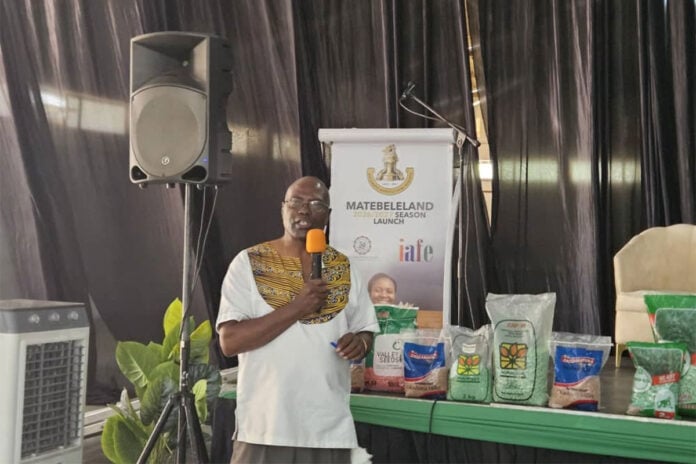
That was the message from Dr Ronny Sibanda, a Zimbabwean agricultural economist and farmer, during an event organised by the Bulawayo Agricultural Society on 6 November to launch the 2026/27 Matabeleland agricultural season.
Sibanda’s presentation focused on livestock production, feed management, and seasonal preparedness.
“A resilient season is not a season with good rainfall. It is a season where drought or disease may occur, but animals still have feed, remain healthy, and the farmer still has something to sell,” he said.
Sibanda defines resilience as the ability to withstand or recover from a shock or stress. For livestock farmers, this often means being able to manage feed shortages. Without adequate nutrition, animals’ growth, reproduction, and health are affected.
Choose the right breed
“I see a lot of discussions in WhatsApp groups where farmers talk about producing certain types of animals simply because they have seen someone else doing it.
“You need to be clear about why you are choosing a particular breed. This is a business, so you need to consider factors like the environment where you’re working,” Sibanda advised.
He added that some breeds perform better than others under the same feeding and management conditions. Breed choice influences how animals cope with drought, feed shortages, and disease.
Diversify feed sources
Sibanda said farmers should have at least two feed sources available before the dry season begins.
“You shouldn’t concentrate on one approach to ensure sustainability and resilience. Use as many options available to you as possible and that make economic sense.”
He identified the following feed sources:
- Commercial suppliers of livestock feed;
- Crop residues, such as stover, which can be treated and used as feed;
- Natural grazing, which is generally the cheapest source but is vulnerable to drought and erratic rainfall; and
- Home-grown livestock feed.
Fodder production requires a substantial supply of water, so farmers should assess their available water resources before planting.
Assess new crop technologies
New crop technologies offer potential benefits, including higher yields, improved resilience to harsh weather conditions, and increased protein or energy content. However, Sibanda cautioned farmers against adopting new varieties simply because others were doing so.
“My point is that you should read about a technology and understand what it involves before adopting it. There are many technologies available.
“Before adopting a new technology, ask yourself: Will it benefit my animals? Do I have the necessary infrastructure? If you can’t explain how a new feed source will benefit your animals, don’t plant it yet,” he said.
Maintain livestock health
According to Sibanda, Zimbabwean farmers are losing livestock to diseases such as January disease and foot-and-mouth disease because they are not following established management practices.
He said animal health is closely linked to everyday management practices, including proper dipping, the correct application of medicines, and farmers checking that workers are carrying out these tasks.
Failure to monitor such practices could result in financial losses.
“I meet a lot of farmers who own land and raise cattle or other livestock but have never witnessed a dipping session on their farms,” Sibanda said.
“Farmers buy medicines recommended by suppliers, and their workers tell them the animals are being dipped properly. But the dip may never actually reach the animals. Instead, the workers pen them in a corner and spray them randomly with a knapsack [sprayer], then tell the farmer the dipping has been done.
“Spend time on your farm observing how things are done. You don’t even need to announce your visits. Just make sure your systems are working according to plan,” Sibanda said.