

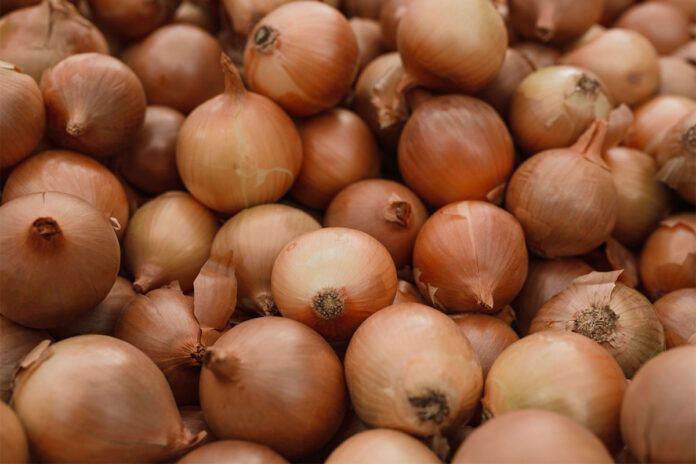
Mozambique’s Minister of Agriculture Roberto Albin has announced plans to accelerate the country’s import substitution, with a particular focus on replacing imports of potatoes, tomatoes, cabbages, and onions from South Africa.
Speaking to the media during a working visit to Massingir Valley Farms in Gaza Province, Albin said the Mozambican government wants to work with local producers and seed companies to significantly increase domestic production.
He added that the province has the capacity to produce large volumes of vegetables and become less dependent on imports from South Africa.
However, agricultural economists have cautioned that replacing imports requires far more than increasing production targets, and that success will depend on sustained investment in infrastructure, financing, research, and regional cooperation.
According to Thabile Nkunjana, senior agricultural economist at the National Agricultural Marketing Council, countries seeking to replace agricultural imports must first create an environment where local farmers can produce competitively and consistently.
“Any country or industry that wants to successfully replace agricultural imports, whether in the short, medium, or long term, needs several critical elements. Without these, domestic farmers typically struggle to meet local demand, which can result in higher food costs and even food insecurity,” he told Farmer’s Weekly.
He explained that one of the most important requirements is investment in agricultural infrastructure, including reliable road networks, cold-chain facilities, and processing infrastructure that enables produce to move efficiently from farms to markets while reducing post-harvest losses.
Nkunjana added that affordable agricultural finance is essential if Mozambique wants to increase production sustainably. He said farmers need reasonably priced credit to buy inputs such as improved seed, fertiliser, and machinery, while crop insurance could reduce production risks associated with adverse weather conditions and other unforeseen events.
He said investment in agricultural research and development is equally important to develop improved crop varieties, enhance soil fertility, increase productivity, and adapt farming systems to local climatic conditions.
Opportunities for South African agribusiness
Rather than viewing Mozambique’s agricultural ambitions as a negative development, Nkunjana said the country’s agricultural expansion could create opportunities for South African agribusinesses.
“To achieve this, there may be opportunities for South African agribusinesses through partnerships, technology transfer, or investment where the two countries can cooperate to accomplish what is required.”
He pointed to previous examples of regional agricultural cooperation, including partnerships between South Africa and Botswana in developing the latter’s beef and citrus industries.
Nkunjana said carefully targeted trade measures could assist emerging industries during their early stages of development.
“Strategic trade barriers, such as targeted tariffs, can shield [newly established] local agricultural industries from heavily subsidised foreign competitors long enough to scale up, despite the fact that they have occasionally been discouraged because of their unintended consequences.”
He added that border closures are a different matter altogether, particularly for countries recovering from severe climate-related disasters, as they often have serious economic and humanitarian consequences.
“Border closures are something that should not occur, particularly for a country like Mozambique, which has experienced catastrophic climate events that have affected its infrastructure and economic activity, including agriculture.
“This typically results in much worse outcomes, such as increased food costs, food insecurity, and the emergence of black markets that are often too difficult to stop once they have taken hold.”
Regional prosperity depends on collaboration
Agbiz chief economist Wandile Sihlobo said in his podcast that efforts to strengthen agricultural production across Southern Africa should be welcomed because they would contribute to shared regional prosperity.
“We all want shared prosperity in Southern Africa. There are lessons and technologies that Mozambique can learn from South African agribusinesses to boost its agricultural production,” he said.
Sihlobo added that agriculture contributes between 20% and 25% of Mozambique’s gross domestic product, meaning stronger agricultural production could make a significant contribution to the country’s economic growth and recovery.
However, he noted that regional agricultural development should not come at the expense of open trade.
“The approach to these agricultural expansion efforts in our region should be one that doesn’t encourage irregular border closures.
“The borders must remain open for food trade, while the various domestic governments, together with farmers and agribusinesses, work to improve their production.”
Sihlobo said South Africa should be viewed as a strategic partner rather than a threat.
“South Africa’s agriculture must not be viewed as a threat but as a key collaborator and provider of essential inputs. We want shared prosperity in agriculture in our region, and trade friction would defeat that goal.”