
Farmers once again proved that necessity is the mother of invention at the Nampo 2026 Boereplanne competition, where practical, home-grown solutions to everyday farming problems took centre stage.
This year’s competition attracted 31 entries from 12 participants, down slightly from 32 entries in 2025.
According to Donald Brink, Omnia sales manager and one of the competition judges, the overall standard of entries was exceptionally high.
“The judges were impressed by the level of creative thinking and innovation that went into developing solutions for practical problems farmers encounter every day,” he told Farmer’s Weekly.
Spare air system takes category A
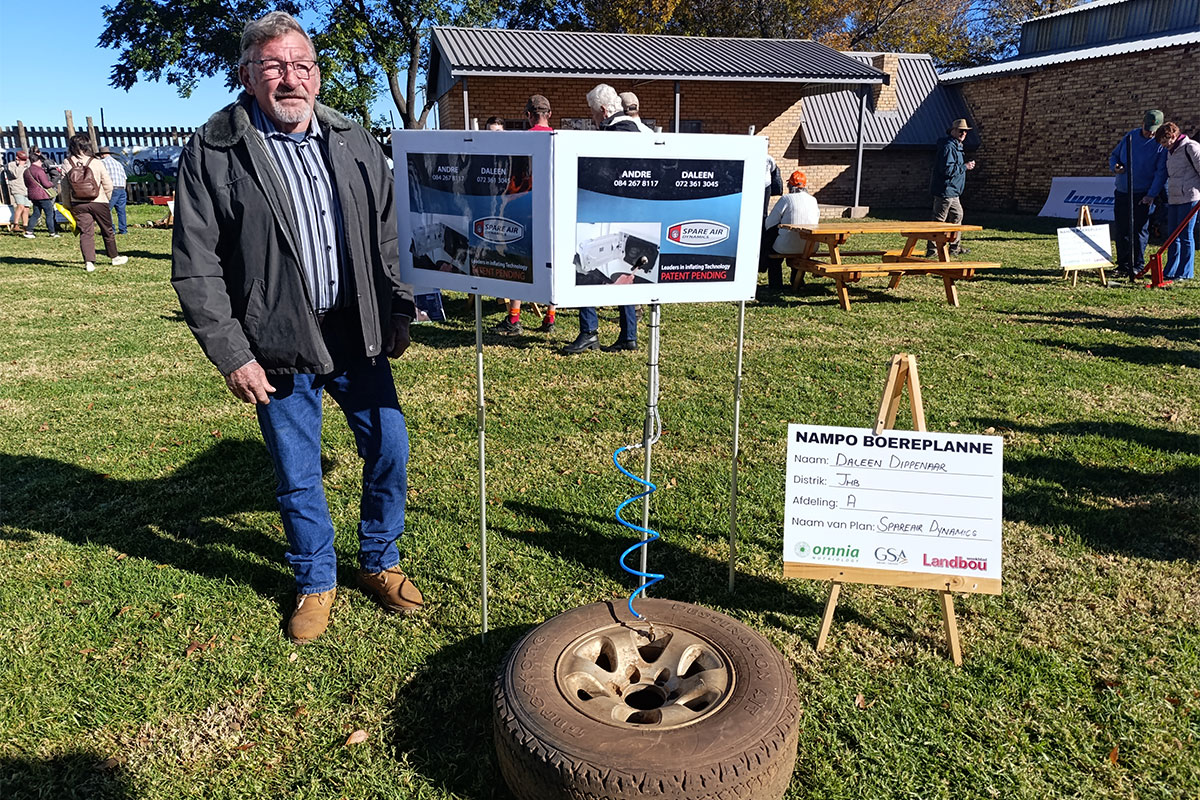
One of the entries that really stood out for Brink was the Spare Air Dynamics system developed by Andre and Daleen Dippenaar, which won Category A for new machines, implements, and agricultural equipment.
The innovation consists of a valve fitted next to a vehicle’s fuel tank and connected via a pipe to the spare wheel. This allows motorists to inflate the spare wheel while filling the vehicle’s fuel tank.
Andre said the idea was inspired by a neighbour who suffered a flat tyre, only to discover that her spare wheel was also flat. While waiting for assistance, she was robbed.
“With this system, you can conveniently inflate your spare wheel without having to remove the tyre. It helps ensure the wheel is ready when you need it most,” he said.
Modified machinery, pest control innovations impress
Petrus Talman won Category B for modified machinery, implements, and equipment with his modified Talman calf-turning table.

In Category C, Willem van den Berg claimed top honours with his ‘rat gun’, which he developed to combat gerbils damaging grain lands in the Reitz district of the Free State.
Willem explained that members of the Riemland farmer study group had researched different methods of gerbil control and came across a promising Australian machine that pumps a mixture of propane and oxygen into burrows before igniting it. However, the imported unit cost more than R100 000.
“We decided to develop our own version at a fraction of the cost,” he said.
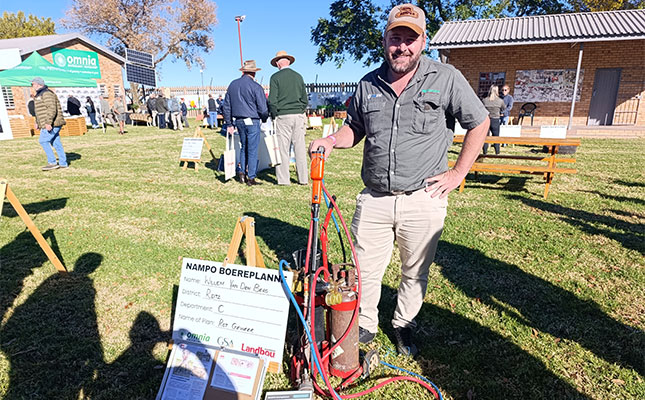
According to him, the device is placed at the entrance of a gerbil burrow, where the blast and pressure wave are usually enough to kill the pests. Animals that survive the initial explosion often succumb under the collapsing tunnels.
“It is a far more environmentally friendly and humane control method than some of the alternatives we investigated and has made a big difference on our farm,” he added.
Family innovation stands out in multiple categories
Botswana entrant Nicolene Goosen also made her mark this year, giving her father, Bertus, stiff competition. Together, they entered 15 innovations into the competition.
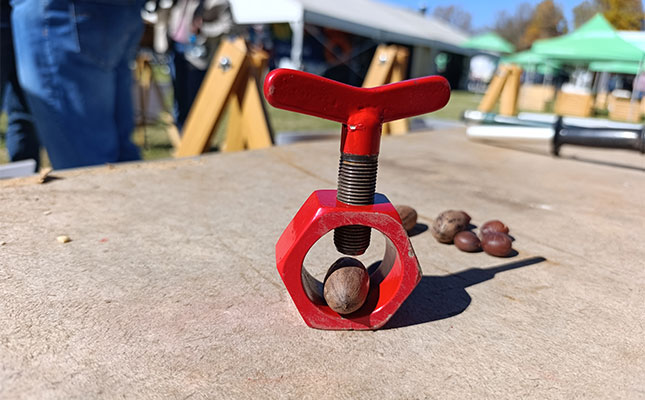
Nicolene ultimately won Category D for house and garden with her nutcracker, and Category E, the open category, with a wheel lift.
Bertus said the judges appeared particularly impressed by the simplicity and practicality of the inventions.
“The nutcracker is made from an actual nut, which caught their attention,” he said. “The wheel lift solves a problem that almost anyone can relate to.”
He explained that Nicolene developed the wheel lift because the vehicle wheels are too heavy for her to handle on her own when changing tyres, and he is not always around to assist.
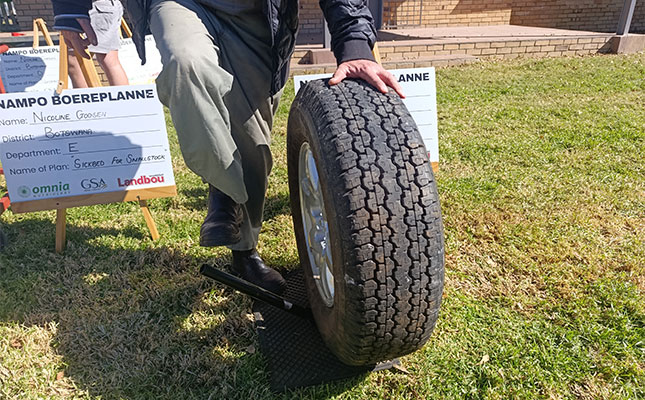
“The back of the lift is open, allowing the pipe to be used as an extension, which makes fastening bolts easier during tyre changes,” he added.
Farmer’s Weekly was notably struck by Nicolene’s small-stock sickbed, which earned second place in the open category. Bertus explained that after purchasing sheep from a heartwater-free area, the family experienced severe heartwater outbreaks on their farm at Matlakeng in southern Botswana.
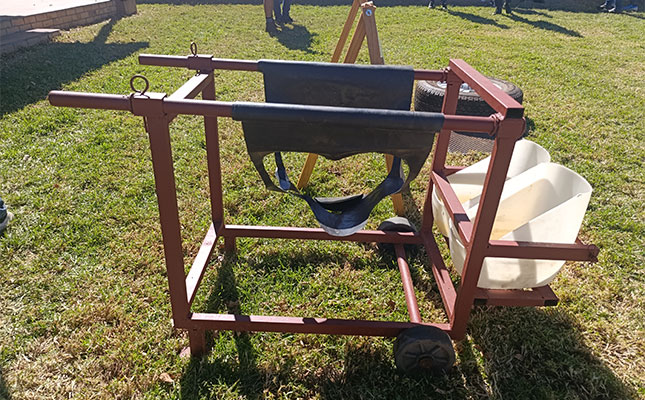
“When lambs contract heartwater, they become so weak that they can no longer stand to eat or drink, and their muscles deteriorate rapidly,” he explained.
“The sickbed keeps the animal upright, helping it regain strength while allowing easy access to feed and water.”
Vacuum seed measurer and borehole protection
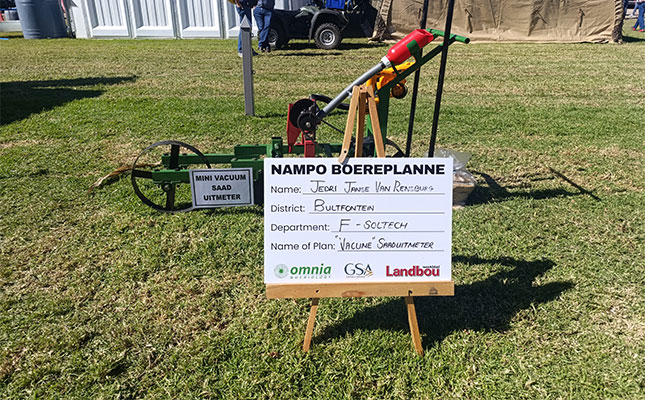
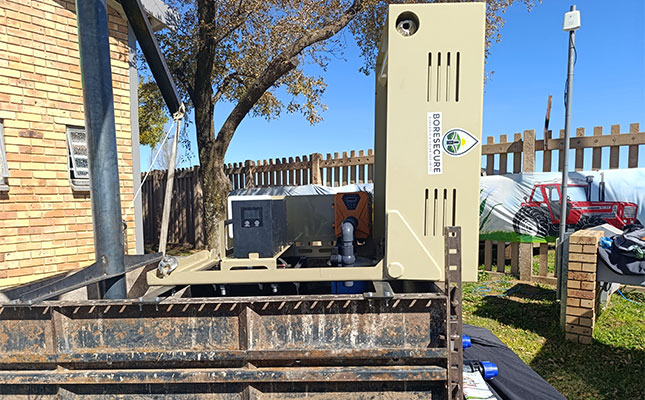
Jedrie Janse van Rensburg won Category F for schools and tertiary institutions with his vacuum seed measurer, while Jan van Sandwyk took top honours in the commercial category (Category G) with BoreSecure, a system designed to protect boreholes and pumps against theft.
Johan Appelgryn, who developed the BoreSecure system with Charles Pierce and Jan, said the idea came after three borehole pumps were stolen from their wildlife ranch near Marken in Limpopo while he was away.
“It is expensive to replace pumps, but the bigger tragedy is losing animals because they have no water. The first animals to die from thirst are usually the zebras,” he said.
The trio are already working on further improvements to the system, including the addition of a solar-powered camera unit that will enable farmers to remotely monitor boreholes and water infrastructure in real time.
According to Johan, the upgrade will not only help to deter thieves but also allow farmers to respond more quickly to problems such as pump failures, vandalism, or water shortages in remote areas.
He added that events such as Nampo restore his faith in agriculture, despite the many challenges farmers face.
“It is easy to become discouraged when you look at rising input costs, theft, and all the other pressures farmers face.
“But coming to Nampo, seeing all the innovation and exchanging ideas with fellow farmers fills you with hope again,” he said.
Special awards went to Michris Janse van Rensburg for his vehicle sanitation system and Werner Dreyer for his Counter Scrum innovation.
Winners received cash prizes sponsored by Omnia, while the winner of the commercial category also secured exhibition space at next year’s Nampo Harvest Day.