
Henry warned that South Africa’s current regulatory data protection (RDP) framework provides no more than two years of effective protection for confidential data submitted by companies introducing new agricultural remedies.
He said this discourages innovation and weakens the country’s competitiveness relative to other major agricultural economies.
The approach risks reducing locally relevant trials and product launches, ultimately threatening food security, export performance, and the broader agricultural economy, which generates some US$13,7 billion (about R225,4 billion) in annual agricultural exports.
However, Henry noted progress through the RDP working group, where key industry players have formulated policy recommendations and submitted them to government.
He expressed optimism that constructive engagement will align South Africa’s legislation with global standards.
Alongside policy discussions, the event also marked Syngenta’s 25th anniversary of supporting South African farmers.
“For 25 years, the farmers of South Africa have trusted Syngenta to stand alongside them,” Henry said.
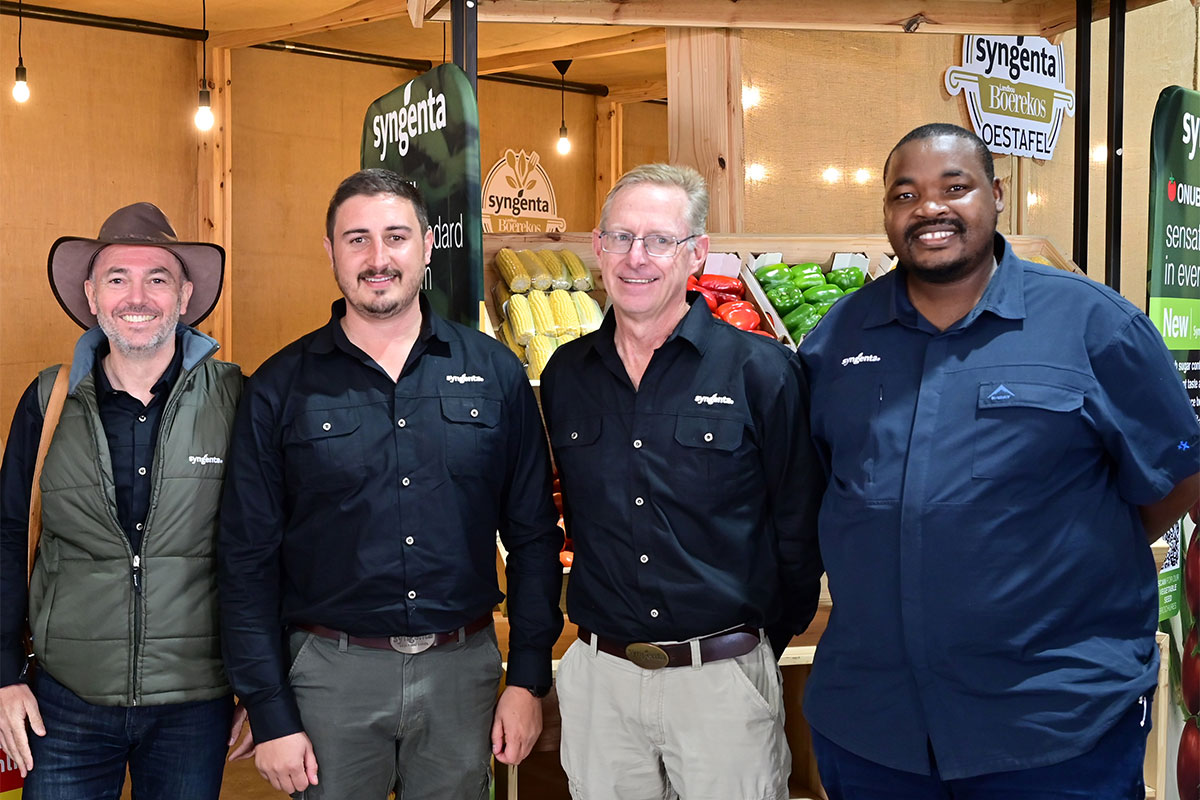
Beyond policy and innovation, the Syngenta Boerekos Plaaskombuis once again provided a cultural focal point at Nampo. A lunch prepared by Landbou Boerekos editor Arina du Plessis and a team of chefs from the Roots Academy culinary and hospitality school in Potchefstroom celebrated local ingredients and heritage cuisine.
Despite the challenges they face, from climate variability to rising input costs, Henry described South African farmers as “extraordinary” in their resilience and ingenuity.
He remains confident that, through strategic partnerships and sustained investment in research and digital tools such as Syngenta Cropwise, the best of South African agriculture is yet to come.