Heat stress affecting a dry cow today could reduce milk production in her next lactation and compromise the performance of her daughter and granddaughter.
This striking finding, presented at this year’s Dairy Management Consulting (DMC) Hollard Conference, captured the central message of the day: many of a dairy herd’s future problems begin long before their consequences become evident.
Across presentations covering transition-cow monitoring, heat stress, reproduction, milking performance, and genomics, speakers repeatedly emphasised the importance of combining reliable data with sound management and timely action.
Dry-cow behaviour provides an early warning
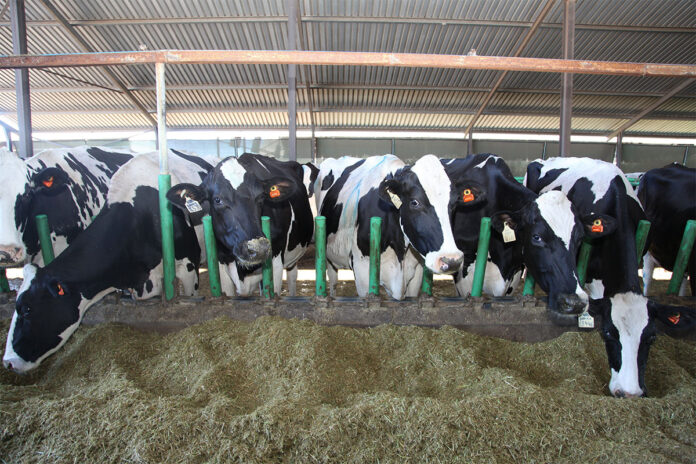
Dr Marco de Groot, performance specialist at CowManager, showed how behavioural monitoring could identify dry cows at risk of developing health problems after calving.
He explained that changes in eating, rumination, and inactivity could serve as early warnings, enabling farmers to investigate factors such as feed and water availability, heat stress, overcrowding, lameness, and repeated group movements.
Examples from commercial farms showed that relatively small interventions could produce measurable improvements. These included adding a water trough, providing fresh feed more frequently, and reducing the stress associated with moving cows between pens.
De Groot’s underlying message was that post-calving health and performance often reflected what had happened during the dry period.
Heat stress can leave a multigenerational legacy
The importance of dry-cow management was reinforced by Dr Jimena Laporta, associate professor of lactation physiology at the University of Wisconsin-Madison in the US.
Laporta presented research showing that heat stress during the dry period could affect a cow’s next lactation, as well as the development and future performance of her offspring.
She explained that cows exposed to heat stress while dry produced, on average, about 5kg less milk per day during their subsequent lactation than cows that were kept cool. Their daughters also showed poorer survival and reduced productive performance.
The effects could extend to granddaughters, too, because a developing heifer already carried the oocytes that could eventually produce the next generation.
Laporta also urged farmers not to overlook heat stress in pre-weaning calves. Although calves did not show the immediate milk production losses seen in lactating cows, their body temperatures could rise progressively during the day.
Higher body temperatures and increased respiration placed additional strain on calves at a time when their mammary glands, ovaries, digestive systems, and immune systems were developing rapidly.
Heat-stressed calves could consume less milk and starter feed, grow more slowly, and become more susceptible to illnesses such as pneumonia and scours.
Heat stress could also disrupt their immune development and reduce the effective absorption of immunoglobulins. The consequences could therefore persist long after temperatures had fallen, affecting survival and potentially future milk production.
Laporta said shade should be the starting point for calf cooling, with additional measures adapted to a farm’s climate and housing system. These could include fans in group pens, improved ventilation in individual houses, and systems combining airflow with misting under hot, humid conditions.
She added that better ventilation could also reduce the accumulation of heat, ammonia, carbon dioxide, and bacteria in enclosed calf housing.
Fertility starts months before insemination
Dr Luca Fabozzi, dairy technical specialist at Zinpro, said reproductive problems were multifactorial and required accurate diagnosis rather than guesswork. He explained that farmers needed to establish whether cows were failing to cycle or show heat, failing to conceive, or losing embryos, as each problem required a different response.
He also rejected the belief that high milk production inevitably resulted in poor fertility, saying well-managed herds could achieve both. Instead, he said excessive loss of body condition, rather than milk production itself, posed the greater reproductive threat.
Fabozzi recommended that cows calve at a body condition score of approximately 2,75 to 3,25 and enter the dry period at roughly the same condition. He explained that cows in suitable condition experienced fewer health problems and conceived sooner, while those remaining open for longer risked extended lactations and becoming over-conditioned.
He said fertility was influenced weeks or months before insemination, as nutrition, heat stress, inflammation, and transition-period health could affect follicular development. Ketosis, lameness, and mastitis could also reduce conception rates and contribute to embryo loss.
Fabozzi therefore urged farmers to maintain dry-matter intake before calving and monitor body weight and condition. Access to feed and water, cooling, comfort, and stocking density were also central to protecting fertility.
His advice was to measure rather than guess, identify the specific cause of poor performance, and act promptly, particularly when cows failed to conceive.
Balancing speed with udder health
Attention then shifted to the milking parlour, where Milkrite | InterPuls milking performance specialist Gijs Hampsink discussed the challenge of achieving fast, complete, and gentle milking.
He cautioned that attempts to increase milking speed should not come at the expense of teat condition or udder health.
Hampsink advised farmers not to rely solely on system-vacuum readings, as vacuum losses and restrictions differed between parlours. Instead, equipment should be evaluated while cows were being milked, with vacuum measured beneath the teat during peak milk flow to establish what the cow actually experienced.
Correct preparation was equally important. Allowing approximately 60 to 90 seconds between stimulation and cluster attachment promoted continuous milk flow, reduced low-flow milking, and limited unnecessary pressure on the teat.
According to Hampsink, farmers should also avoid overmilking and inspect teats immediately after cluster removal. Swelling, redness, or discolouration could indicate excessive vacuum, unsuitable liners, or inappropriate pulsation settings.
Genomics is a tool, not a cure
Swartland dairy farmer Van der Byl du Toit concluded the technical programme by sharing his farm’s practical experience with genomics.
He explained that the technology had helped the business assess genetic potential more objectively, improve breeding decisions, and identify which animals should produce dairy replacements.
Du Toit cautioned, however, that genomics was not a ‘silver bullet’, as it could not correct poor management or inadequate facilities.
According to him, farmers also need to select breeding indexes that reflect their own production systems, milk payment structures, and financial circumstances, rather than automatically adopting the indexes used in other countries.
Du Toit said his objective was to breed balanced, long-lived cows rather than selecting solely for high milk production.