
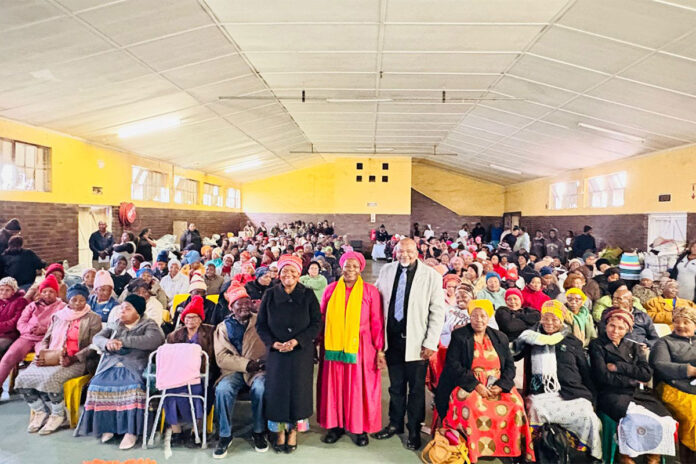
Eastern Cape Agriculture MEC Nonceba Kontsiwe visited food garden and community agricultural projects in Makhanda in the Sarah Baartman District on 3 September, as part of the department’s drive to promote household food production, reduce poverty and strengthen food security.
The initiative was expanded from 2024, following findings by the South African Human Rights Commission highlighting high levels of poverty and malnutrition in the province.
Through Ilima Lokulima, households and smallholder farmers have received production packs, farming tools and mechanisation support. The department’s spring water protection programme has also resulted in taps being installed in several villages, providing households with access to water while creating employment opportunities.
From food gardens to livelihoods
At the Makhanda projects, beneficiaries said access to land, equipment and agricultural support had helped them improve their livelihoods and reduce household food costs.
Thandeka Gqamane, a beneficiary of Ilima Lokulima, told Farmer’s Weekly, she became involved in the programme in September last year after being allocated a piece of land.
“When we arrived, there were elderly people who were already working here. Today marks a year since we started, and the Department of Agriculture has helped us greatly,” Gqamane said.
Gqamane said the project initially relied on buckets to transport produce before the department supplied wheelbarrows, making the work easier and allowing production to increase.
The opportunity to participate in an agricultural show further encouraged the group to view farming as a potential source of income.
“That is when our passion was ignited and we realised we can make a living from this,” Gqamane said.
She said producing vegetables had also improved her wellbeing and reduced her household expenses.
“I am revitalised, I am healthy, and this has put food on my table. I no longer have to spend money on vegetables. I can save my funds and raise money by selling excess food to communities,” Gqamane said.
Training communities to farm
At the Umthathi Training Project, agricultural skills development is being used to bring more community members into food production.
Mthobeli Mali, who has worked at the project for 16 years, told Farmer’s Weekly, the cultivation field was established in 2012 to provide practical training to people wanting to learn how to plough and grow crops.
The project provides community members with plots and teaches them basic farming practices, including land preparation and planting.
“Most people in our community do not have adequate land in their backyards. We use this piece of land to give them land to work on,” Mali said.
Mali said the project had also provided him with a livelihood, allowing him to sell surplus produce in Makhanda.
“When I arrived, I didn’t know how to work the land. This has been crucial in my life because I earn a living from this and sell excess produce in town,” Mali said.
He said he hoped the project could expand its cultivated area and eventually qualify for tractor support, allowing production to be increased.
“With the country experiencing high levels of unemployment, this could help alleviate some of those challenges,” Mali said.
Skills as a foundation for food security
Speaking to Farmer’s Weekly, Umthathi Training Project assistant director Mlungisi Magalela, said the development of agricultural skills could have a wider impact when knowledge was shared within communities.
“The most important thing in life is to acquire skills, because skills speak to your development. In the process, you are then able to share those skills with people who may not have had the same opportunities,” Magalela said.
Magalela said the interest generated by the project demonstrated the value of collective learning and community participation in agriculture.
“It is a sharing exercise and a collective engagement. When people understand that anything that contributes to agriculture serves as a useful reference for food security, they begin to see the value of these initiatives,” Magalela said.