
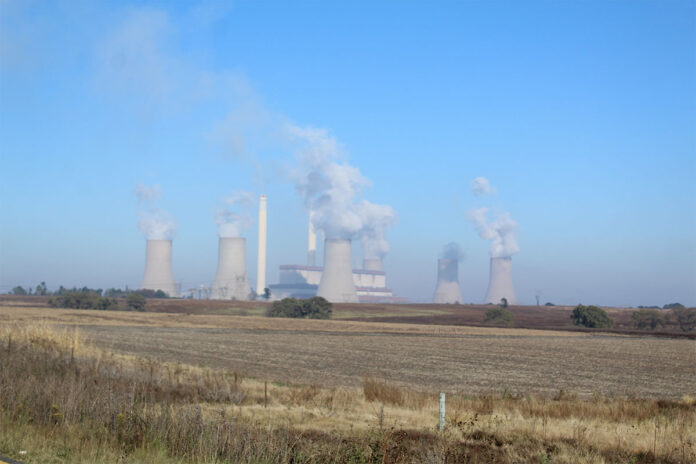
Although Eskom has largely overcome its generation shortfall, the financial burden on electricity users has continued to escalate.
Chris Yelland, energy analyst at EE Business Intelligence, told Farmer’s Weekly that the end of load-shedding in April 2024 was made possible by improved performance at Eskom’s coal-fired power stations and the return to service of units at Medupi and Kusile, which added about 1 500MW of generation capacity.
“The problem is no longer electricity generation. Instead, the crisis has shifted to the affordability of electricity.”
Yelland explained that rapidly rising tariffs were forcing energy-intensive industries to reduce production or shut down altogether because they could no longer compete internationally. This phenomenon, known as demand destruction, was fundamentally changing the South African economy.
“We used to have a highly energy-intensive economy, but many of those industries are closing or shrinking while the economy shifts towards lower-energy sectors such as banking and insurance,” he said.
The result is that electricity demand has fallen, leaving Eskom with surplus generation capacity. “One would think with a surplus of energy, prices would drop, but instead tariffs continue to rise.
“When Eskom sells less electricity, it increases prices to recover the same amount of revenue. Higher prices then encourage customers to use even less electricity or switch to alternatives, reducing sales further. That creates a utility death spiral. It is not a healthy situation,” said Yelland.
For agriculture, these rising costs are becoming increasingly difficult to absorb. Jolanda Andrag, chief operating officer of AgriSA, warned that electricity tariffs are no longer a simple input cost for South African farmers. “Under the 2025/26 framework and Multi-Year Price Determination 6 trajectory, they have become a systemic threat to the viability of irrigation farming.”
She told Farmer’s Weekly that evidence from sugar cane and maize production showed profitability was already being eroded by double-digit electricity tariff increases, while fruit producers would face similar pressure as the summer export season approached.
“If left unaddressed, these changes will compromise food security, rural employment, and South Africa’s competitiveness in global agricultural markets.”
Tariff changes hit harder than expected
While the National Energy Regulator of South Africa (NERSA) approved an average electricity tariff increase of 12,74% from 1 April 2025, changes to Eskom’s tariff structure meant many agricultural users experienced effective increases of between 25% and 30%.
According to AgriSA, evidence submitted by the organisation, together with Canegrowers South Africa and Grain SA, showed that a typical 250kVA irrigated farming operation saw annual electricity costs rise from about R408 000 to R539 000 in a single season, an increase of 32%.
Last week, AgriSA welcomed NERSA’s draft Market Inquiry Report into fixed charges and Eskom’s Retail Tariff Plan, saying it confirmed concerns the organisation had consistently raised about the disproportionate impact of the tariff reforms on agriculture.
The inquiry found that while moving towards more cost-reflective tariffs was appropriate in principle, implementation had produced unintended consequences for sectors such as agriculture, prompting calls for NERSA and Eskom to reconsider the tariff structure.
Andrag noted that the impact of structural unbundling was being compounded by additional increases resulting from the High Court judgment of 21 December 2025, which required NERSA to redetermine Eskom’s allowable revenue. The redetermination approved additional allowable revenue of R54,7 billion, to be recovered in phases during 2026/27 and 2027/28.
This resulted in an additional 3,4% increase in 2026/27, and an additional 2,64% increase in 2027/28, bringing the total resultant increase to 8,76% and 8,83%, respectively, for those years. While phased, these increases are layered on top of the already elevated structural cost base introduced in 2025/26.
According to Andrag, electricity has already become the second-largest input cost in sugar cane production after labour, while horticultural producers face mounting irrigation and cold-chain costs.
Reliable power remains elusive
Although load-shedding has ended, reliable, consistent energy supply has remained elusive.
Yelland said this was due to widespread outages resulting from deteriorating distribution infrastructure, vandalism, and theft.
Andrag noted that AgriSA was mapping electricity network failures across the country to identify the worst-affected regions. She said Eskom often struggled to justify replacing ageing infrastructure in sparsely populated rural areas, while severe staff shortages in some regions meant repairs could take months.
Municipal financial distress was further affecting maintenance because Eskom battled to recover revenue from municipalities.
She also pointed to the vulnerability of towns supplied by a single distribution line, which increased the incidence of erratic supply. “When that line has a fault or is destroyed in a flood, as happened earlier this year in Ceres, the whole town is without electricity.”
Solar offers relief, but policy remains a hurdle
As electricity costs climb and supply becomes increasingly unreliable, more farmers and agribusinesses are investing in solar photovoltaic systems and battery storage.
Yelland said declining installation costs, improved financing options from banks, and escalating Eskom tariffs had significantly strengthened the business case for renewable energy. “The more Eskom prices go up, and the more erratic the supply becomes, the more people will switch.”
He added that export-focused farmers were also investing in renewable energy to reduce their carbon footprint and remain competitive in international markets.
However, both Yelland and Andrag argued that policy was slowing rather than accelerating the transition. This was since despite generating their own electricity, many businesses were still required to remain connected to the Eskom grid and continue paying service charges.
Andrag said this remained a major frustration for producers who were investing heavily in energy independence.
Yelland said registration and compliance requirements for solar installations were also unnecessarily burdensome. He argued that as Eskom’s electricity sales declined, the utility was attempting to recover lost revenue by requiring solar users to remain grid-connected and pay fixed charges, even when they used no Eskom electricity.
Looking ahead, he said South Africa needed policies that encouraged rather than discouraged decentralised electricity generation.
He called for wider adoption of feed-in tariffs that would allow customers to sell excess electricity back into the grid, saying a diversified and competitive electricity market would reduce costs, improve resilience, and stimulate economic growth.